
The Philadelphia chip index rose about 1.6%, and CoreWeave gave back a 7% opening gain. Builder sentiment hit its lowest since 2012. Strategy spent nearly nine times as much on its preferred as on bitcoin.
Most AI stocks bounced, and the one most reliant on borrowing sat it out.
The S&P 500 closed up about 0.4% and the Nasdaq Composite about 1.1%. The Dow was little changed.
Chip stocks rebounded from their worst week since April 2025 as bond yields rose. CoreWeave did not join in. The Philadelphia Semiconductor Index rose about 1.6% after eight straight declines. Micron (MU) gained about 3%.
CoreWeave (CRWV) opened about 7% higher, then fell to a 52-week low of $59.25. It closed down less than 1% at $61.12. Goldman Sachs upgraded it to Buy on Monday.
Cleveland-Cliffs missed on revenue and forecast 2027 EBITDA above $4 billion. Third-quarter revenue of $5.6 billion fell short of the roughly $5.7 billion FMP consensus. Adjusted earnings of 28 cents a share beat it.
The CEO said the 2027 figure rests on signed contracts and index price forecasts. Cleveland-Cliffs (CLF) closed up about 16%.
Bounce, With Exceptions
A broad bounce did not mean a broad all-clear. The chip index ended its losing streak, but CoreWeave gave back its opening gain despite a fresh upgrade. Buyers came back for chipmakers and for a steelmaker with signed 2027 contracts. They did not come back for the name most reliant on borrowing. Monday's relief had a ranking.
Lately Every Top Stock List Has Started Looking the Same.
Nothing wrong with Nvidia, Tesla, or SpaceX — but we believe there are plenty of other top-quality opportunities for investors willing to dig into the details.
That's why our MarketBeat analysts built an all-new list of the 5 Best Stocks to Buy Now.
Every company on the list:
- Worth at least $5 billion
- Strong fundamentals
- Strong growth prospects ahead
You'll get the full bull case — and the full bear case — for each stock. Every opportunity, every risk, every factor we considered. So you can invest with confidence.
The report is called 5 Stocks to Buy Now — and it's yours free today.
Oil swung both ways, and a Gulf contract barely moved.
Brent swung almost $4 on Monday and was back below Friday's settlement by 3 p.m. It fell to $106.83 overnight and rose to about $110.70 shortly before 2 p.m.
It was near $109.40 just before 4 p.m., below Friday's $109.86 settlement. The Russia sanctions waiver argued for lower prices, while Houthi strikes on Saudi Arabia continued. No single development lined up with either turn.
Egypt's vote on defending Saudi Arabia has slipped to Oct. 26. Parliament's speaker adjourned the debate, and one party bloc said it would abstain.
Polymarket's Oct. 31 contract on the U.S.-Houthi truce rose a cent to 95.5 cents. It held there into the afternoon. It turns on U.S. strikes on Yemen, not the Saudi front.
A Premium Without a Trigger
Monday's oil price measured nerves, not barrels. Brent swung both ways, and no single development lined up with either turn. The one Gulf contract here prices U.S. strikes on Yemen. It says little about the Saudi front Egypt is weighing. A calm truce contract is not a calm Gulf.
Yields and stocks rose together, and builders had their gloomiest month since 2012.
Treasury yields rose with stocks on Monday, undoing the overnight haven bid by early afternoon. The 10-year yield ended at 5.15%, 6 basis points above Friday's 5.09%.
It had traded near 5.05% in Asian hours. Kalshi's October hike contract traded at 14 cents at 1:28 p.m.
Builder sentiment hit 29, a 14-year low. The National Association of Home Builders' index fell from 32 to its lowest since June 2012. FMP's consensus was 32.
Forty-three percent of builders cut prices, the highest share in the 2020 to 2026 period, NAHB said. The average cut held at 6% for a seventh month.
No Shelter in Bonds
Bonds offered shelter for a few hours, then took it back. The 10-year dipped overnight, then rose with stocks despite the weakest builder mood since 2012. More builders are cutting prices, but not by more, so the strain is spreading wide rather than deep. When bad news can't pull rates down, bonds stop being a hiding place.
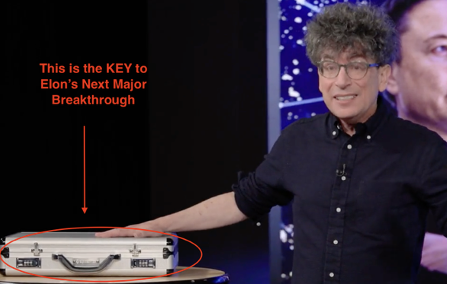
Renowned tech investor James Altucher – the man who called the rise of Nvidia, Apple and SpaceX years in advance – just uncovered Elon Musk’s latest breakthrough idea…
And according to James, it’s going to be even bigger than the SpaceX IPO – creating up to 1.8 million new millionaires over the coming years.
The pieces behind it are inside this briefcase – which he reveals 100% FREE in this video.
Private money paid up for a chip designer, and a regulator looked at how Barclays funds private credit.
Tenstorrent more than doubled its valuation to $6.2 billion as public chip stocks sold off. The AI chip developer raised $1.5 billion. Trace Capital and Innovation X led the round.
Investors included Tether Investments and Sandisk. The company did not disclose revenue or profitability with the round.
Private credit borrows from banks through derivatives. A complaint at Barclays puts that plumbing under review. A Bank of England regulator is looking into an insider complaint, the Financial Times reported.
It alleges traders understated the risk of derivatives Barclays used to finance private credit loans. Nothing has been proven. Barclays' U.S.-listed shares (BCS) fell nearly 3%.
Private Price, Public Doubt
Private money is still paying up for AI chips while the plumbing behind private lending draws scrutiny. Tenstorrent raised at a far higher price right after a public chip selloff, with no revenue disclosed. A U.K. supervisor is checking how Barclays booked the derivatives behind its private credit lending. Private marks move on conviction. Private loans move on bank funding.
Bitcoin missed the chip rebound, and the biggest treasury company spent mostly on its own paper.
Bitcoin traded near $81,800 at 3:55 p.m., up about 0.3% from Friday's U.S. close. The Nasdaq gained 1.1% over the same stretch. Ether was near $2,390.
$193 million for STRC, $22 million for bitcoin. Strategy (MSTR) bought 267 bitcoin for $22.1 million last week, a Monday filing showed.
It spent $193.1 million repurchasing STRC preferred shares, nearly nine times as much. Its board raised the preferred buyback authorization to $3 billion.
Strive, a smaller rival, bought 1,223 bitcoin. It settles a $630 million preferred sale Tuesday.
Mt. Gox's end-of-October supply scare is off the calendar. The collapsed exchange's trustee moved the repayment deadline to Oct. 31, 2027, with court permission. It is the fourth straight annual extension.
Blockchain trackers have shown more than 34,000 bitcoin in wallets linked to the estate. The deadline is an outer limit, so payouts can still come earlier.
Buybacks Over Bitcoin
The biggest corporate bitcoin buyer spent last week mostly on itself. Strategy put most of its cash into its own preferred stock, while a smaller rival kept adding coins. The corporate bid looked thinner on a day bitcoin trailed the Nasdaq. Mt. Gox's remaining payouts now have until October 2027, with no fixed release date. The seller's deadline moved out a year, and the biggest buyer turned inward.
Nvidia poured over $7B into this
Take a look at this…

It's a radical "light-speed" device that's turning AI as we know it into "Accelerated AI", making it 100 times faster and 100 times more energy efficient.
In fact, Jensen Huang, Nvidia's founder and CEO, says this device is shattering the limitations of AI and without it, AI can't scale.
If you want to discover what this technology is, why Nvidia is betting billions on it…
And the one stock we believe could be the biggest winner when "Accelerated AI" goes mainstream…
Monday favored companies with fresh contracts or fresh capital, and bonds gave borrowers no help.
Chips rose with yields while CoreWeave gave back its opening gain. Strategy bought its own preferred over bitcoin, and builders cut prices with the 10-year above 5%.
Rates Just Reset. Who Feels It First?
On January 2, the 10-year Treasury yielded 4.19%. By September 30, it was 5.29%. Most of that move landed in a single quarter.
The bond market repriced and companies are starting to report it.
Some companies earn from higher rates. Some pay for them. And each one runs on a different clock.
We traced three of them, IBKR, WRB and FIS, in a new FREE Special Report:
Rates Just Reset. Who Feels It First?
Who earns it fast. Who earns it slowly. Who pays. One has already reported. The other two report next, and the report tells you the exact line to check.
We'll text the report straight to your phone.