Fed funds futures price only about a 10% chance of an October increase, down from 70% in late September, while odds of a Bank of Canada hike the same morning have climbed to about 80%. Around the decisions sit $183 billion of Treasury note auctions and the Fed's preferred inflation gauge.
Markets closed the week with oil at a six-month high, gold below $4,000 on the spot market and the 10-year Treasury yield near 5%. The coming week puts each of those prices up against a policy decision or a hard number, and the central bank investors expect to act is the one that gets less attention.
The Fed is expected to wait
The Federal Reserve announces its decision at 2 p.m. Eastern on Wednesday, Oct. 28. Fed funds futures price about a 10% chance of a quarter-point increase, according to currency strategist Marc Chandler, down from roughly 70% in late September. Prediction markets are more settled still: Polymarket's contract on no change traded at 95.5 cents early Sunday, and Kalshi's contract on a quarter-point hike last traded at 5 cents. Prediction markets see about a 76% chance of an increase in December.
The Fed began raising rates in September. Economists expect it to hold this week while keeping the door open to more, a combination widely described as a "hawkish pause." Avery Shenfeld, chief economist at CIBC, has made the trade-off explicit, saying the Fed "might defer this next, and likely final hike if oil prices subsequently cool, until December." ING expects a hold on Wednesday and a quarter-point increase in December, to a range of 4.00% to 4.25%.
Canada is a different story
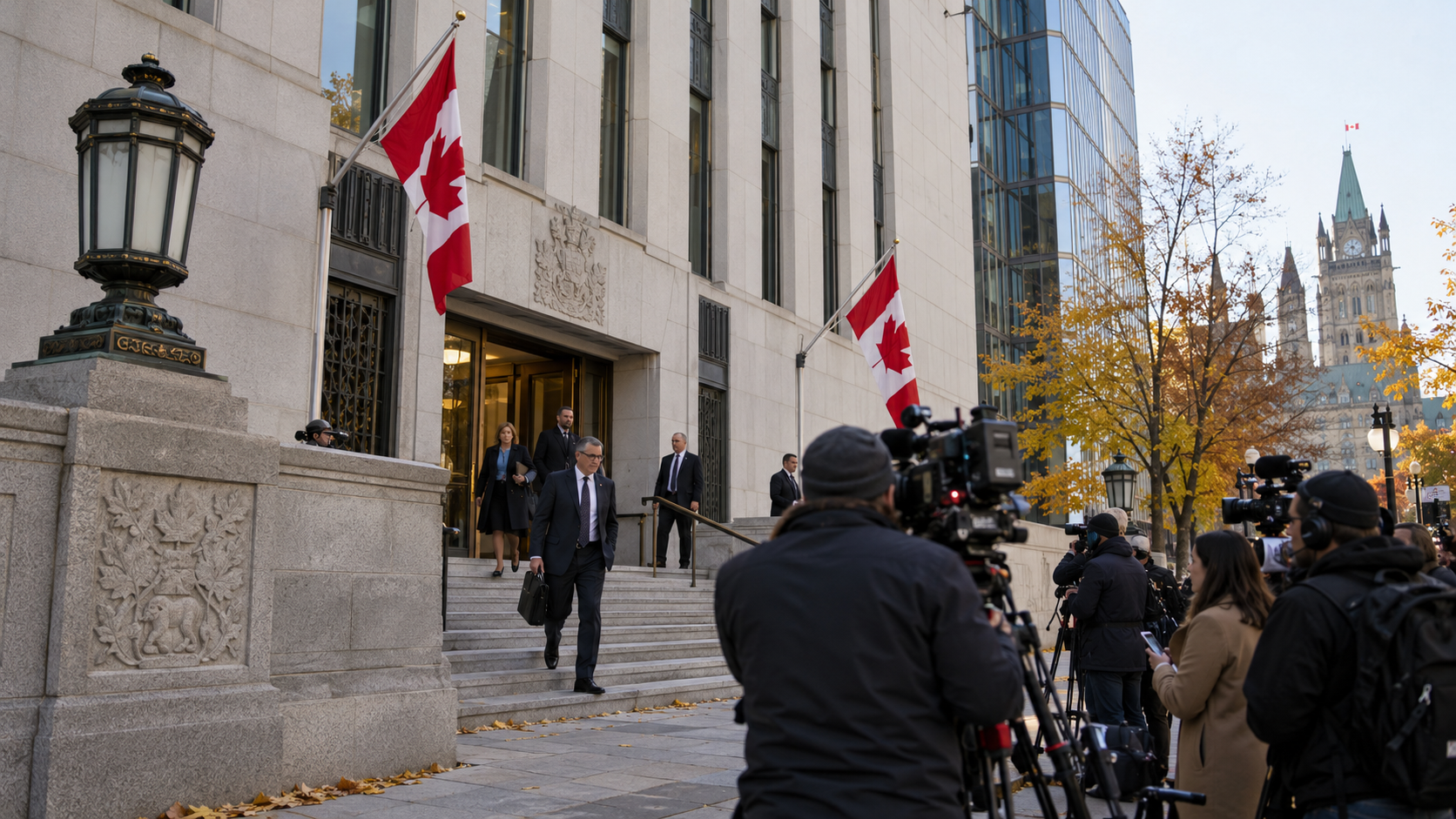
Over the same weeks the market has moved the other way on Canada. Chandler puts the odds of a Bank of Canada hike at about 80%, up from about 35% on Oct. 16. The decision comes at 9:45 a.m. Eastern on Wednesday, more than four hours before the Fed's.
The domestic data give the bank less reason to hold back. Canadian retail sales rose 1.2% in August, with every subsector higher. Trade adds another variable: revised U.S. tariffs on Canadian goods under Section 338 take effect on Oct. 30, two days after the decision.
The European Central Bank decides on Thursday and the Bank of Japan on Friday; both are expected to hold. The U.K. presents its budget on Wednesday.
The supply
The Treasury will sell $69 billion of two-year notes on Monday, $70 billion of five-year notes on Tuesday and $44 billion of seven-year notes on Thursday, a combined $183 billion, plus $30 billion of two-year floating-rate notes on Wednesday. The five-year sale comes the day before the Fed's decision.
The auctions arrive as the Treasury prepares its next quarterly refunding. In its agenda for dealer meetings on Oct. 29 and 30, the department said it "continues to evaluate future changes to nominal coupon and FRN auction sizes." Dealers' responses are due at noon on Monday. Any signal that coupon auctions will grow would add supply to a market where the 30-year yield is already above 5.3%.
The data
The most important U.S. numbers arrive on Thursday at 8:30 a.m. Eastern: the advance estimate of third-quarter GDP and September's personal consumption expenditures price index, the Fed's preferred inflation gauge. Because they come the day after the decision, the Fed will set policy without them. Durable-goods orders and the Conference Board's consumer confidence index come on Tuesday, and France publishes third-quarter GDP and flash October inflation on Friday.
The dollar has stopped following rates
One sign of uncertainty about the Fed's path sits in the currency market. The 30-day correlation between the dollar index and the two-year Treasury yield has fallen to about 0.35, Chandler said, from about 0.80 in May and June. When the dollar stops tracking short-term yields, something other than rate expectations is driving it, most likely the Gulf conflict and the flows it is producing.
How the week could break
A Bank of Canada hike, a Fed statement more worried about oil than expected, weak demand at the five-year auction or a hot PCE reading would support the view that central banks are prepared to fight an energy shock with rates, which would pressure bonds on both sides of the border.
A Bank of Canada hold, a patient Fed, strong auction demand and soft GDP growth would support the view that growth is the bigger risk. In that case the 80% pricing on Canada would prove to have run ahead of the central bank, and the Canadian dollar and short-dated Canadian bonds would be the first to reprice.
What to watch
The two-year auction and dealer refunding responses on Monday; the five-year auction, Israel's election and China's Fifth Plenum, which runs through Thursday, on Tuesday; the Bank of Canada at 9:45 a.m., the U.K. budget and the Fed at 2 p.m. on Wednesday; GDP, PCE and the ECB on Thursday; the Bank of Japan on Friday; and OPEC+ on Nov. 1.