After pulling its Australian listing, the Nvidia-backed data-center developer is in talks with existing investors about a smaller private round. The objections that sank the IPO, including a 58% free float, will follow it into those talks.
October 9, 2026
Tickers: NVDA, BX, MGH.AX
A day after Firmus Grid withdrew its initial public offering, the outline of its fallback plan emerged, along with a clearer picture of why public investors balked.
The company and its advisers are in talks with existing investors about raising $2 billion to $3 billion in a private round, according to people familiar with the discussions. The structure has not been decided. Firmus had been seeking about $5 billion in the listing, which it withdrew on Friday morning in Sydney, saying it would "pursue capital from the private markets and consider alternative public and private market options."
What investors objected to
Three features of the offering drew pushback.
The first was the float. About 58% of Firmus' shares would have been free to trade from the first day, leaving only about 42% under lockup. Investors worried that early backers, who had bought at far lower valuations, could sell heavily soon after the debut. The company was valued at under $2 billion a year earlier, and its August private round valued it at more than $10.5 billion.
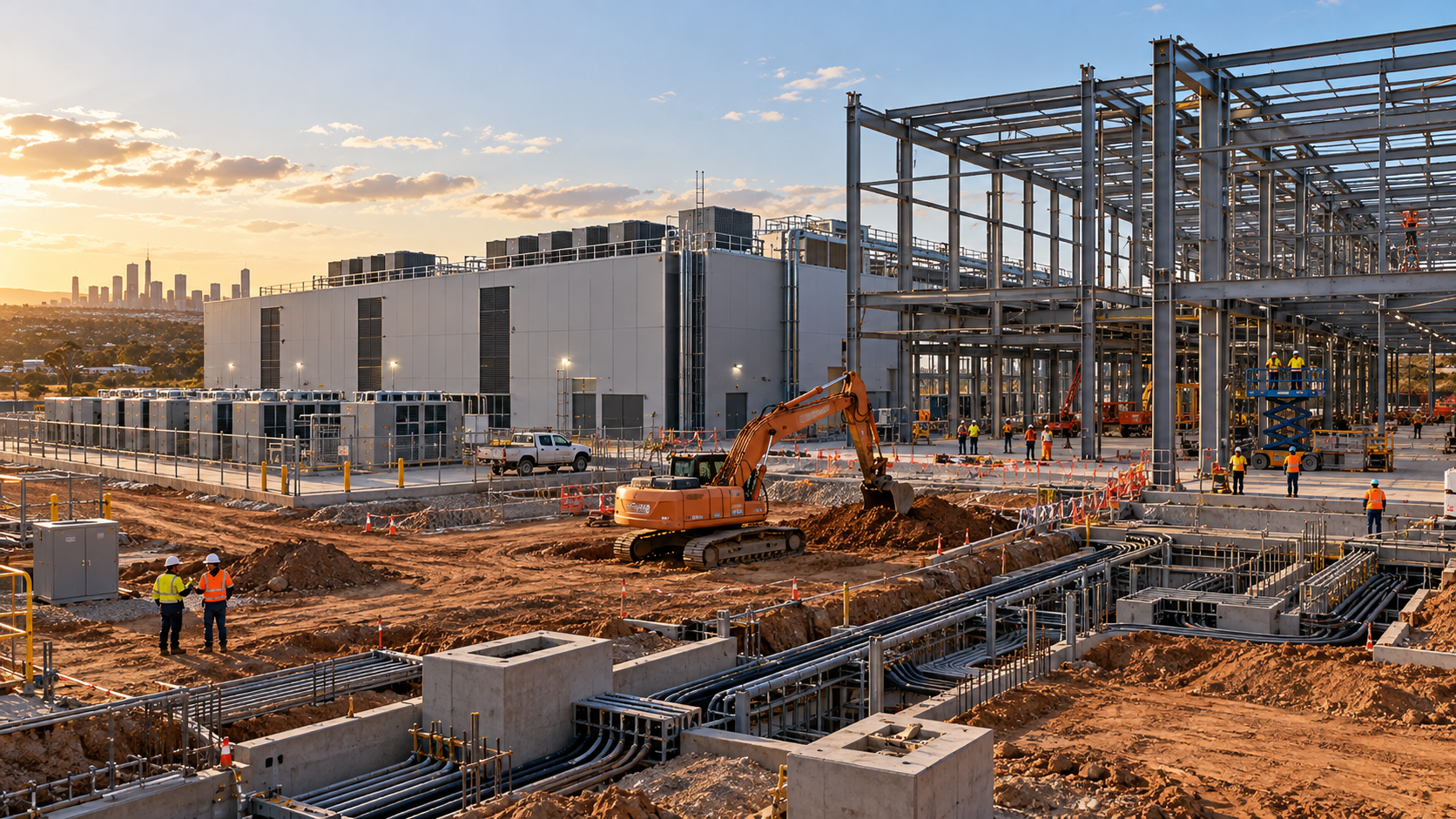
The second was what has actually been built. Firmus has a pipeline of 912 megawatts of data-center capacity, of which 46 megawatts, about 5%, has been completed, according to investor documents. It operates two data centers.
The third was revenue. Firmus had revenue of about $51 million in its 2026 fiscal year. At the roughly $30 billion valuation implied by the IPO price, investors were being asked to pay nearly 600 times that figure.
"We think that Firmus indeed has a compelling story. It just doesn't have a compelling valuation," said John Pearce, chief investment officer of UniSuper, one of Australia's largest pension funds, which did not take part. "So much has to go right to justify the valuation." He also said the company would have to keep raising debt and equity to fund its plans.
The private math
A $2 billion to $3 billion round would cover 40% to 60% of what the IPO was meant to raise. The terms will set a new mark for the company. A round priced near the August valuation would leave Firmus worth about a third of its IPO target; a round priced above it would show private investors willing to pay more than public ones, the opposite of the pattern the IPO was supposed to confirm.
Firmus' backers include Nvidia, Blackstone, Coatue and Jane Street. Its customers include OpenAI, an anchor tenant at two planned facilities in Malaysia, and Meta.
The supplier
Maas Group, the Australian industrial company that owns 3.2% of Firmus and holds about A$1.1 billion of construction work orders from it, said its contracts remain in place.
Two readings
One reading is that Firmus has a financing gap, not a business problem. Existing investors are deep-pocketed, the pipeline is contracted with large customers, and a smaller private round buys time for more megawatts to come online before another listing attempt.
Another reading is that public investors identified risks a private round cannot remove. Most of the capacity is unbuilt, revenue is small relative to the valuation, and the company will need repeated capital raises. A private round at a lower price would also reset the value of every earlier backer's stake.
What comes next
The size, price and investors in the round will set Firmus' new valuation. Construction progress on the remaining 866 megawatts and further payments to suppliers such as Maas will show whether the buildout continues at the planned pace.