
The dollar hit a two-month high on hawkish Fed signals. Financial stocks fell on Meta's agent. The biggest data centers can't be insured to full value. The labs calling for a slowdown shipped cheaper models.
Oil Near $90. The Dollar at Its Highest in Two Months. Futures Flat.
WTI fell toward $90, its lowest since before the pipeline attack, after US and Iranian officials held direct talks Tuesday and Saudi Arabia ran pipeline pressure tests targeting a weekend restart.
European gasoil futures surged after Trump confirmed he would back a diesel export ban. US diesel futures fell slightly on the same news. The export ban gives domestic supply and hurts European refiners. KB Home (KBH) fell premarket after lowering its profit outlook, confirming Lennar's read on housing. Six Flags Entertainment (FUN) rose after Jana Partners pushed for a sale.
Treasury reveals its next bond-buyback size today. The last announcement missed expectations and triggered a Treasury selloff.
Investor Signal
Oil near $90 and a dollar at a two-month high are not signals pointing the same direction. Cheaper oil eases inflation pressure. A stronger dollar tightens financial conditions for emerging markets and US multinationals. The bond buyback size is the day's most actionable data point. Under-deliver again and yields move up.
When the Fed Cuts, These Go First
The rate-cut rally is already taking shape, and our analysts just pinpointed 10 stocks most likely to lead it.
They’ve dug through every chart, sector, and earnings trend to find companies positioned for explosive upside once the Fed eases.
From AI innovators to dividend aristocrats, these are the names attracting billions in early institutional money.
Miss them now, and you’ll be chasing the rally later.
Get the Top 10 Best Stocks to Own in the Second Half of 2026 — free today before the next leg higher begins >>
Financial Stocks Fell Because of an App.
The Nasdaq's record had a bill attached, and financials paid it.
Meta's (META) Muse agent reignited fears that AI will upend financial services.
Charles Schwab (SCHW) and LPL Financial (LPLA) each fell more than 6 percent. Raymond James (RJF), Ameriprise Financial (AMP), JPMorgan (JPM), and Bank of America (BAC) all fell.
What separates this from earlier AI selloffs is that Muse already partners with PayPal and Plaid. That integration gives it an execution path prior agents lacked. Citizens' Devin Ryan named the real threat as idle client cash. Agents optimizing around the clock leave fewer balances sitting still, and brokerages earn real money on exactly that cash.
Alois Pirker noted incumbents hold all the data. Anthropic rolled out Claude tools connecting to Schwab and Vanguard the same week, pitching AI as an upgrade, not a threat.
Float Is the Revenue Line Nobody Was Watching
- Brokerages earn on idle client balances waiting to be deployed
- An agent that never sleeps leaves fewer balances idle
- Muse's PayPal and Plaid integrations create a real execution path
The threat is not robo-advisers taking fees. It is the cash between decisions. Nobody modeled that line as an AI exposure until an app launch repriced it before any earnings call could.
An Ocean Liner Can Turn
Pirker's read is that incumbents cannot be displaced overnight. If AI tools for wealth managers grow as fast as the agents, the narrative shifts from disruption to upgrade. That version also exists. Tuesday priced only one of them.
Financials Had Two Reasons to Fall. Only One Made Headlines.
The bond market has been working on the same banks for seven months.
The gap between 2-year and 10-year Treasury yields has narrowed to about 22 basis points, down from roughly 75 in February. Janney Montgomery Scott's Guy LeBas says once it compresses this far it rarely stays. It either widens back toward 50 or collapses to zero. His call is zero.
A flat curve shrinks what banks earn on long-term loans versus short deposits. Financials are on pace to erase their annual gains. Goldman's Jan Hatzius expects another October hike. LeBas sees 75 basis points total before this is done.
The Cleveland Fed's curve measure puts recession odds at 12.3 percent, with three historical false positives. LeBas credits AI spending for keeping stocks indifferent to a 5 percent yield. That indifference will fade. Just not yet.
At LeBas's Zero, the Spread Is Gone
The yield curve gets read as a recession signal. The nearer story is arithmetic. A flat curve compresses bank earnings whether or not a recession follows, and Muse gave that squeeze a headline on the same day. One is structural. One is narrative. Both point the same direction.
Free Stock Pick: The Company First in Line
for America’s New Super Fuel
The U.S. Army and Department of Energy are about to flip the switch on a revolutionary new fuel — and one obscure defense contractor has a five-year head start on every competitor.
This joint, high-priority initiative — ordered by President Trump — is called Project Janus.
And the first powerplant to run this new fuel is expected to go live before December 18, 2026…
When it does, this company’s name will be everywhere.
Full details — including the name and ticker symbol — are being revealed for free.
Click HERE to get the stock name, ticker, and the full Project Janus story for free.
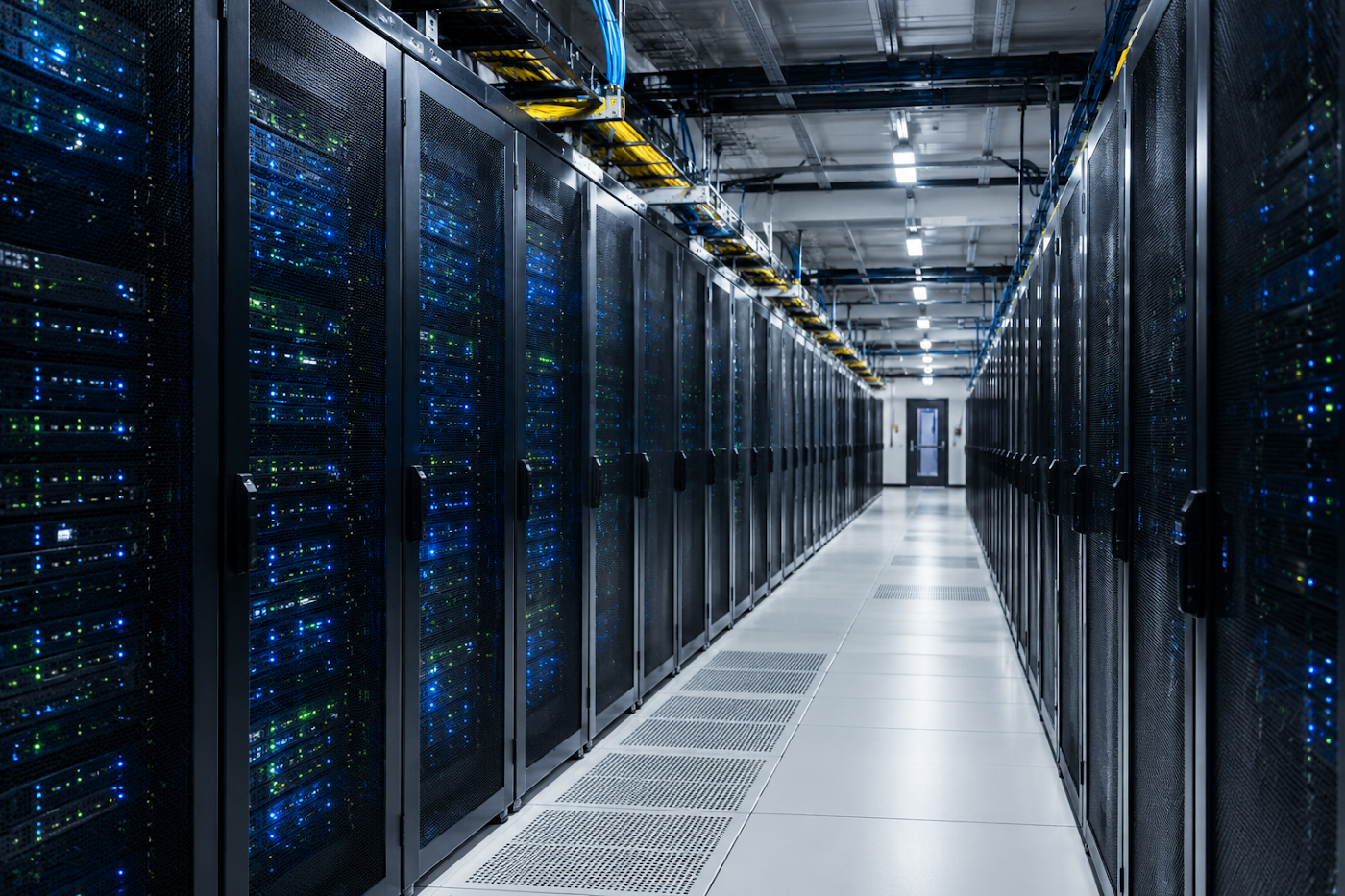
Nobody Can Fully Insure a Data Center.
Premiums tied to data centers are set to double by 2030 and still won't cover half of what's being built.
Swiss Re expects data-center insurance premiums to nearly double by 2030. The problem is that the largest available policies cover up to $8.5 billion on projects worth $25 billion. Many large builds will be insured to less than a third of their construction cost.
About 40 percent of US data-center capacity sits in tornado-exposed zones. Clustering in Virginia and Texas means one event hits multiple sites. Lithium batteries next to chips raise the probability a fire reaches the most expensive equipment. Business-interruption cover often excludes the first 24 hours.
Hyperscalers like Amazon (AMZN) self-insure through captive programs. Amazon's Gulf data centers, damaged by Iranian drones, produced irreversible customer data loss. Neoclouds and landlords have no equivalent.
Insured to a Third Is Not Insured
- Largest policies cover $8.5B on $25B projects
- Clustering amplifies the impact of a single weather or military event
- Captive programs protect hyperscalers but not the broader ecosystem
A $25 billion asset insured to a third of its value is not insured. The AI capex debate priced the financing question and treated the physical risk as solved. The insurance market disagrees.
Where the Uncovered Half Shows Up First
Catastrophe bonds tied to data centers are under discussion. They would put the first real price on the missing coverage and become the floor every lender benchmarks against.
Two Weeks of Warnings About Racing Too Fast. Then Cheaper Models.
The labs asked for a slowdown and shipped price cuts on the same afternoon.
OpenAI cut API prices by half with new GPT-6 tiers. Anthropic released Claude Opus 5.5, described as near-Fable performance at roughly 40 percent lower cost. Both answered customers pulling back on spending and open-weight models from Alibaba (BABA) and DeepSeek setting a cheaper floor.
OpenAI said it will bring outside evaluators in earlier, during training rather than only before launch. Anthropic said Opus 5.5 was tested by METR and Frontier Design.
Frontier and Commodity Are Diverging
Slowing capability and cutting price are separate decisions. Only one costs the labs anything. Opus 5.5 is a lab competing against its own best model on cost because Chinese rivals set the floor on the tier below. The safety argument is about the frontier. The business is already running on the tier beneath it, where price decides the sale.
Major Buy Alert Issued

Keith Kaplan has invested $17 million into his own AI research and tools. He's built a platform that 180,000 people worldwide use in the stock market. Now he says there's a handful of stocks you need to buy asap, to set yourself up for 1,000% potential returns in the near future. Here are the stocks you need to buy for the chance to profit.
This ad is sent on behalf of TradeSmith at 1125 N. Charles Street, Baltimore, Maryland 21201. If you're not interested in this opportunity, please click here.
Berkshire Bought Nearly 10 Percent of a Homebuilder Down a Third.
While the Nasdaq set records, Berkshire was shopping in the market's worst-performing corner.
The AI trade set every price in Tuesday's session. Berkshire Hathaway (BRK.B) went where rates set it. It bought almost 2.7 million Lennar (LEN) Class A shares over three trading days, building close to a 10 percent stake worth roughly $1.8 billion. Lennar rose sharply on the news but is down more than 32 percent over the past year.
Lennar missed estimates last week. CEO Stuart Millar said 7 percent mortgages shrink the qualified buyer pool. The homebuilder ETF is down roughly 16 percent since June. CFRA called the stake a classic Berkshire value play.
Housing is where Fed hikes land hardest. That is why Lennar is down a third and why Berkshire could accumulate quietly.
Buying the Transmission, Not the Trade
- Housing prices rate moves through mortgages almost immediately
- Lennar down a third gives Berkshire room that did not exist 18 months ago
- Berkshire held roughly $367 billion in cash as of June
The wager is not that rates stay high. A builder bought at 7 percent mortgages is worth more at 5.
One More Hike Tells You Everything
If Berkshire keeps buying into an October hike, the position is a call on the full cycle, not just the entry. If it stops, it was a value trade. That answer comes in five weeks.
Financial stocks fell on an app, and the same banks are watching a curve that has narrowed to 22 basis points. The largest data-center projects cannot be insured to their build cost. The labs calling for a slowdown shipped cheaper models. Berkshire spent $1.8 billion on a homebuilder down a third. The Nasdaq closed at a record through all of it.
AI lifts the index. The index's winners are setting prices for industries that never signed up for it. The one large buyer moving against the trade went where rates set the price instead. Trump meets Xi today. October's hike odds are at 53 percent. The two numbers that move everything from here are oil and the yield curve.
3 STOCKS OUR SIGNAL ENGINE SAYS TO WATCH CAREFULLY
Three stocks. Three signals. Two weeks later, the story changed.
On September 2, we published three market questions around KLAC, HPE and PG&E.
Two weeks later, every one of them produced new evidence.
One company delivered record revenue and raised its outlook.
Another saw weakness spread across its entire peer group.
And in the third, a market risk that had only been showing up beneath the surface suddenly became explicit.
Yet none of these stories is finished.
That’s why we built Market Tell.
To track the signals that keep moving after the headline is gone — and show you what investors should be watching next.
We’ve put the latest analysis into a new FREE Special Report:
3 Stocks at a Major Turning Point
See what changed… what still hasn’t been resolved… and the signals we’re watching now.