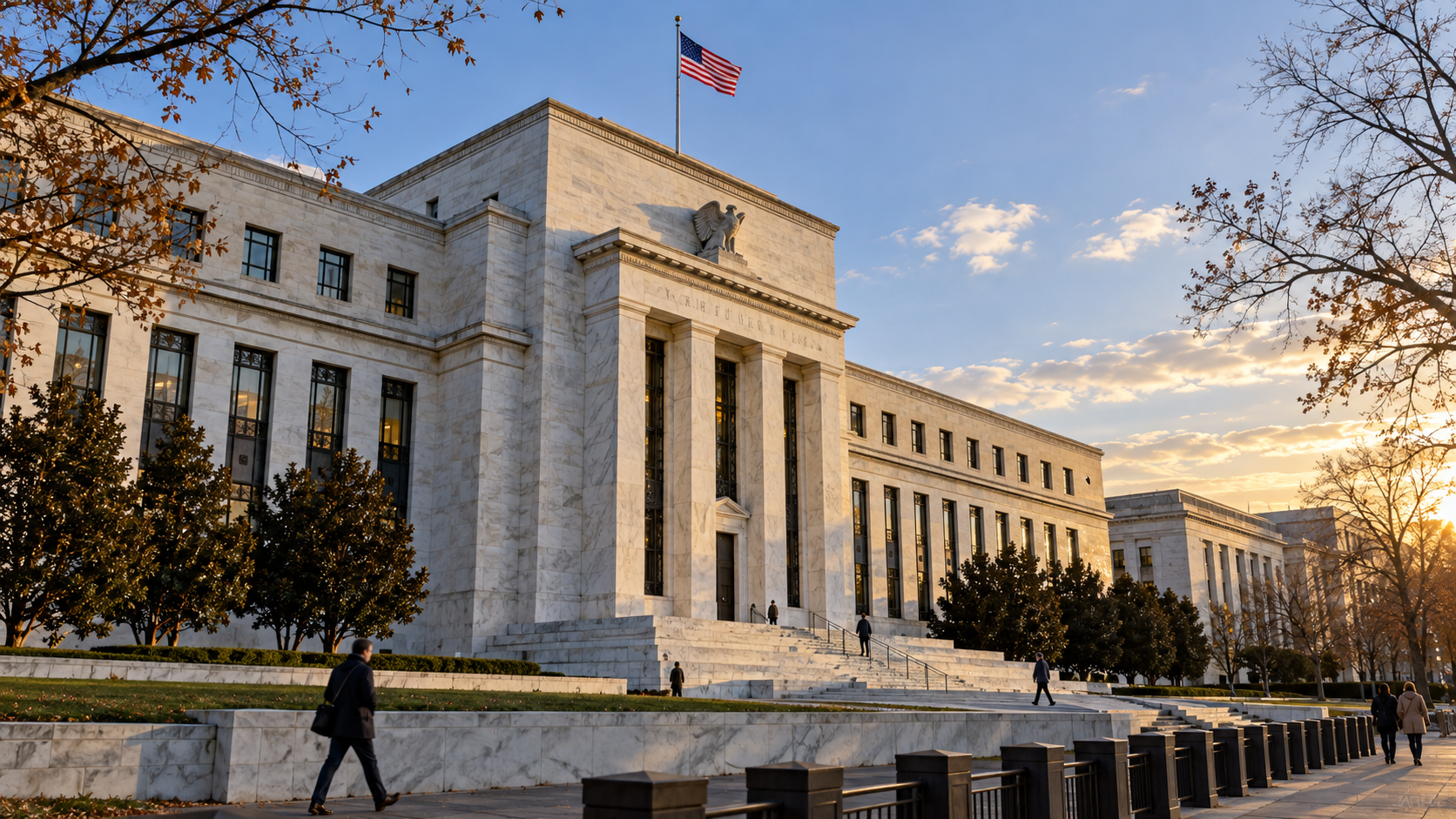
October went from likely to a toss-up in an afternoon, yet traders still price about four more quarter-point hikes within a year.
Ask two senior Federal Reserve officials when the next rate hike should come and this week you get two answers. Ask the futures market and you get a third.
Speaking in Buffalo on Tuesday, John Williams, who runs the New York Fed, argued for patience. "There is no need for urgency," he said, adding that a single additional increase "late this year" was his base case and stressing it was "just my forecast." Michael Barr, a Fed governor, used the same day to press again for more tightening. Only a week before, he had put the number of further hikes needed at two or more.
Three destinations for one cycle
Line the views up and the gap becomes clear. Williams sees one quarter-point move before year-end. Barr sees at least two. Interest-rate futures, meanwhile, still embed close to a full percentage point of tightening over the coming 12 months, roughly four quarter-point steps.
So the market has done something subtle. It trimmed October, cutting odds of a move at the to meeting from strong to roughly even after Williams spoke. It did not trim the total. Traders accepted the New York Fed chief's view on the calendar while holding on to a destination closer to Barr's, and then some.
Which voice leads the room
If Williams is closer to the committee's center, then 10-year yields near 5.24% and a dollar up about 1.9% for September may already reflect most of what the Fed will deliver this year. Gold's roughly 5.4% slide over the past month fits that reading; it is not the behavior of a market bracing for a hawkish shock.
If Barr is the better guide, Williams was only arguing about sequencing. A hike deferred to December is still a hike, and a committee split on the number of moves could surprise markets that have taken comfort from the timing debate.
The discriminating test
The cleanest way to tell the two readings apart is the gap between the October odds and the 12-month pricing. If incoming inflation data are soft, both should fall together. If core prices run hot, October odds will jump back toward certainty while the year-ahead total barely moves, a sign Barr's framework is winning.
Next on the calendar
August PCE inflation lands Wednesday morning. Three regional presidents, Barkin of Richmond, Goolsbee of Chicago and Kashkari of Minneapolis, are due to speak that evening. September payrolls follow on Friday, and the October meeting is the first vote that settles the argument.