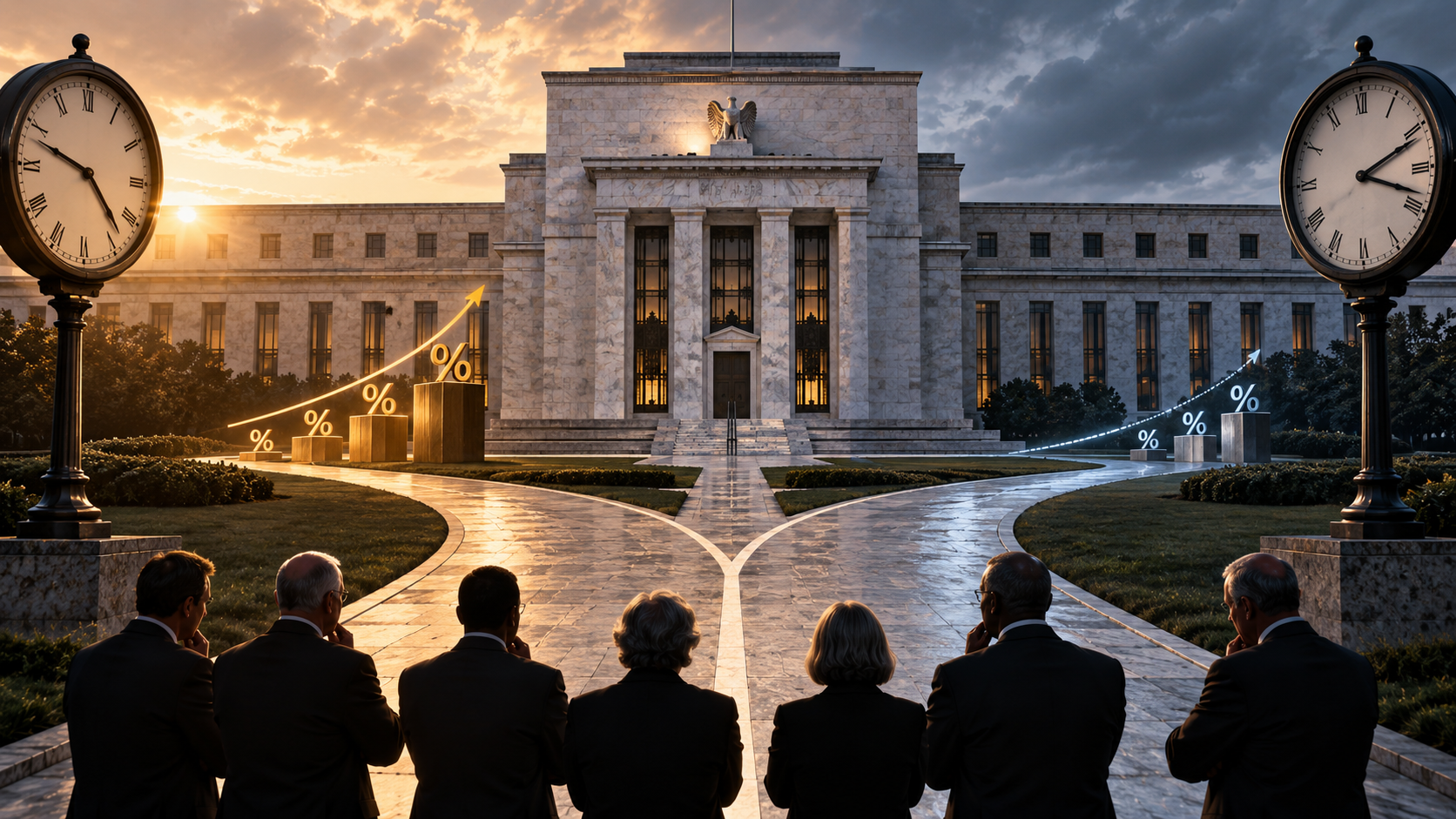
Vice Chair Jefferson joined New York's Williams in counseling patience. Hours later, Dallas Fed President Logan said rates have a lot further to go.
Two days of Federal Reserve speeches have produced a clear disagreement, though not about whether rates are headed higher. The argument is about how fast and how far.
Vice Chair Philip Jefferson, speaking Thursday at the University of Virginia's Darden School of Business, said yields "across the term structure have increased further" since the Fed's September meeting, "a sign that investors are reassessing the evolving macroeconomic landscape." He added: "My colleagues and I will need to come to our own judgment, which may take more time."
His remarks followed New York Fed President John Williams, who said on Sept. 29 he saw "no need for urgency" while still expecting another increase this year.
Then came Dallas Fed President Lorie Logan, a voter on the rate-setting committee this year. "I currently estimate the target range needs to rise an additional 50 basis points or more to appropriately balance the outlook and risks for our dual mandate goals," she said in prepared remarks late Thursday. She described the stance of policy as "offsides" given a balanced labor market and inflation above target, and said further increases would "undo the FOMC's risk management cuts from last fall."
Minneapolis Fed President Neel Kashkari sat between the camps, saying he does not "have a strong view" on whether the next increase comes this month, while projecting one more hike this year and another in 2027.
The arithmetic of the split
The Fed raised its target range by a quarter point in September to 3.75% to 4.00%, the first increase since 2023 and the opening move of Kevin Warsh's tenure as chair. Logan's floor of another 50 basis points implies a range of at least 4.25% to 4.50%. Markets have moved closer to Jefferson's timetable: futures-implied odds of an October hike fell to about 28%, from roughly 70% earlier in the week, with December now the expected meeting for the next move.
The common thread
Both sides cite the bond market. Jefferson points to higher yields as a sign of investor reassessment. Logan says "higher term premiums can slow the economy, reducing the need to tighten monetary policy." That leaves a loop with no obvious exit. Officials want to watch long yields settle before acting, yet part of what keeps long yields high is investor doubt that officials have acted enough.
Jefferson's text gives hawks some cover. He called inflation "too high," noting it has exceeded the 2% target for more than five years, and said he remains "concerned about the risk of higher energy prices leading to a persistent rise in inflation more broadly."
What to watch: The September jobs report on Friday, expected to show about 90,000 new positions. A strong number would strengthen Logan's argument. The more decisive input may be mid-October consumer price data, the last major inflation reading before the Oct. 27-28 meeting.