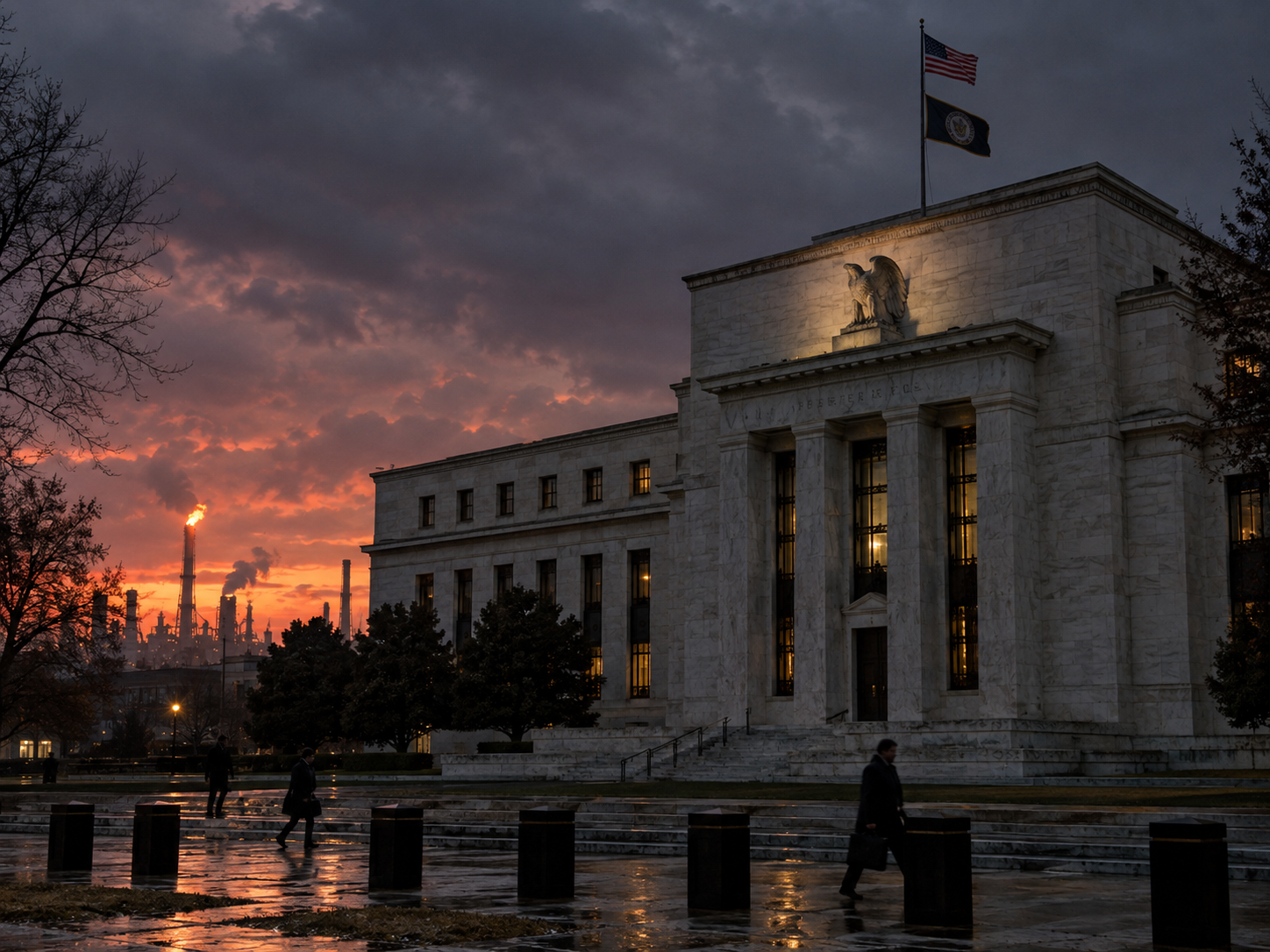
A stronger jobs report and rising energy prices have pushed traders, and at least one major bank's strategists, to bet on a quarter-point increase instead of a pause, even as the Fed's own governors remain split.
For most of the summer, the debate inside the Federal Reserve was about how many rate cuts to deliver, not whether to raise rates at all. That debate has flipped.
Fed funds futures tracked by CME Group's FedWatch tool showed roughly a 60% probability this week that the central bank raises its benchmark rate by a quarter point at the September 15-16 meeting, up from close to even odds a week earlier. JPMorgan Wealth Management strategists went further, naming a 25-basis-point hike their new base case and dropping a prior view that the Fed would hold rates through the rest of 2026.
Two forces are driving the shift. The Labor Department's August jobs report showed payrolls rising 162,000, roughly three times the consensus estimate, while unemployment held at 4.1% and wages climbed 3.1% from a year earlier. At the same time, oil prices have pushed toward $100 a barrel on an escalating conflict around the Strait of Hormuz, threatening to keep inflation elevated just as officials were counting on it to keep cooling.
Governor Christopher Waller's own remarks, delivered September 3, capture the pivot even though he was not calling for a hike. Waller put three-month core inflation at 3.05% through July, down from 4.76% in February, and said the committee should hold rates if August data confirms continued disinflation. He added a conditional the market is now leaning on: "If inflation comes in hot, I would consider a rate hike." He made no mention of cutting rates at all.
JPMorgan's strategists cited two forces behind their new call: inflation pressure tied to the Hormuz-linked energy shock, and an incentive to reinforce the Fed's credibility after a July meeting that ended in a hold with three dissents.
The dollar has not confirmed the shift. The ICE Dollar Index slipped to about 98.9 this week, down from roughly 99.4 a week earlier, even as hike odds moved higher over the same stretch. Gold has moved little, trading near $4,396 an ounce, a muted reaction for a metal that typically benefits from policy uncertainty.
Not every Fed official reads the data the same way. Waller has pushed back on hike talk even as Governor Kevin Warsh, in a Jackson Hole speech late last month, sharpened his own inflation warnings. That divide means Friday's August consumer price index report is likely to do more to settle the debate than any single speech has managed so far.
The reversal matters for more than Treasury yields. Rate-sensitive stocks and housing-linked shares had been pricing in a Fed that keeps cutting through year-end. A hike would remove that tailwind just as mortgage rates are already climbing on the same energy-driven inflation pressure. If Friday's CPI confirms the disinflation trend Waller described, the August jobs beat looks more like a one-off and the case for holding steady returns. If it doesn't, a Fed that spent the summer weighing cuts will instead be raising rates.