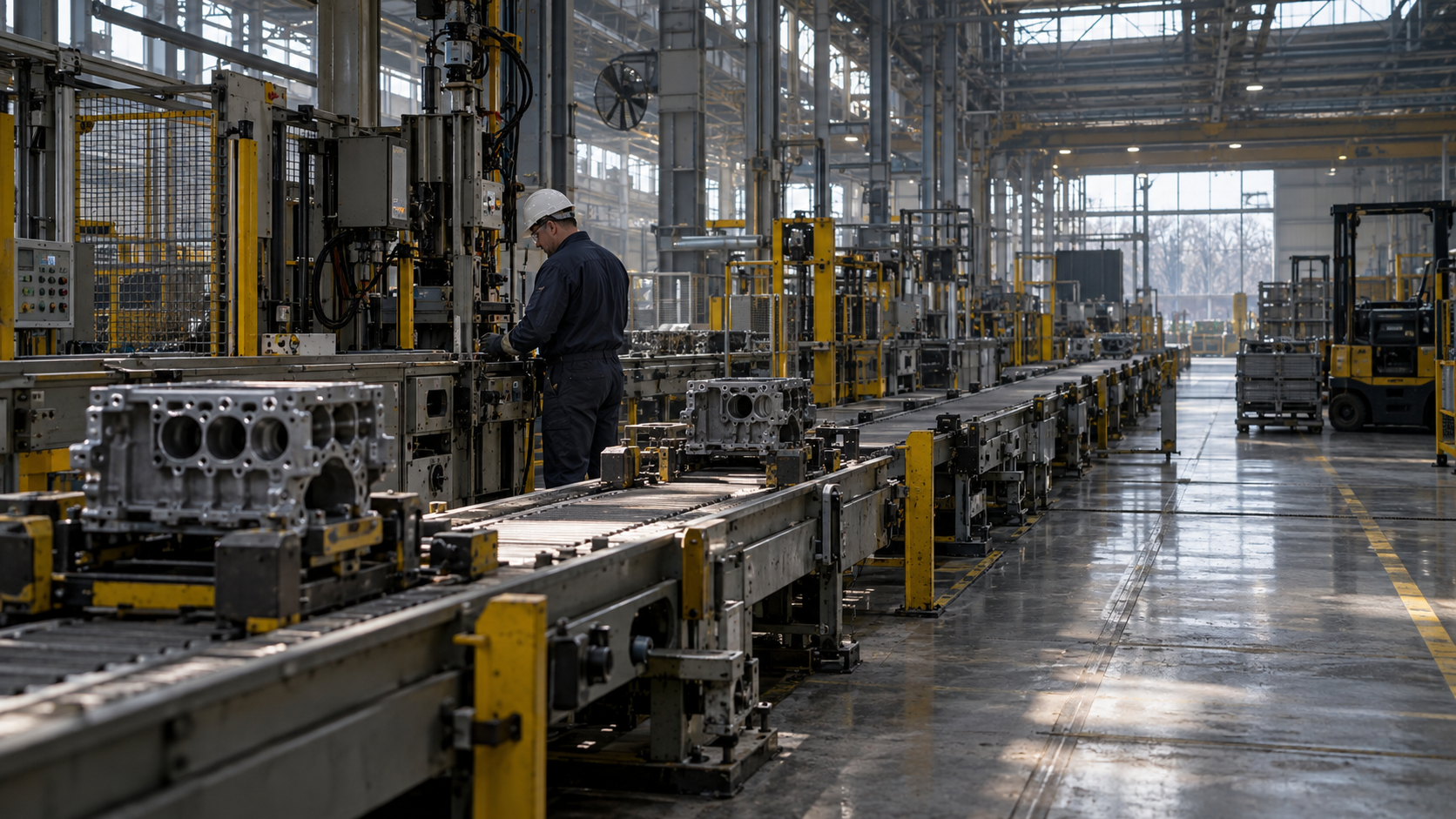
A surprise 0.3% drop snapped seven straight months of gains just as the Fed resumes raising rates, raising the question of how long data-center spending can paper over a cooling factory floor.
U.S. manufacturing output fell 0.3% in August, an unexpected decline that snapped a streak of seven consecutive monthly increases and came in well below the 0.3% increase economists had forecast, a swing large enough to count as a meaningful miss. The drop followed an unrevised 0.2% increase in July, meaning the sector went from modest growth to an outright contraction in the span of a single month.
The timing is what gives the number its weight. The decline landed just as the Federal Reserve resumed raising interest rates after roughly three years on hold, a combination that puts renewed pressure on the parts of the economy most sensitive to borrowing costs. Manufacturers tend to feel higher rates first, through the cost of financing equipment, inventory and expansion, and a surprise pullback so soon after the Fed's move raises the question of whether August was a one-month blip or the start of a slower stretch for the factory sector.
Manufacturing output was still up 0.9% from a year earlier, a reminder that the monthly decline, while unexpected, has not erased the broader trend of growth over the past twelve months. And broader industrial activity is getting real support from a source outside traditional manufacturing altogether: the ongoing buildout of artificial intelligence data centers. That spending has been propping up industrial activity even as more conventional manufacturing cooled in August, effectively masking weakness in one part of the industrial economy with strength in another.
That split raises the central question for investors watching this sector. Data center construction and the equipment that goes into it can carry industrial output for a while, but it is a narrower base than a factory sector firing on all cylinders, and it depends on continued heavy capital spending by a relatively small group of technology companies. If that spending slows or traditional manufacturing weakens further, the offset that has been holding up the headline industrial numbers gets thinner.
For now, the year-over-year gain suggests the underlying trend has not broken, and one month of softer factory data is not itself a warning sign. But with the Fed newly back in tightening mode, the sector bears watching closely. Whether AI-driven capital spending can keep doing the work of an entire industrial economy, even as higher rates squeeze the more traditional parts of it, will be one of the more important threads to follow into year end.