Ford sold fewer vehicles in the second quarter. Revenue fell. The company booked a $1.3 billion net loss. Adjusted operating profit still rose 17%, full-year guidance went up, and the stock jumped in after-hours trade.
That gap defines the investor debate. The bull case holds that Ford now earns more from each truck it builds. The skeptical case holds that affluent buyers bought a lot of expensive Broncos in a single quarter.
The quarter made the first case more credible. It did not settle it.
What drove the profit
The split between volume and profit is the central result. Wholesales fell 12%. Revenue fell about $1.9 billion to $48.3 billion. Adjusted EBIT still rose to $2.5 billion, and margin widened to 5.2% from 4.3%.
Chief Financial Officer Sherry House named the cause directly. Mix and net pricing did the work, not volume.
Ford Blue carries the strongest evidence. Segment EBIT rose 72% on a 1% revenue gain while wholesales fell 8%. Margin more than doubled, to roughly 4.4%.
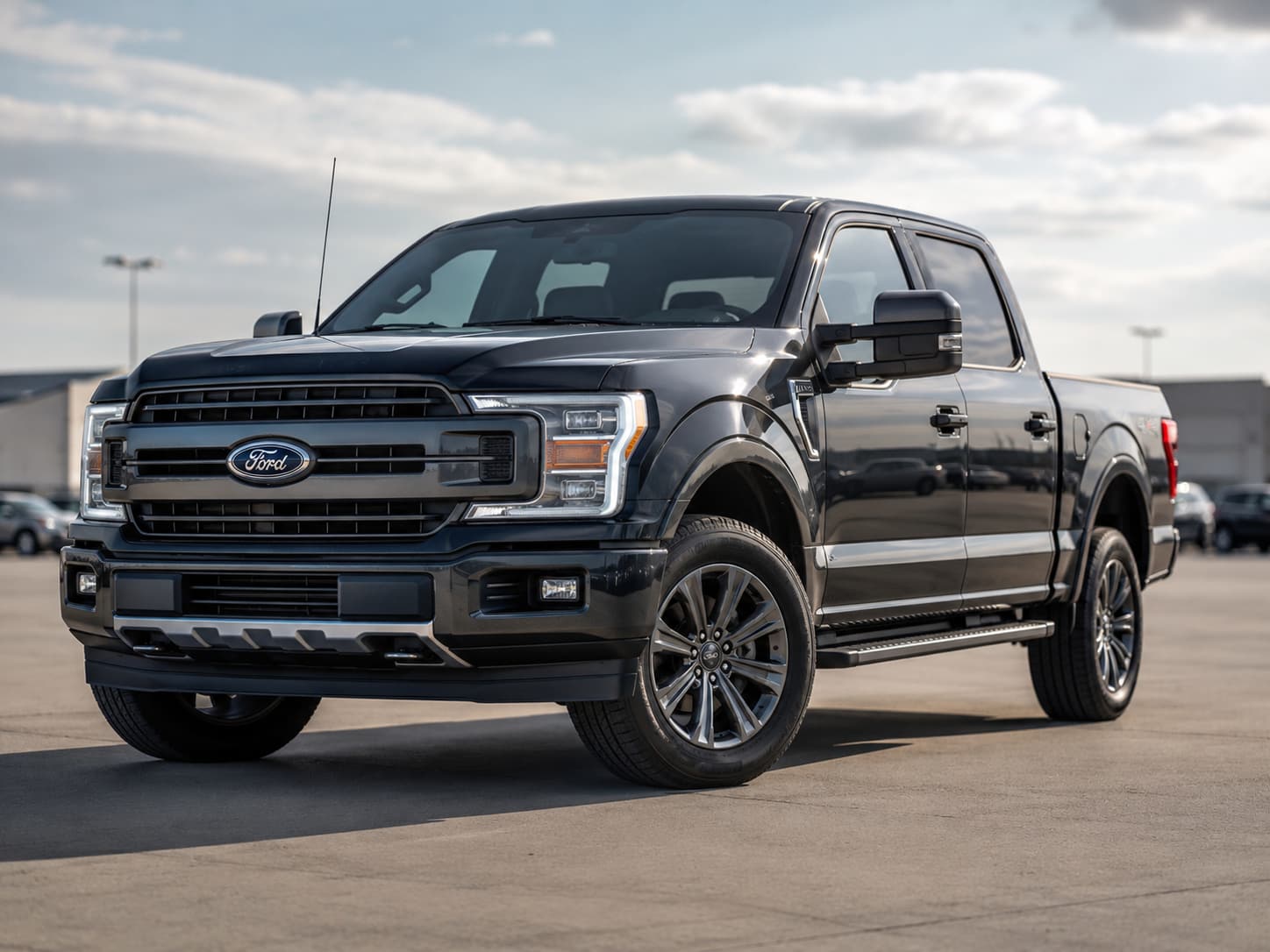
The product detail supports management's account. Off-road models reached 25% of U.S. sales in the quarter. Tremor now accounts for 15% of Expedition sales. Explorer and Expedition retail sales rose 22%. The Bronco family set a quarterly record.
The same detail supports the bear case. Those products sell to wealthier households, and management described the off-road customer as younger and more affluent. Ford has proven pricing power inside a few distinctive franchises. That is not the same as pricing power through a weaker labor market.
One figure cuts in Ford's favor. U.S. sales fell 10.3% in the quarter to 549,200 vehicles. Excluding the Escape and Lincoln Corsair phase-outs and a 69% cut in daily rental sales, Ford estimates volume would have risen about 0.5%. Wholesales look worse than end demand.
The discounting question also has a clear answer. F-Series inventory sits near a lean 45-day supply. Incentive spending was low, retail share rose, turn rates were healthy and rental volume stayed small. Total U.S. inventory of 52 retail days remains below the company's 55 to 65 day target.
The raise rests on price, mix and tariff relief
Ford lifted full-year adjusted EBIT guidance to $10 billion to $11 billion, a $1 billion increase at the midpoint. Free cash flow guidance moved to $6 billion to $7 billion. Capital spending stayed at $9.5 billion to $10.5 billion.
House called the reason simple: mix and pricing. On the press call she added a third driver, net tariff exposure. Ford now expects full-year net tariff cost to come in better than $1 billion.
That third item belongs on its own line in any model. It reflects policy, not factory performance.
Part of the cash flow raise is timing rather than conversion. The new range includes about $500 million of the $1.3 billion tariff reimbursement Ford booked in the first quarter. House placed the remaining $800 million in 2027.
Regulatory change helped twice more. It improved Ford Blue's trim mix and it allowed Ford to cut electric vehicle incentives.
Peer context limits how much of this reads as company achievement. General Motors raised its own outlook a week earlier, also citing better pricing and smaller EV losses. Both companies are drawing on an industry-wide pricing and policy tailwind.
The Novelis aluminum disruption did narrow. Ford now expects about $1.5 billion of full-year cost, toward the low end of its prior range, with roughly $800 million already incurred. The supplier's hot mill restart remains on track and contingency metal is secured.
Why the second half is not a run rate
The exit rate implied by guidance is weaker than the headline raise suggests.
Colin Langan of Wells Fargo pressed on why investors should not annualize second-half earnings. House gave three reasons. Commodity costs hit two quarters instead of one, roughly $900 million more than in the first half. Spending accelerates on the Universal EV platform, Ford Energy and the Oakville launch. And the $1.3 billion tariff refund does not repeat. Investor relations offered to complete the math offline.
Emmanuel Rosner of Wolfe Research then asked whether EBIT rises in 2027. House listed the puts and takes and said it is too early to say.
That exchange is the tone story of the quarter. Ford raised the current year with conviction and declined to underwrite the next one.
Ford Pro carries the execution risk
Ford Pro had a difficult quarter. Revenue fell 5% to $17.8 billion. EBIT fell 26% to $1.7 billion. Margin contracted to about 9.7% from roughly 12.4%.
Management attributes most of the decline to aluminum constraints and postponed Super Duty fleet orders. The company expects to recover those orders, return Pro to its 2025 revenue run rate by year-end, and add up to 100,000 units of Super Duty capacity when Oakville launches in the fourth quarter. Early 2027 model-year contracting is running about a month ahead of last year.
The math is demanding. Pro earned $3.4 billion in the first half and must earn $3.6 billion to $4.1 billion in the second. Deferred fleet orders are not booked profit. They can be repriced, delayed again or dropped if commercial activity slows.
Pro remains the company's profit engine. The quarter weakened the assumption that its double-digit margin is durable.
The EV loss is shrinking because the business is
Model e lost $919 million, an improvement of about $410 million and a third consecutive year-over-year gain. Segment revenue fell 56% to $1 billion. The loss is narrowing largely because Ford is selling far fewer first-generation electric vehicles.
The strategy is now narrow and specific. Ford is concentrating on one architecture, starting with a roughly $30,000 electric pickup due next year, alongside a Geely agreement in Europe.
The $3.6 billion battery joint venture charge, mostly non-cash, explains most of the gap between the GAAP loss and adjusted profit. It does not represent operating deterioration. It does document the cost of battery capacity assumptions that proved uneconomic.
Two new businesses now sit inside the equity story without disclosed economics. Ford says it is in the "third inning" of selling 20 GWh of 2028 energy storage capacity, with one signed agreement and prototype cells in production. The company also won a federal contract for three Super Duty-based military prototypes. Neither supports standalone value yet.
The reframed burden of proof
The quarter changed the category of the Ford story. It is no longer only a volume-decline story. It is an earnings-quality story, and the early evidence is real.
The burden of proof moved rather than lifted. Four conditions now matter.
Ford Blue has to hold price and mix as inventory refills. Ford Pro has to convert deferred volume and rebuild a double-digit margin against higher commodity costs. Quality gains have to reach warranty and recall cash, not only survey rankings, against roughly 12 million vehicles recalled this year. And the Universal EV platform and energy storage business have to launch without another write-down cycle.
A fifth condition sits above those. Tariff relief, regulatory change and firm industry pricing all supported this quarter. Those tailwinds are borrowed, and the structural case requires profit that holds once they fade.
The market is paying for a company that earns more from fewer trucks. It is not yet paying for a completed transformation. The refusal to forecast 2027 suggests management understands the distinction.