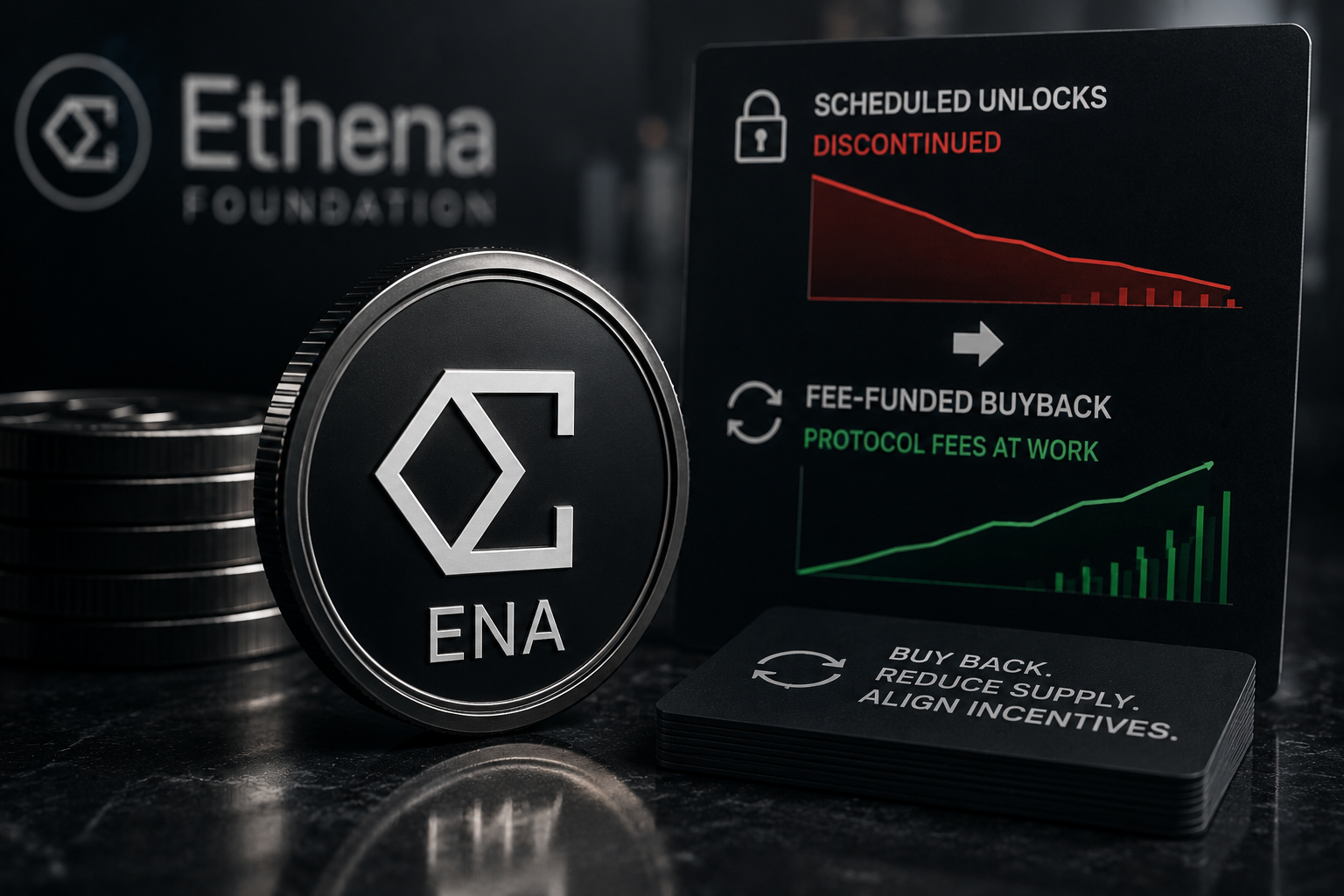
By purchasing early investors' positions and proposing to end scheduled token unlocks in favor of a fee-funded buyback, Ethena is trying to remove the sell pressure that has weighed on its token, a structural fix other DeFi projects with similar unlock overhangs could look to replicate.
The Ethena Foundation bought out its early and seed-stage venture investors and proposed ending future scheduled unlocks of its ENA token in favor of a buyback mechanism funded by a protocol fee switch. Both elements point toward the same objective: removing a source of sell pressure that has hung over the token since it launched.
Early VC positions, which would otherwise convert to freely tradable ENA on a fixed unlock schedule, are being bought out directly by the foundation rather than left to unlock and sell into the open market. Separately, the foundation has proposed halting future scheduled unlocks altogether and replacing that supply mechanism with buybacks funded by fees the protocol generates, effectively swapping a predictable source of new sell-side supply for a mechanism that removes tokens from circulation instead.
For existing ENA holders, the proposed shift changes the calculus in a specific way. Rather than anticipating a wave of new tokens entering circulation on a known schedule, the working assumption becomes one where protocol fees are used to buy tokens out of the market. That ties the token's supply trajectory to how much revenue the protocol actually generates, rather than to an unlock calendar set years in advance.
ENA traded at $0.1675 Wednesday, up 13.41% intraday, with the session ranging from $0.1425 to $0.172. That is the day's move, not a longer-run figure. Separate reporting has described a rally of nearly 100% over the past month and a 25% gain over the past week that has since cooled. Wednesday's 13.41% intraday move should be read on its own terms, as a reaction to Wednesday's news, rather than folded into either of those longer-window figures.
The more durable story here is structural rather than price-driven. Token unlock schedules have been a recurring source of friction across decentralized finance projects. VCs and early backers eventually receive tokens they can sell, and the market tends to price in that future supply well before it arrives, which caps upside and creates a standing overhang on the token regardless of how the underlying protocol performs. Ethena's approach, buying out the VCs directly and replacing scheduled unlocks with a buyback funded by protocol revenue, is a direct attempt to eliminate that overhang rather than simply manage investor expectations around it.
Whether that structure holds up depends on whether the fee revenue funding the buybacks is durable. The approach itself, a foundation using its own balance sheet and fee income to retire the supply overhang that VC unlocks create, is a template other token projects facing the same structural problem could plausibly copy, independent of how ENA itself trades from here.