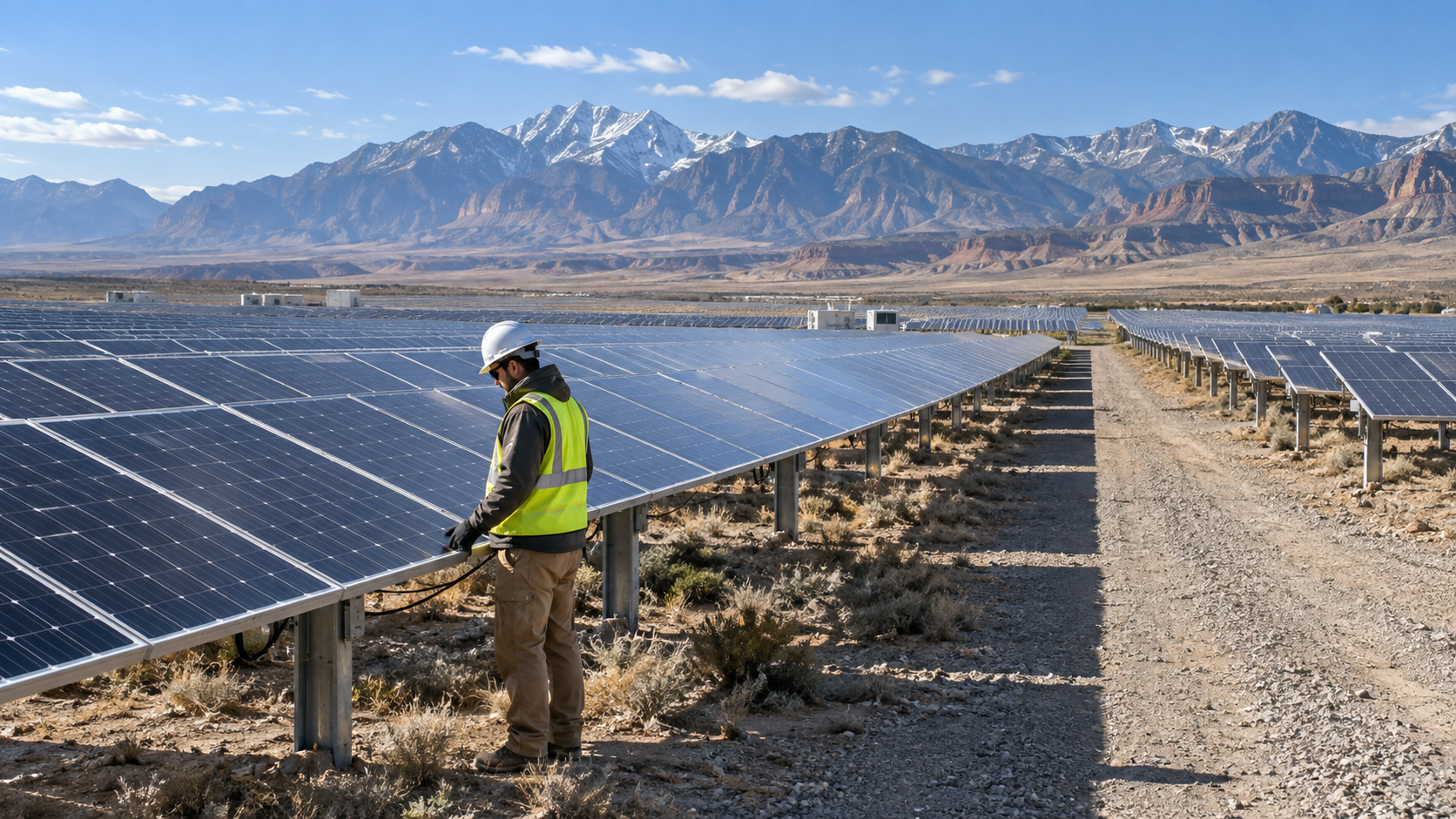
The buyer is not acquiring development risk or merchant exposure. It is acquiring two long-dated contracts with hyperscalers, and a wind portfolio is still to come.
Excelsior Energy Capital has sold two operating solar plants to Enel for $760 million, in a transaction announced and completed .
The assets are Faraday Solar in Utah, at 682 megawatts DC and 525 megawatts AC, and Skyhawk Solar in Tennessee, at 127 megawatts DC and 100 megawatts AC. Combined, that is approximately 810 megawatts DC.
Both are already contracted, and to the buyers that matter most in this market. Faraday supplies Meta under a 20-year power purchase agreement through PacifiCorp. Skyhawk's output is delivered to Google through the Tennessee Valley Authority's Green Invest program.
What is actually being bought
This is not a renewables development deal. Both plants are operating, and both have their offtake locked to investment-grade technology buyers on long-dated terms. What changes hands at $760 million is a contracted cash flow stream with an identified counterparty, not construction risk or merchant power exposure.
That distinction explains the pricing logic. An operating plant selling into a 20-year hyperscaler PPA is closer to an infrastructure credit instrument than to a power development asset, and it prices accordingly.
For Excelsior, it is an exit at the point where the value-creation work is finished: the plants are built, energized and contracted, which is precisely when the risk-adjusted return profile stops suiting a development-stage owner and starts suiting a utility.
A capacity note worth clearing up
The transaction has been described as both 625 megawatts and 810 megawatts, which looks like a contradiction and is not. The 625 figure is the two plants' combined AC capacity and 810 is their combined DC capacity. Solar projects are routinely described both ways, and the two numbers describe the same assets.
The wind piece is still open
The solar sale is part of a larger portfolio transaction of more than 1 gigawatt. A wind component of approximately 205 megawatts is expected to close in the fourth quarter of 2026. No price has been disclosed for that portion.
That leaves a dated catalyst on the calendar and an unanswered valuation question: whether uncontracted or differently contracted wind capacity clears at anything resembling the implied per-megawatt value of two hyperscaler-contracted solar plants.
Why this transaction is a data point about AI, not just power
The AI capital expenditure cycle is usually measured in chips and data centers. This transaction measures it one layer further back. Two solar plants in Utah and Tennessee changed hands for $760 million on the strength of what Meta and Google contracted to pay for their output, which is what it looks like when hyperscaler power demand becomes the underlying credit in an infrastructure trade.