The Nasdaq erased a 1.4% morning drop and investment-grade bond funds gained with Treasuries, a sign that the stress in AI debt had not spread to the broader credit market by midday. Homebuilders led a rotation into rate-sensitive stocks.
After two days in which the AI selloff ran from stocks into credit and across Asia, the U.S. session on Thursday tested whether it would reach the rest of the bond market. By early afternoon, it had not.
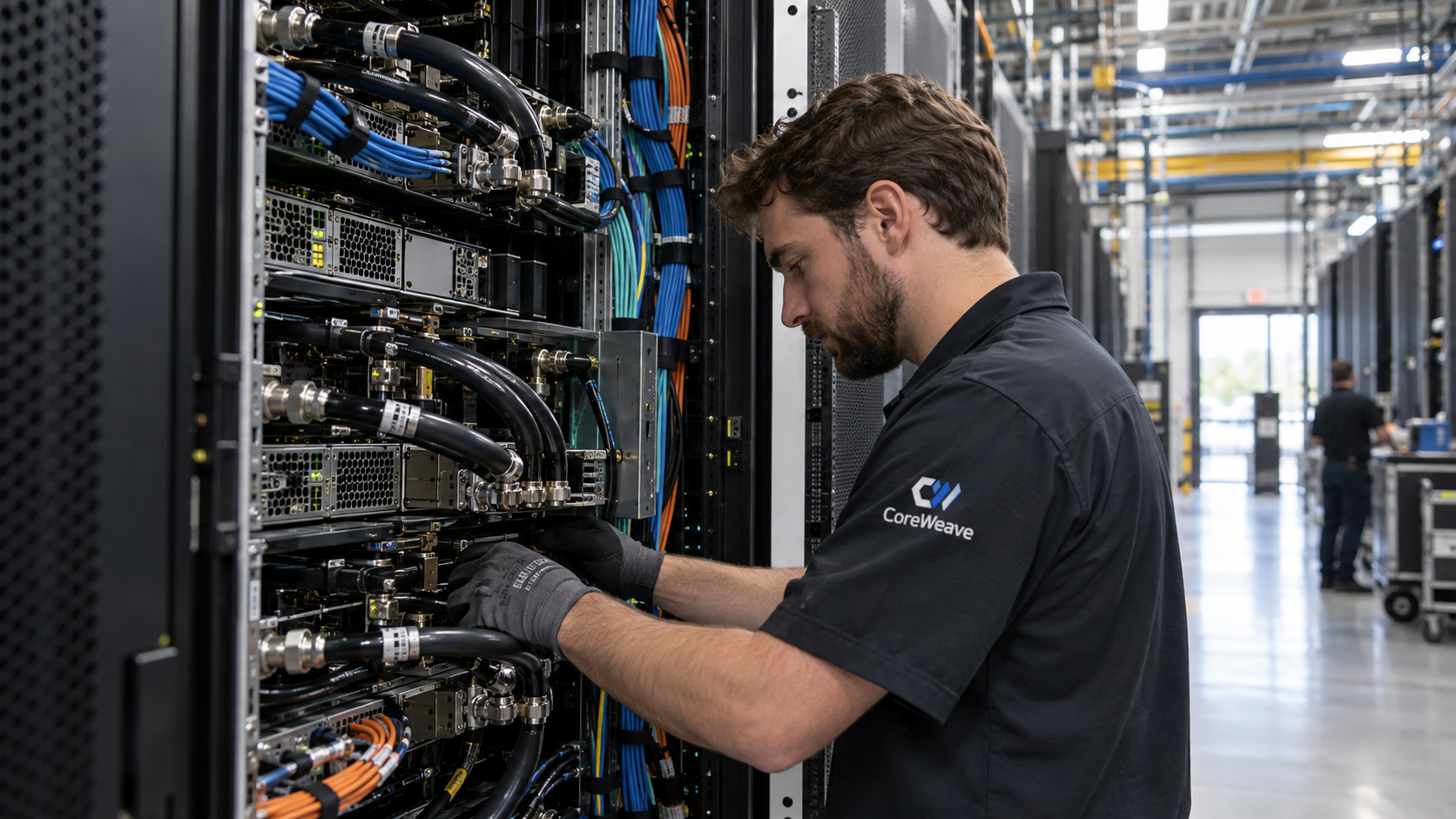
CoreWeave, the AI cloud provider at the center of the debt worries, fell to a 52-week low of $59.51 in the morning, about 9.5% under Wednesday's close of $65.78. It then rallied to about $68, roughly 14% off the low and up about 3% for the day. Oracle gained about 3%. Default-swap prices for both had reached records earlier this week.
The bond market is pricing CoreWeave as a stressed borrower. The yield on its notes due 2031, issued in April, rose above 16% on Thursday, and default protection near 1,000 basis points implies roughly a 63% chance of default within five years. The company is disputing that read: Chief Executive Mike Intrator told employees in an internal memo on Wednesday that CoreWeave's deal backlog more than covers its debt obligations, according to a report on the memo.
The test that mattered
The more telling move came in diversified credit. The iShares iBoxx investment-grade corporate bond ETF rose about 0.8% and the iShares high-yield fund about 0.4%, as the 10-year Treasury yield fell to near 5.09% from Wednesday's 5.19% close. If concern about AI borrowers were spreading to corporate credit at large, those funds would be expected to lag Treasuries or fall. They did neither.
That leaves the stress concentrated, for now, in a small group of heavily indebted AI infrastructure builders rather than in corporate borrowers generally.
Stocks round-trip
Equities followed a similar arc. The Nasdaq Composite dropped about 1.4% to 26,308.85 in the morning, near a one-month low, then recovered to roughly flat at about 26,678 by 1:45 p.m. Eastern. The S&P 500 was up about 0.3% and the Dow about 1%. Chipmakers did not fully recover: the VanEck Semiconductor ETF was still down about 1.7%. Semtech fell about 14% on the day of its AI data-center investor event, and Vertiv, which supplies power and cooling equipment for data centers, fell about 6%.
Where the money went
Investors rotated into sectors that gain when rates fall. Homebuilder shares rose about 4.1%, a bank ETF about 1.6% and the Russell 2000 about 0.9%, while energy shares slipped about 1.6%. The small-cap swing was the widest: the Russell 2000 had opened down about 1.9%. Defensive stocks also drew money, with consumer staples up about 2% by late morning and close to 9% for October, the best of any large-cap sector this month.
The homebuilder rally came with mortgage costs still high. The average 30-year fixed mortgage rate was 7.4% in the week through Wednesday, according to Freddie Mac, the highest since late 2023. Buying builders at those rates is a bet on where yields are going, not where they are. Bank results were also released Thursday morning, so the financials' gain cannot be credited to rates alone.
The macro channel
The worry has a macroeconomic dimension. Chicago Fed President Austan Goolsbee has warned that the AI infrastructure buildout may be overheating the economy, and a strategist at Jefferies said a slowdown in AI capital spending "could sharply weaken US growth expectations." If building data centers is a meaningful source of demand, tighter financing for the builders could slow both growth and inflation.
Market implications
The contained reading: diversified bond funds rose, stocks recovered, and investors bought cyclical and rate-sensitive sectors. A handful of borrowers with heavy debt relative to revenue are being repriced, and the rest of the market is treating that as their problem.
The spreading reading: chip stocks stayed down, default protection on the largest technology companies reached records this week, even if at low levels, and the rotation into rate-sensitive sectors is itself a bet that slower growth will bring lower rates.
What to watch
Whether CoreWeave holds above Thursday's $59.51 low, any financing or rating action at CoreWeave or Oracle, and whether the corporate bond funds keep pace with Treasuries. A day when those funds fall while Treasuries rally would be the first sign that the AI credit worry has become a broader credit worry.