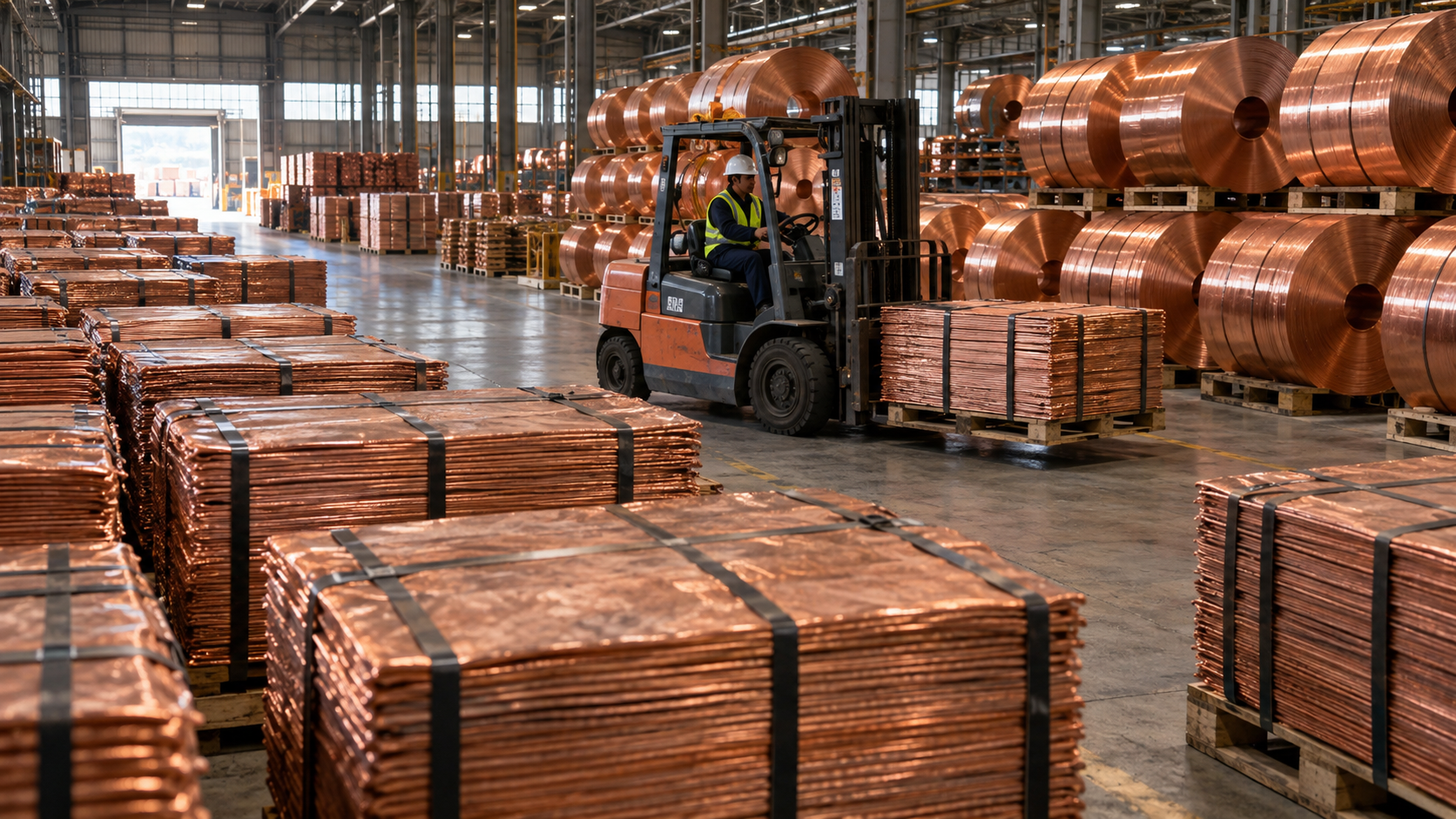
U.S. warehouse inventories have surged, while weaker mine output points to a separate supply constraint.
Copper touched a fresh record of $14,533 a metric ton this week, edging past the previous high of $14,527.50 set in January, according to pricing reported by the Seoul Economic Daily. The move reflects two distinct, compounding pressures rather than a single story.
Two forces behind the rally
The first is tariff-driven stockpiling. Traders have shipped large volumes of copper into the United States ahead of anticipated tariffs, swelling COMEX warehouse inventories from roughly 80,000 tons in February of last year to 695,624 tons currently, a buildup that reflects positioning ahead of a policy deadline rather than underlying demand.
The second, potentially more persistent pressure is weaker mine output. Global copper mine output fell 1.1% in the first half of 2026, with Chilean production, the world's largest source of mined copper, weighed down by operational problems at major mines, declining ore grades and poor weather.
Separating the two matters for how investors should read the rally. A price move driven mainly by stockpiling ahead of a tariff deadline is the kind of gain that can partly reverse once the anticipated policy is in place and inventories work down. A price move driven by a genuine, multi-month decline in mined output is a different and more durable story, tied to the physical difficulty of getting copper out of the ground rather than to trade-policy timing.
The reported record may reflect both forces. Warehouse inventories and mine production will help show whether the rally is sustained by constrained supply or loses momentum as tariff-related positioning eases.