Constellation Brands' fiscal first quarter was less about proving beer demand has fully recovered than showing that the business may be moving past its most difficult phase.
The company beat profit expectations, reaffirmed full-year guidance and posted a return to beer sales growth. Investors bid the stock up nearly 4% after hours. But the numbers underneath the beat were more mixed. Beer depletions stayed slightly negative. Modelo Especial and Corona Extra kept softening. Management repeatedly acknowledged that lower-income shoppers, especially Hispanic households, remain squeezed by inflation, high gas prices and broader economic uncertainty.
The result is a quarter that strengthened the stabilization case without quite closing it.
What the Print Actually Showed
The central investor debate is whether Constellation has reached a turning point or simply delivered a better-than-feared quarter against low expectations.
The reported numbers were good. Net sales fell 3% to $2.43 billion, but adjusted EPS rose 7% to $3.43, well ahead of the $3.20 consensus. Reported EPS came in at $3.79. Management reaffirmed fiscal 2027 comparable EPS guidance of $11.20 to $11.90 and raised reported EPS guidance to $11.50 to $12.20.
Those numbers mattered because expectations had turned cautious. Constellation withdrew its longer-term fiscal 2028 outlook earlier this year, citing a volatile operating environment. Investors came into the quarter looking for another guidance cut or more evidence that beer demand was still weakening.
They got neither.
Beer net sales rose 2%. That followed a 1% gain in the prior quarter, after many quarters of weakness. Shipments rose 1.8%. Pricing stayed favorable. Margins held up better than feared. Combined with the reaffirmed guide, that explains the after-hours rally.
But the demand picture underneath was less clean.
Beer depletions fell 0.3%. That distinction is central to the debate. Shipments and pricing lifted reported revenue. Consumer takeaway at retail has still not returned to growth.
The intra-quarter pattern also mattered. Management said trends started strong in the quarter and then weakened as higher gas prices from the war in Iran hit consumers on top of an already tough multi-year inflation cycle. The pullback hit lower-income households hardest.
Modelo and Corona Are No Longer Carrying the Story Alone
The most important operational shift was where beer growth actually came from.
For years, the Constellation thesis rested on Modelo Especial and Corona Extra delivering steady premium growth regardless of what the broader beer category was doing.
That dynamic is changing.
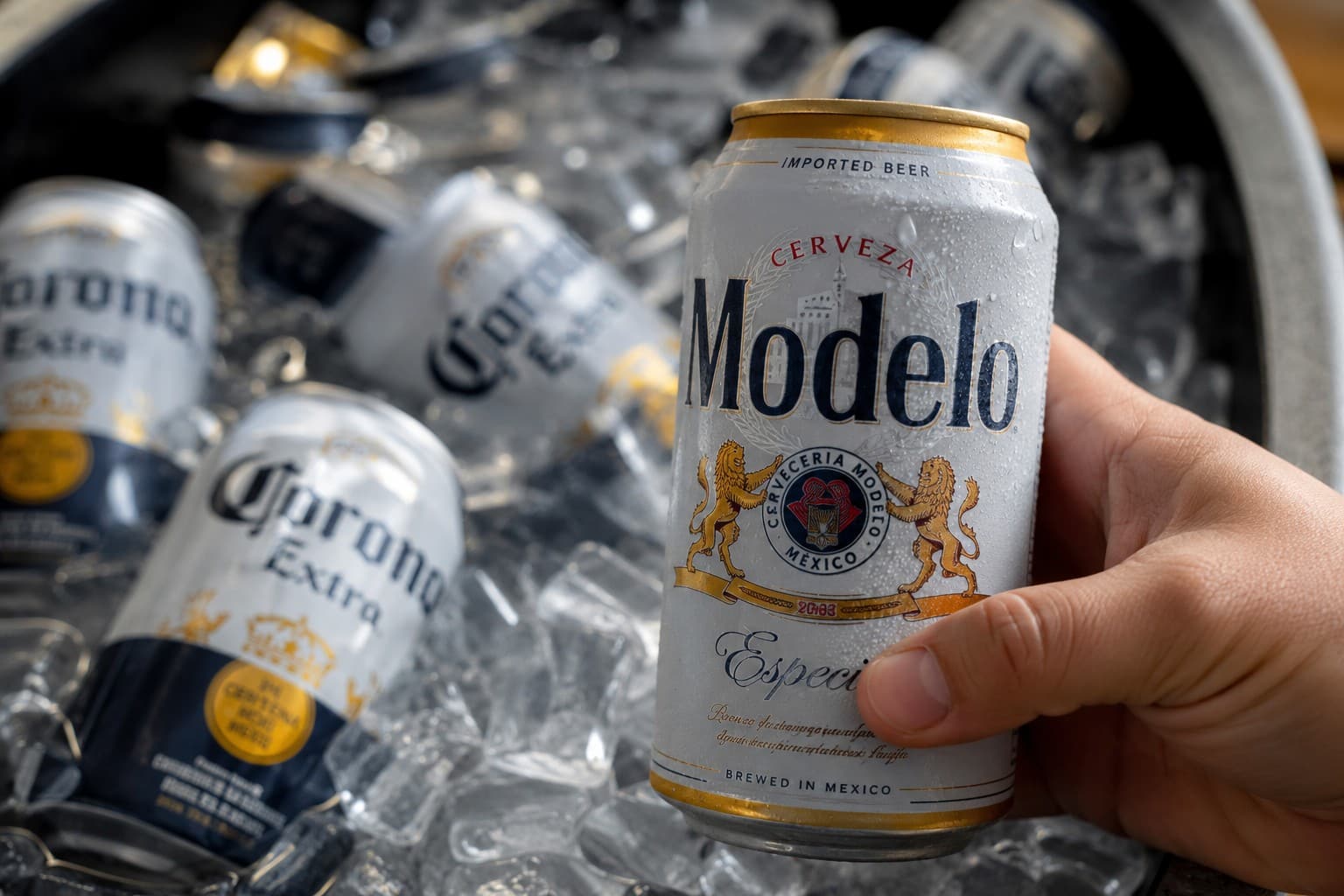
Modelo Especial remained the top US beer brand by dollar sales and kept gaining share. But depletion volumes fell about 2% during the quarter. Corona Extra weakened more, with depletion declines above 5%.
The growth came from elsewhere in the portfolio. Pacifico posted depletion growth of roughly 21%. Victoria grew about 14%, with strong traction among Hispanic consumers aged 21 to 25. Modelo Chelada was up about 6%.
That is encouraging in one way. Constellation is showing that its Mexican beer franchise is broader than its two flagships. The dependence on Modelo and Corona alone is easing.
But investors have to decide whether these faster-growing brands represent real incremental demand or are simply offsetting weakness at the top of the portfolio. That question is not yet settled.
If Modelo and Corona eventually return to positive depletion growth while Pacifico and Victoria keep expanding, the premium beer thesis strengthens meaningfully. If flagship weakness continues, the diversification will look more like it is masking category softness than overcoming it.
Consumer Pressure Eased But Did Not Disappear
Management's discussion of the consumer was the most notable change from prior quarters.
Executives said pressure among Hispanic consumers has moderated compared with recent quarters. They stopped well short of describing conditions as normalized. That matters because Hispanic consumers make up roughly half of Constellation's beer customer base.
The company continued to describe shoppers as value-conscious and picky about discretionary purchases. Higher gas prices, sticky inflation and macro uncertainty remain real headwinds, particularly for lower-income households.
Importantly, management did not suggest premium consumers are broadly trading down. Instead, spending across discretionary categories stayed cautious. That limits category growth even as Constellation keeps gaining share.
The debate has shifted. It is no longer whether Constellation is losing competitive ground. It is whether even category-leading premium brands can fully offset macro pressure on their core consumer.
CEO Nicholas Fink, who took over in April, sounded more constructive about future demand catalysts than in prior quarters. He said he sees "significant runway to continue growing our leading brands with an even greater emphasis on understanding consumer occasions and relevance." He also flagged "white spaces where we have a right to win" in adjacent categories.
Outside management, RBC Capital Markets sees the FIFA World Cup and moderation in oil prices as demand catalysts later in the fiscal year. Those remain possibilities, not embedded assumptions.
The Portfolio Cleanup Is Improving Earnings Quality
Outside beer, Constellation's portfolio reshaping continued to change how the reported numbers look.
Wine and spirits revenue dropped 47% after last year's divestitures, making the total company revenue picture look worse than the underlying trend.
On an organic basis, wine and spirits net sales grew 8%. Depletions grew about 6.6%. Mi CAMPO Tequila stood out, with depletion growth above 60%. That supports management's strategy of concentrating resources behind higher-growth premium brands rather than holding on to lower-return wine assets.
The portfolio cleanup is starting to lift earnings quality even as it drags on reported revenue growth. The company is also targeting more than $200 million in yearly cost savings by fiscal 2028.
Margins got real help this quarter. Constellation's products were removed from President Trump's 50% aluminum tariff effective April 6, easing a meaningful cost pressure. Continued productivity work and pricing discipline added support. Beer operating margins stayed roughly stable despite ongoing marketing investment.
That combination — cost relief, pricing resilience and a simpler premium portfolio — is why earnings comfortably outpaced revenue growth.
Relief Is Not the Same as Recovery
The market's reaction reflected relief more than renewed conviction.
Constellation showed that earnings are resilient, pricing power has not broken, guidance is intact and the beer business may be stabilizing after several tough quarters.
It did not eliminate the main concerns weighing on the stock.
Beer depletions are still negative. Modelo Especial and Corona Extra have yet to return to real volume growth. Lower-income and Hispanic consumers remain under pressure. Category demand is subdued. Visibility beyond fiscal 2027 is limited after management pulled the fiscal 2028 outlook.
The stock context matters too. Constellation shares closed at $139 in regular trading, roughly flat for the year but well below their 52-week high. The stock has lost ground over the past three months. Investors are not repricing a hot growth story. They are cautiously reassessing what kind of recovery arc is actually available.
What changed this quarter was not the fundamental narrative but investor confidence in the downside. That is real, but limited.
The quarter suggests Constellation's premium Mexican beer franchise is structurally strong enough to defend margins, keep pricing power and keep gaining share against a challenging consumer backdrop. It does not yet show that consumer demand has recovered enough to restore the historical growth rate.
That leaves the central debate intact, on more favorable terms for the bulls.
The burden of proof has shifted. It is no longer whether the business is getting worse. It is whether stabilization can turn into sustained positive depletion growth. Until Modelo Especial and Corona Extra return to consistent volume expansion alongside improving consumer demand, one better beer quarter is not yet enough. Two would be more convincing.