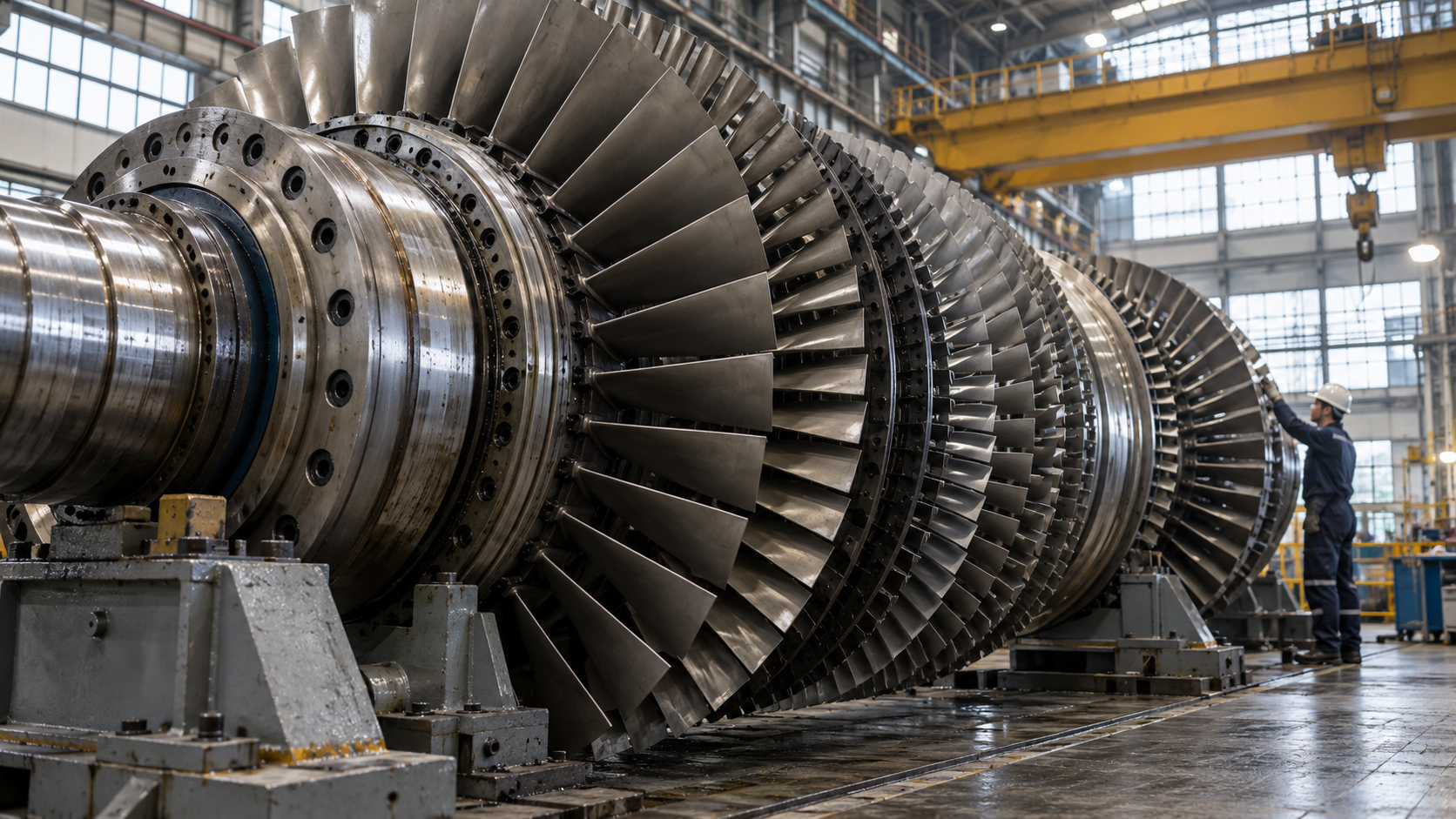
The AI selloff reached well beyond semiconductors, with GE Vernova, Vistra and Bloom Energy down more than 10%. Small caps were nearly flat and health care rose, a sign that the damage was concentrated rather than broad.
Thursday's slide in AI-related stocks was not just a chip story. Some of the steepest losses came in companies that supply electricity and power equipment to data centers.
By about 1:42 p.m. Eastern, GE Vernova was down 11.5%, Bloom Energy 10.7% and Vistra 10.5%. Those declines matched or exceeded the drop in the iShares Semiconductor ETF, which fell 6%. Optical-component maker Lumentum lost 10.3%, CoreWeave 10.2% and Lam Research 11.1%.
Memory and storage names fell hard too: SanDisk dropped 8.7%, Seagate 8.1% and Western Digital, which reports after the close, 6.8%. Among the largest chipmakers, AMD was down 7.4%, Intel 7%, Micron 5.4% and Nvidia 4.1%.
The Invesco QQQ Trust fell 2.6%.
Worse in the session than before it
The selling followed Wednesday evening's results from Meta Platforms, Tesla, IBM and Lam Research, and it deepened once regular trading began. MarketWatch tied the chip selling to Tesla's cut to its near-term spending target and Lam's forecast; Bloomberg pointed to oil and Meta's results. Lam, which had been indicated about 8% lower before dawn, was down 11% by early afternoon. KLA's 8.6% loss was about double its early indication; Applied Materials fell 7%, from about 5% before dawn.
Lam's own call offered more specific reasons than sentiment. Management said its December-quarter guidance would have been a bit higher without supply constraints, that some delayed shipments move into March, and that China, 35% of September-quarter revenue, will be meaningfully down in December, according to accounts of the call. Its revenue guidance midpoint of $8.60 billion was still above one consensus estimate of about $8.54 billion, so positioning may also have played a part.
Power and data-center names were not late to the selloff. GE Vernova, Vistra and Bloom Energy were already down about 3% to 5% before the open, roughly in line with chip-equipment makers. The regular session roughly doubled or tripled those losses.
One trade, many exposures
The common thread across chips, memory, optics, turbines, independent power producers and fuel cells is that all have been bought as beneficiaries of data-center construction. Their actual businesses differ widely. A power producer's earnings depend on electricity prices and contracts; a chip-equipment maker's depend on fab spending. When they fall together, it usually means investors are trimming a theme rather than reassessing each company.
CoreWeave, at about $55.54, traded within a few cents of its 52-week low at 1:42 p.m. Blackstone President Jon Gray said on Thursday that CoreWeave would "find a way through" the financing pressure on the company.
Rotation, not retreat
The damage was narrow. The Russell 2000 slipped only 0.2%. The S&P 500 fell 1.3%, roughly half the Nasdaq's decline. The Health Care Select Sector SPDR Fund rose 1.2%, with Eli Lilly up 3.6% and Bristol Myers Squibb up 3.3%. Procter & Gamble jumped 5.9% after its results, and Kimberly-Clark, Colgate-Palmolive and Coca-Cola also rose. Bank and homebuilder ETFs climbed as long-term Treasury yields fell.
That pattern looks more like rotation out of crowded AI positions than a wholesale retreat from risk.
What to watch
Western Digital reports after Thursday's close. Microsoft and Alphabet report on Oct. 28 and Amazon on Oct. 29, and their capital-spending plans will do more to settle the debate than any single supplier's guidance. Persistence matters too: one session of selling in a crowded trade can reverse quickly.