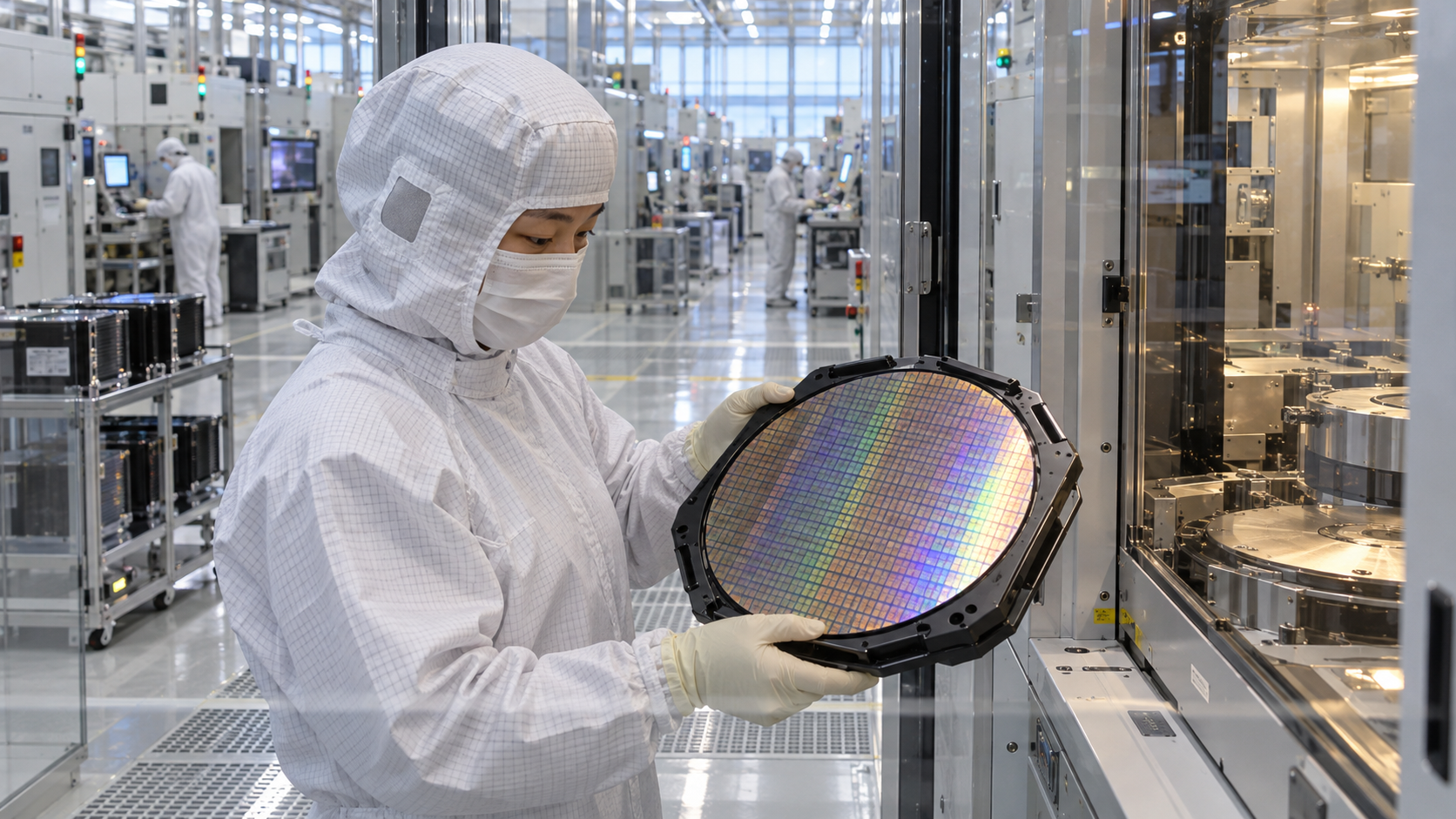
The Philadelphia Semiconductor Index rose about 1.8% and the Nasdaq about 1.1% by early afternoon, led by memory makers and Amazon. Treasury yields climbed at the same time, breaking last week's pattern, while CoreWeave fell about 2.6% despite an upgrade and banks and utilities lagged.
After the chip index's worst week since April 2025, Monday's rebound was broad. It was also selective in a way that says something about where investors see risk.
The Philadelphia Semiconductor Index rose about 1.8% to about 11,333 by 1:48 p.m. Eastern, after falling 11.4% last week and closing lower for eight straight sessions. The Nasdaq Composite gained about 1.1% and the S&P 500 about 0.5%. Memory makers led, with SanDisk up about 5.6% and Micron about 2.7%. AMD rose about 2.1%, and Intel gained about 2.6% after an upgrade from JPMorgan.
Amazon rose nearly 5% after Morgan Stanley named it a top pick with a $350 price target, citing expected 47% growth at its cloud unit in 2027. Separately, Amazon is part of a plan with X-energy and American Electric Power for 12 small modular reactors at a former coal plant site in Indiana. Datadog rose about 6.4% after Bernstein upgraded it to Outperform.
The exception
CoreWeave, the AI cloud provider at the center of last week's financing worries, fell about 2.6% to about $60, even though Goldman Sachs upgraded it to Buy. The stock fell about 12% on Friday.
The divergence fits the debate behind the selloff. Investors have been asking less whether AI demand is real and more who is paying for the build-out, and on what terms. The largest cloud providers have deep cash flows, though they too have turned to the bond market: Amazon, Alphabet, Meta and Oracle sold about $194 billion of bonds this year through early July. CoreWeave relies far more on borrowed money relative to its size. A rebound that lifts the first group while leaving the second behind suggests the financing question has not gone away.
Yields rose with stocks
Last week, falling stocks and falling yields moved together as investors sought shelter in bonds. On Monday, the 10-year Treasury yield traded about 5 basis points above Friday's close, at about 5.14% in early afternoon, while stocks climbed. The relationship that many investors had come to expect, in which rising yields pressure the AI trade, did not hold on the day.
Not every corner joined in. Regional banks slipped about 0.6%, JPMorgan about 1% and Wells Fargo about 1.9%. Power producers and utilities were among the S&P 500's laggards, with NRG Energy down about 4.1%, Eversource about 3.8% and Constellation Energy about 2.9%.
Three views on the tape
Peter Tchir of Academy Securities said he is "nervous" about a potential selloff in AI-related debt and warned of "faux liquidity." Ed Yardeni of Yardeni Research described bond investors as "regulating" the AI trade. Max Kettner of HSBC called it "an incredibly technically-driven market."
Market implications
One reading is that the eight-session slide reset positioning and valuations, nothing more. Demand indicators have not changed, analysts are upgrading leaders, and the rebound can continue as long as earnings this week confirm spending plans.
A second reading is that the market is sorting AI companies by balance-sheet strength. Companies with deep cash flows recover, while more leveraged builders lag, and higher yields will keep widening that gap.
What to watch
Whether the chip index closes higher, ending its losing streak; Netflix's results on Tuesday; Meta's and Tesla's on Wednesday, especially any change to Meta's capital spending forecast; credit spreads on AI-related debt; and CoreWeave's trading relative to the chip index. A Meta spending increase alongside yields above 5% would sharpen the financing question rather than settle it.