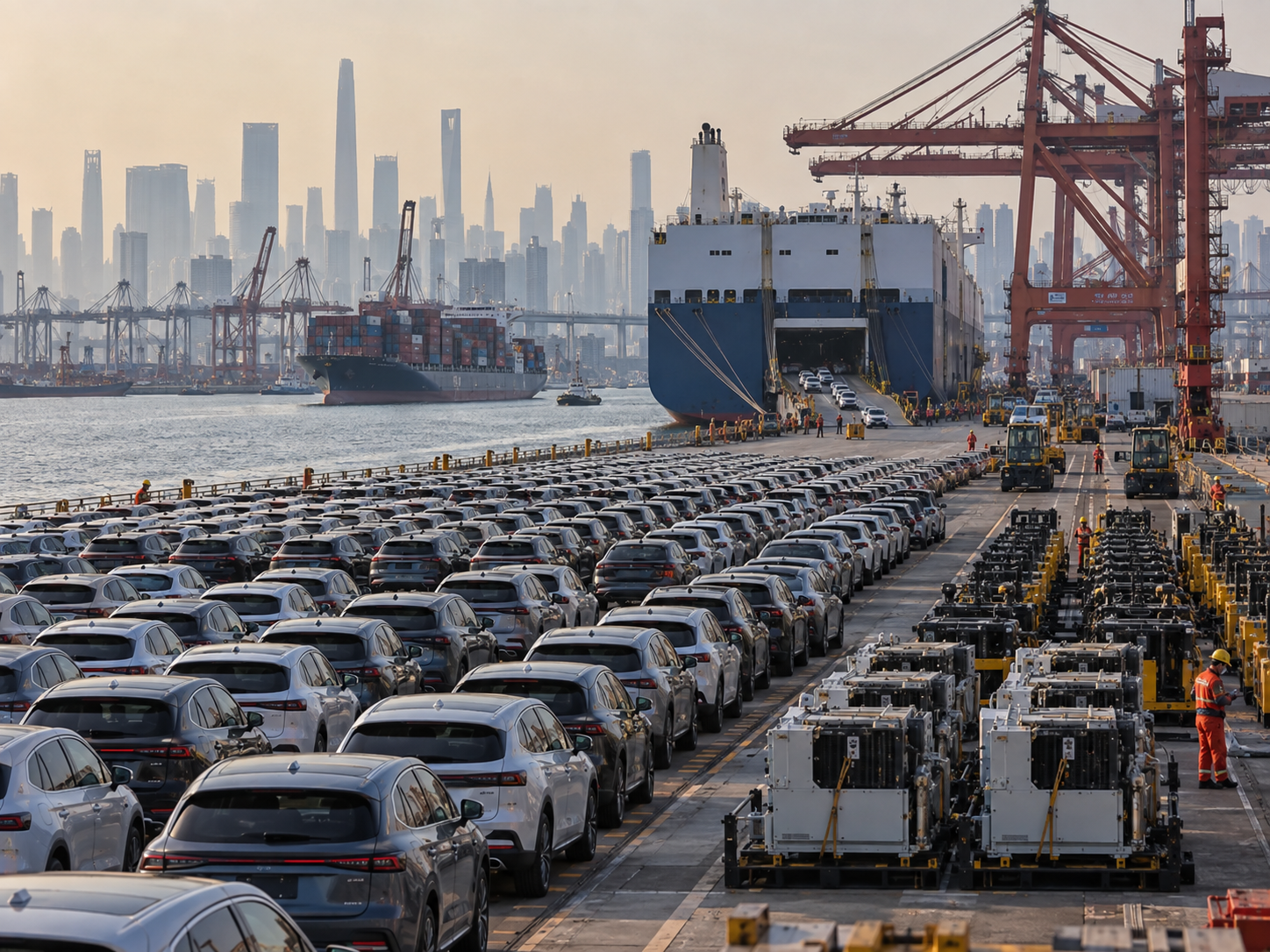
August exports rose 25% from a year earlier, extending a run built on electric vehicles, industrial machinery and semiconductors, even as the strength of import demand is read differently depending on the comparison used.
China's August trade data showed exports rising 25% from a year earlier, up from 23.9% growth in July, while imports rose 28.2%, up from 27.5% the prior month. The trade surplus widened to $119.1 billion from $112.5 billion in July.
Electric vehicles, industrial machinery, semiconductors and AI infrastructure were the leading drivers. "China has moved aggressively up the value chain and has become a major player in AI infrastructure and industrial automation," strategist Chi Lo said.
The strength sits alongside a softer domestic picture. Real estate continues to weigh on demand at home, and the government has injected a reported $54 billion into state financial institutions. Exporters have also been diversifying where they sell, pushing further into Southeast Asia, Latin America and Africa rather than relying as heavily on the U.S. and Europe.
A meeting between President Trump and Chinese leader Xi Jinping is reportedly planned for late September in Washington, with trade expected to be high on the agenda. The trade data gives both sides fresh numbers to bring into that conversation: a Chinese export machine still accelerating despite a year of tariff pressure from its largest trading partner, and an import figure whose strength depends on which comparison point you credit.
For investors, the headline number is straightforward. China's export engine, powered increasingly by higher-value goods rather than the cheap manufactured exports that once defined its trade profile, kept accelerating in August. Whether that resilience extends to the companies and countries now absorbing a bigger share of Chinese exports, from Southeast Asian manufacturers to Latin American commodity buyers, is the next question the diversification trend raises, one that will only sharpen if the Trump-Xi meeting fails to ease the underlying tariff dispute.