The central bank added gold for a 23rd straight month, and customs data show a record $158.8 billion of imports through August. U.S. yields above 5% are still winning the argument on price.
China's gold imports are running at a record value. That has not been enough to stop the price from falling.
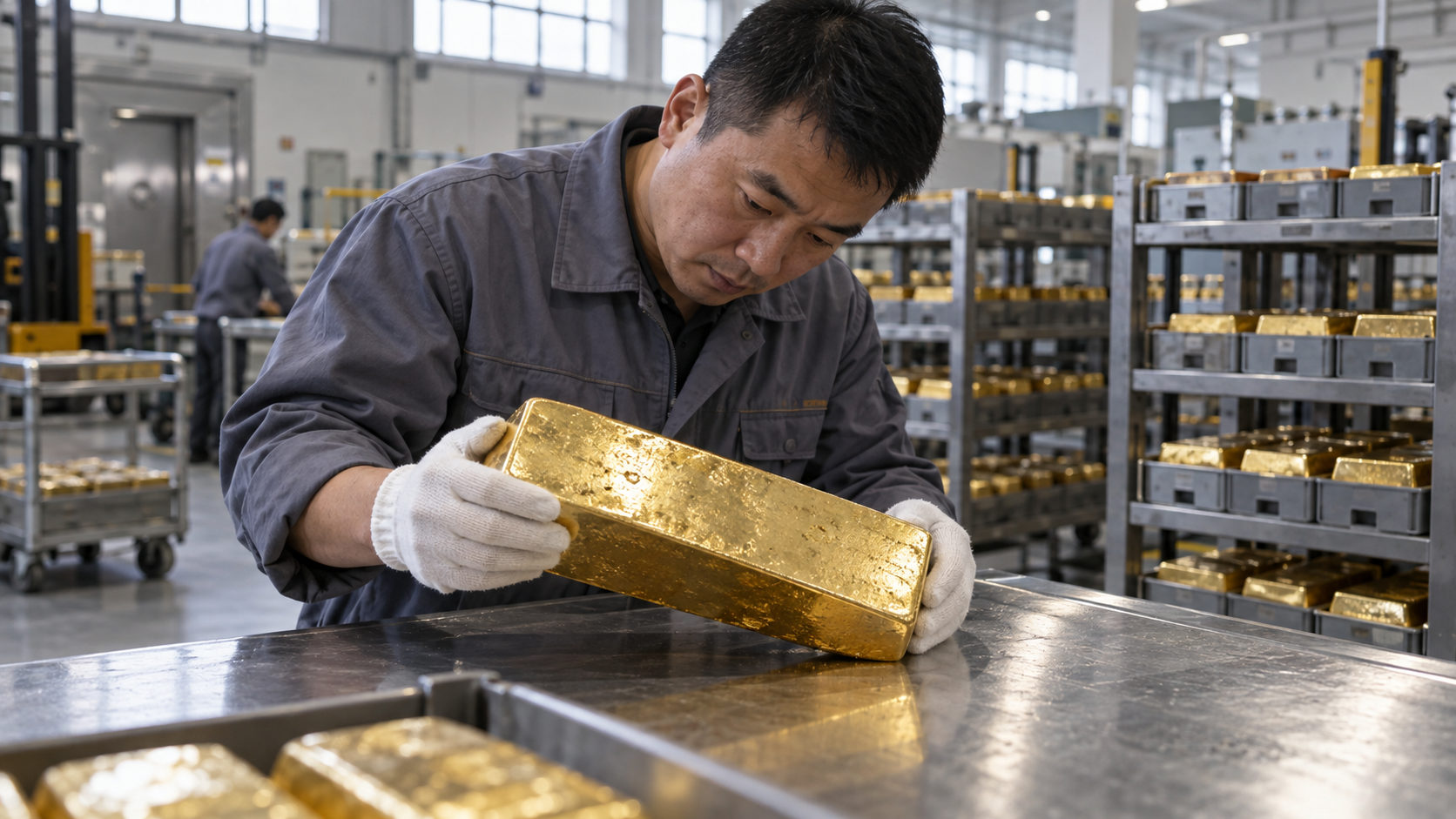
The People's Bank of China added to its gold reserves in September, extending its buying streak to 23 consecutive months. Chinese customs data show imports of 1,141 metric tons in the first eight months of 2026, worth a record $158.8 billion. In all of 2025, China imported 886 tons worth $96.5 billion.
That means the country has already brought in about 29% more gold by weight than in the whole of last year, with four months still to go. By value, eight months of imports are about 65% larger than the 2025 total, reflecting how much higher prices are.
The price
Gold futures traded near $4,201 an ounce at about 4:30 a.m. Eastern on Monday, down about 0.4%. The metal fell 8.5% in September, according to the World Gold Council, the month the Federal Reserve raised interest rates for the first time since 2023 and the 10-year Treasury yield pushed above 5%.
The tension is a familiar one. Gold pays no interest, so when safe government bonds yield more than 5%, holding it costs investors more in forgone income. In China, the calculation runs the other way. One-year Chinese government bonds yield about 1.2%, against about 4.46% for a one-year Treasury, according to Saxo Bank, so the income a Chinese saver gives up by owning gold is small.
Two kinds of buyer
The central bank and the country's importers are both buying, and neither appears to be reacting to U.S. yields. The central bank kept adding in a month when the price fell sharply, and imports set a record in a year when prices were far higher than in 2025.
The selling that drove September's decline came from investors who do weigh those yields. With a 5% Treasury on offer, it was large enough to outweigh Chinese demand.
The forecasts
Some strategists expect the Chinese bid to win over time. State Street's base case, to which it now assigns a 60% probability, has gold at $4,750 to $5,500 an ounce by the end of the first quarter of 2027, a gain of 13% to 31% from Monday's early price.
Two readings
One reading is that Chinese official and private demand has built a structural floor under the price. Buying at a record pace while the metal falls suggests that weakness is being absorbed, and any decline in U.S. yields would remove the main source of selling.
The other is that the floor has not held. An 8.5% fall in a month, during record Chinese imports, shows that real yields outside China still set the price, and with the Fed weighing another increase, that pressure has not gone away.
What to watch
Wednesday's consumer price report will move U.S. yields and with them the cost of holding gold. China's October reserve data, due early next month, will show whether the central bank kept buying on the dip.