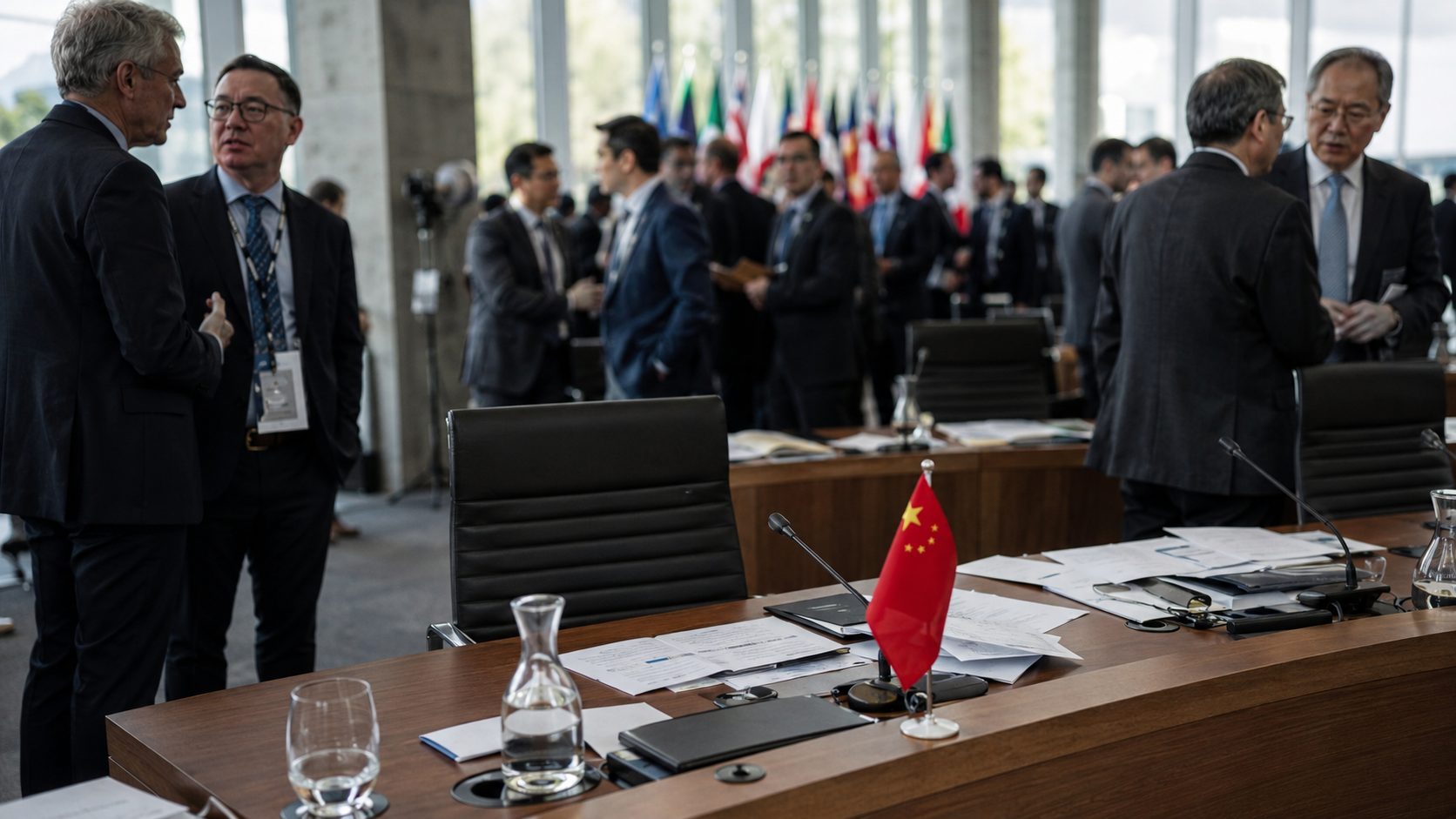
The G20 finance ministers left their meeting without a joint communique after China rejected language the other nineteen members accepted. Treasury Secretary Scott Bessent framed the split as vindication for warnings he has made for years.
The G20 finance ministers' meeting closed without a joint communique after China rejected proposed language the other 19 members accepted, spanning four areas: Strait of Hormuz and conflict-related language, provisions on global economic imbalances and export reliance, calls for greater IMF scrutiny, and language on sovereign-debt restructuring.
Bessent characterized the near-unanimity as notable in its own right: "I do think it is incredible to get 19 countries to agree to anything." On China specifically, whose 2025 current-account surplus was cited at $1.2 trillion, he framed his own prior warnings as vindicated: "unfortunately, I was right. The rest of the world probably needs to take a hard look at what they should be doing to protect their citizens' jobs."
Bessent separately previewed the September 24 meeting between President Trump and Chinese President Xi Jinping, saying it would include discussion of artificial intelligence policy, specifically guardrails meant to prevent non-state actors from developing independent AI models. That is a distinct agenda item from the trade dispute, and nothing in Bessent's public remarks connects the two topics. He also defended continued G20 engagement with Russia despite the war in Ukraine: "if the sides don't talk, if we are not engaged, then how can it be solved?" Beijing has not publicly responded to Bessent's characterization of its trade practices.
The investor question is whether near-unanimous agreement that China's export model is unsustainable translates into coordinated action or stays at the level of rhetoric. Nineteen of twenty G20 members accepting the same language is a meaningful diplomatic data point, one with implications for Chinese exporters, import-competing manufacturers elsewhere, and the renminbi if it eventually hardens into coordinated trade-defense measures. But a finance-ministers-level communique failure is, on its own, a comparatively low-cost outcome, and without a confirmed link between this dispute and the upcoming Trump-Xi summit, it remains an open question whether this friction moves from rhetoric to policy.