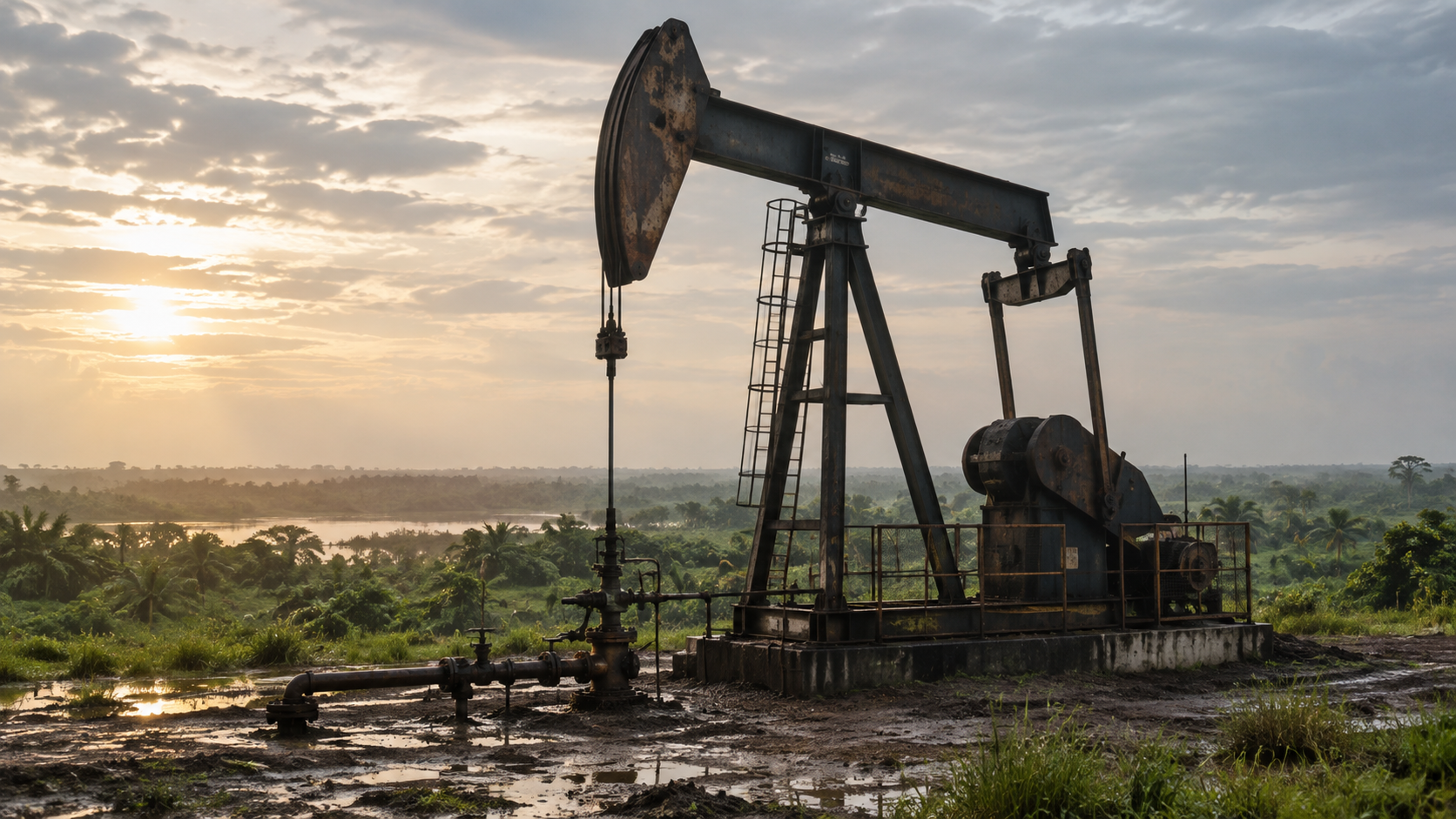
A heavy-crude expansion announced at the start of the month now sits inside a very different price environment, and inside a diesel shortage the barrels it produces are specifically suited to relieve.
Chevron announced a roughly $7 billion expansion of its Orinoco Belt operations in Venezuela at the beginning of September. Nothing about the project has changed since. Everything around it has.
When the expansion was announced, Brent was well below $100. It traded above $107 through Monday's session. U.S. diesel set a record on Friday at $6.05 a gallon, more than 60% above its level a year earlier. Saudi Arabia's East-West pipeline has been offline since , and the diplomatic track meant to ease transit risk through the Strait of Hormuz failed to convene on its first scheduled date.
Why the grade matters here
Orinoco produces extra-heavy sour crude. That grade trades at a discount to Brent, and the discount is the entire commercial logic of the asset. It is also the grade that a significant share of U.S. Gulf Coast refining capacity was configured decades ago to process, which is why Venezuelan barrels have historically had a natural home despite the quality penalty.
The relevance of that configuration right now is the diesel print. Heavier, sour crudes yield proportionally more distillate than light sweet grades do, which makes them the more useful barrel in a market where the distillate crack is the problem and gasoline is not.
A project announced on one set of price assumptions is now being built into a market that has moved in its favor on both the absolute price and the product mix.
The parts that have not moved
Nothing in the expansion changes its central constraint, which is political rather than geological. Venezuelan production operates inside a sanctions framework that has been adjusted repeatedly, and a multi-billion-dollar development commitment in that jurisdiction carries a risk that no commodity price improves.
There has also been no disclosed production target, timeline, or first-oil date attached to the expansion, which means the barrels involved cannot be placed on any supply curve that matters to this quarter's prices.
What it would take to matter
For this to become a supply story rather than a capital-allocation story, two things have to happen. Chevron has to disclose volumes and a schedule. And the sanctions posture has to hold long enough for the schedule to be credible. Until then, the expansion is best read as a statement about where Chevron thinks heavy sour crude economics are going, made shortly before the market moved to agree with it.