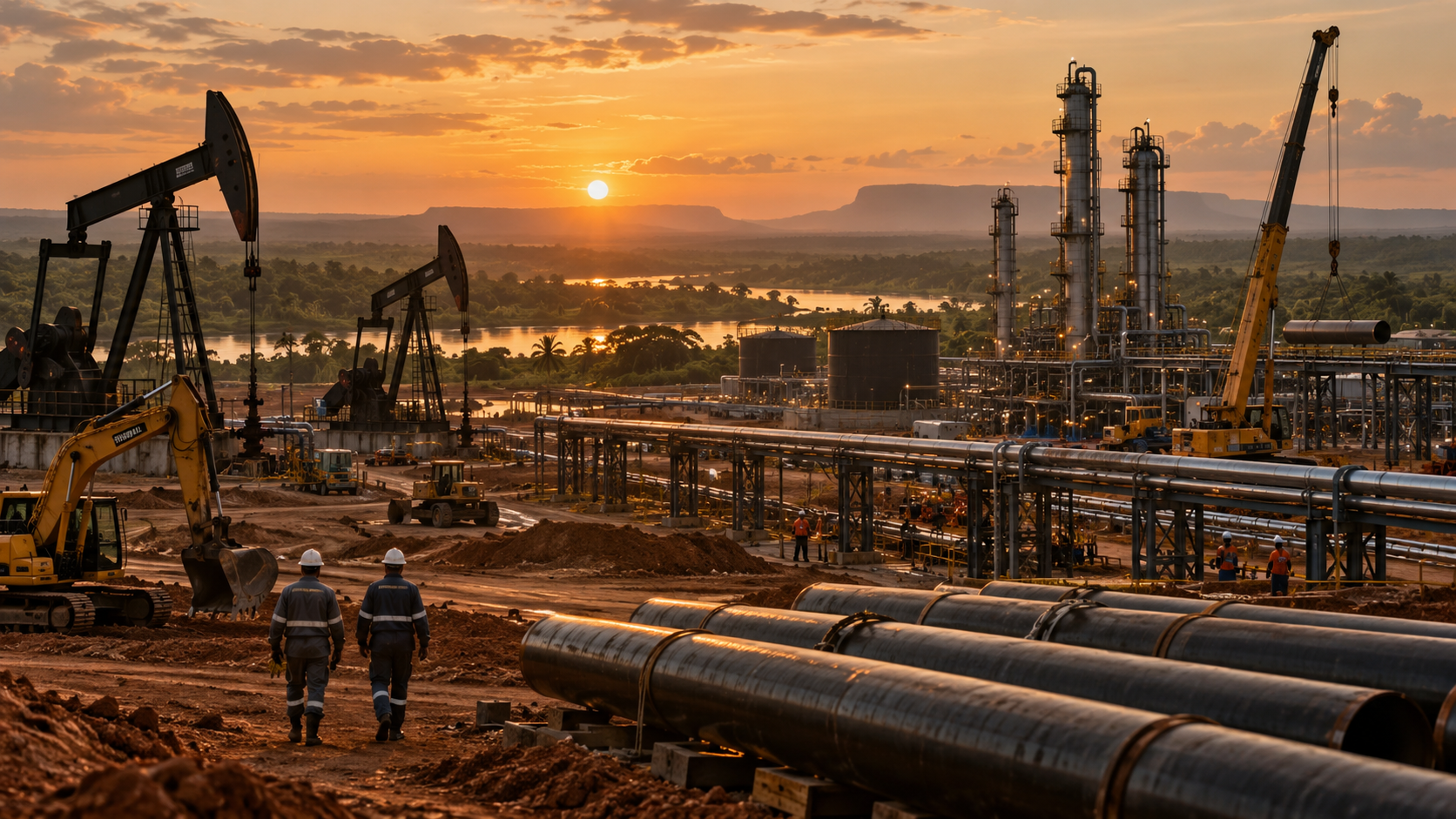
A production target of 600,000 barrels a day by 2031 gives the agreement a duration that outlasts any single administration's sanctions posture.
Chevron, working with Italy's Eni, has confirmed an agreement to expand its oil operations in Venezuela, following a separate U.S. and Venezuela oil arrangement reached in the same period. Chevron's stated target is production of 600,000 barrels a day from Venezuela by 2031.
That target is the most important number in the agreement, and not because of the barrels.
A five-year commitment in a one-election environment
Venezuela's oil sector has been a sanctions instrument for most of a decade, with licences granted, narrowed and revoked according to the political posture of the moment. A company committing capital to a 2031 production target is making an implicit judgment that the current framework survives at least one change of U.S. administration.
Independent analysis has flagged the target as carrying material execution risk, and the reasons are physical rather than political. Venezuelan heavy crude requires diluent, specialised upgrading capacity and functioning export infrastructure, all of which have degraded substantially through years of underinvestment. Restoring output at that scale is a multi-year capital programme, not a matter of reopening valves.
Why the timing is notable
The agreement lands while crude trades above $100 a barrel, Gulf export infrastructure is disrupted, and the distillate market is running roughly four weeks of supply cover. Venezuelan heavy crude is a feedstock that U.S. Gulf Coast refineries are specifically configured to run, and those refineries are currently earning crack spreads near record levels.
That is a rational commercial moment to commit to a difficult barrel. It is also a moment when the political cost of doing business in Caracas is lower than it has been, because the alternative barrels are expensive and constrained.
What would confirm or break it
Production data. A target for 2031 produces no evidence for years, but the interim markers are observable: diluent import volumes, rig counts in the Orinoco belt, and export cargoes lifting to U.S. Gulf Coast destinations.
The other variable is the sanctions framework itself, which no company controls. Chevron has operated in Venezuela through multiple licence regimes and has become practiced at structuring around them. That experience is the strongest argument that this commitment is more durable than the political environment it was signed into.