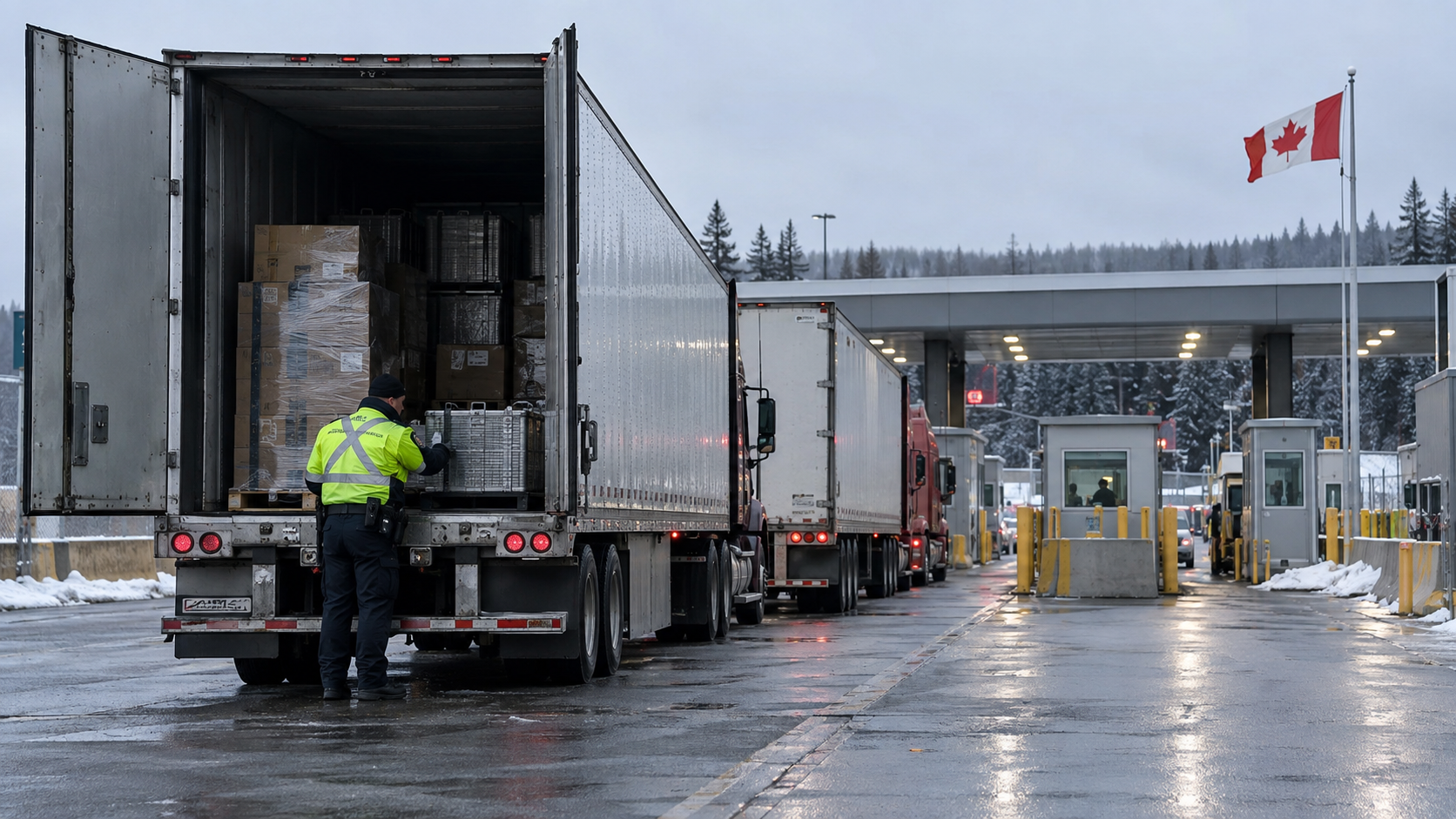
Duties covering C$27.6 billion in trade add uncertainty for exporters as oil prices climb.
Canada's counter-tariffs on U.S. imports took effect at 12:01 a.m. Tuesday, converting a months-long trade standoff into active policy. The measures, published by Canada's Department of Finance, impose duties of 15%, 25% and 50% depending on the product, matched to corresponding U.S. tariff levels, and target steel, dairy, appliances, agricultural equipment, pulp and paper, and electronics. Canada's government put the total value of the affected trade at C$27.6 billion.
The tariffs followed the breakdown of trade talks between the two countries over the summer. U.S. markets absorbed the news alongside a separate, unrelated shock Tuesday, Houthi strikes on Saudi energy infrastructure that pushed oil toward $100 a barrel, and major indexes traded lower in the reported snapshot: the Dow fell 0.95%, the S&P 500 slipped 0.36% and the Nasdaq eased 0.36%, with the CBOE volatility index up more than 2.5%. Market commentary attributed the day's softness to a combination of the tariff implementation, rising oil prices and Middle East tensions, without isolating a single cause, and there is no clean way to separate how much of the day's decline belongs to tariffs alone.
Who bears the cost?
Canada’s tariffs are imposed on imports entering Canada. The direct duty falls on the importer, while U.S. exporters could face weaker demand, pressure to cut prices or narrower margins. The effect on consumer prices depends on how businesses absorb or pass through the added cost.
The measures add to uncertainty alongside the energy shock, but neither September development will appear in Friday’s August CPI report. Any inflation effects would emerge in later data, with their size and location still unclear.
What isn't yet clear is how large the practical impact will be. The tariffs cover a defined list of product categories rather than the full trade relationship between the two countries, and the first real evidence of their bite, in trade-flow data, corporate disclosures or the inflation numbers themselves, has not yet arrived.