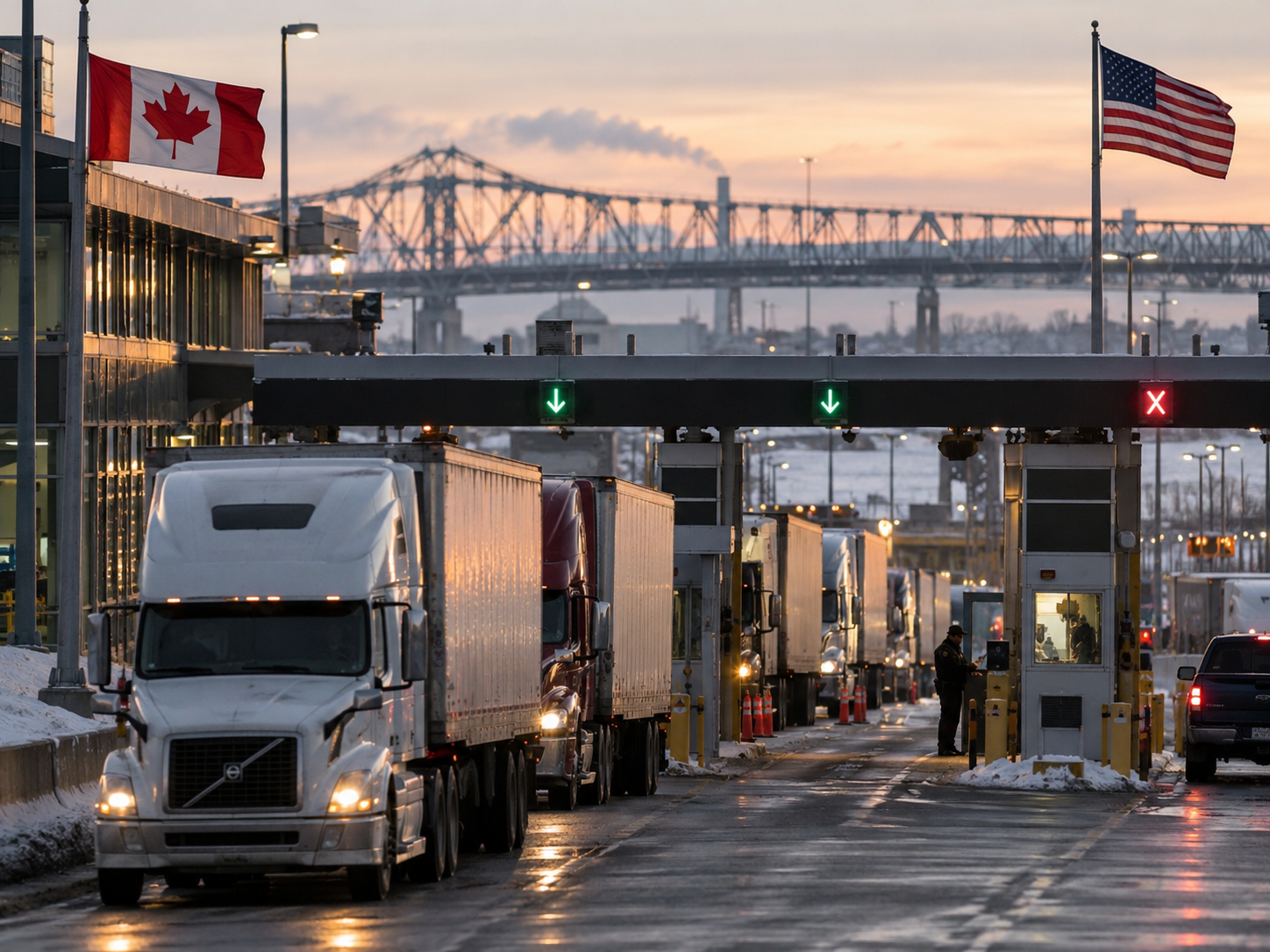
Ottawa matched Washington's tariffs dollar for dollar on C$27.6 billion of goods, and one economist has now put a number on what it costs Canadian households.
Canada's counter-tariffs on the United States took effect at 12:01 a.m. Tuesday, matching a 50% U.S. tariff on C$27.6 billion of Canadian goods that took effect August 22. The Department of Finance applied three rates, 15%, 25% and 50%, to roughly 700 categories of U.S. imports eligible under CUSMA origin rules, including dairy, steel, aluminum, lumber, pulp and paper, textiles, agricultural equipment, appliances, electronics and cosmetics. Goods already in transit on the effective date are exempt, and fish and seafood were removed from the list to protect that Canadian industry.
Ottawa's framing has been explicit about matching, not escalating: it applies the same rate the U.S. applies to the equivalent product, dollar for dollar, rather than a higher one.
Economist Trevor Tombe has put a concrete figure on what that means for households: roughly C$4 billion in added economy-wide costs, a 0.25% rise in average consumer prices, and about C$250 a year in added spending for a family with children. Households earning under C$30,000 a year could lose more than 0.5% of disposable income, according to his estimate.
Prime Minister Mark Carney has kept the door open to a resolution. Trade talks could resume, he has said, "when the Americans stop doing memes, stop throwing shade, stop trying to be tough," calling the U.S. mockery of Canada "beneath their office."
Markets have not shown a clear reaction to Tuesday's implementation yet, and Washington has not responded to the tariffs taking effect.
What makes today different from the threat that preceded it is that the tariffs are now a real cost, not a bargaining chip. Dairy processors, lumber and paper mills, appliance makers and steel producers on both sides of the border are now operating under tariffs of up to 50%, and Tombe's household-cost estimate turns an abstract trade dispute into a number Canadian consumers can see in their own budgets. Whether that number grows depends on whether Washington responds in kind or whether Tuesday's implementation, structured to mirror rather than exceed the U.S. action, proves to be the dispute's high-water mark.