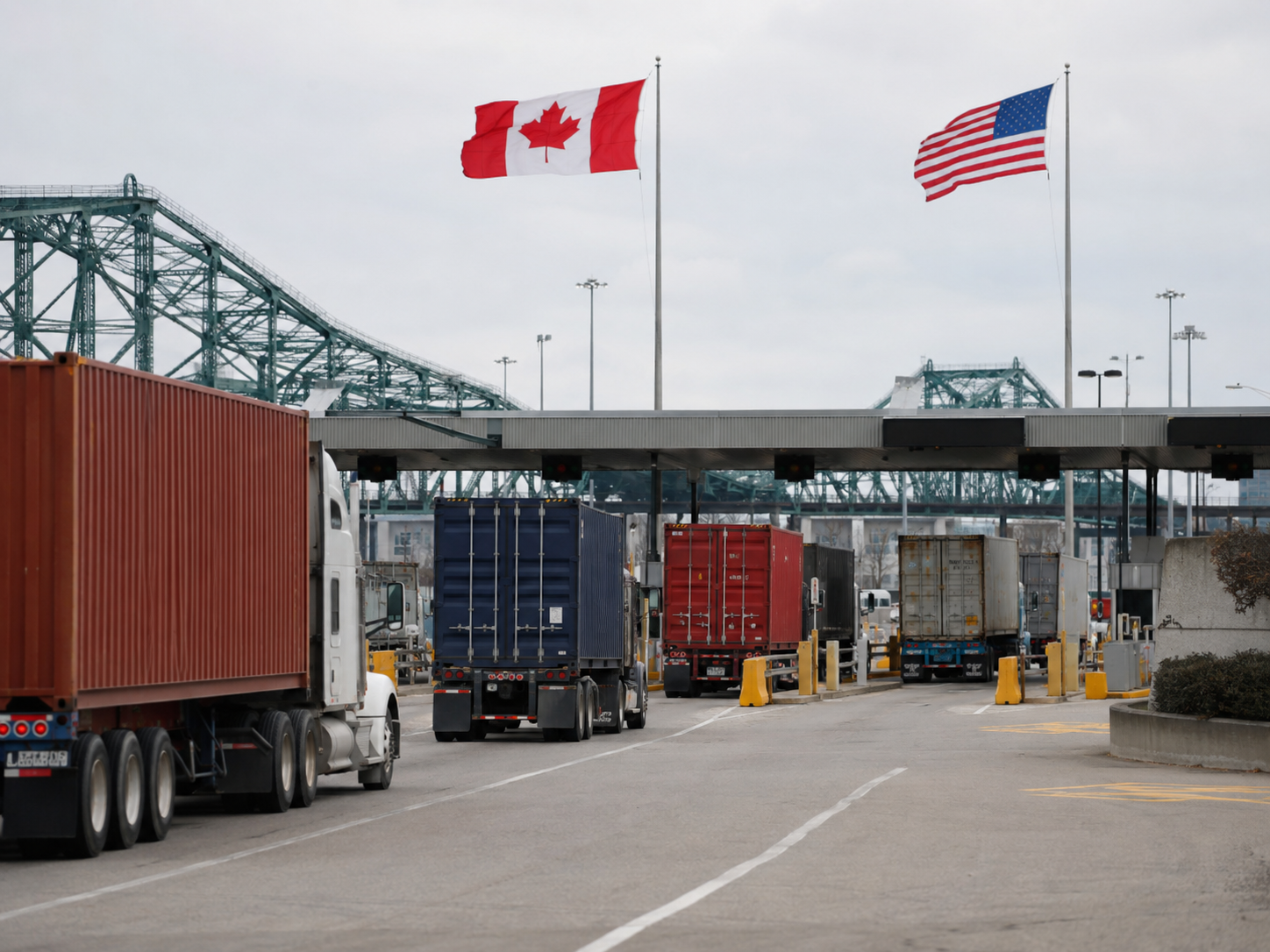
Prime Minister Mark Carney's escalatory language arrives alongside a 50 percent U.S. tariff on a defined slice of Canadian exports, not the broader trading relationship, ahead of Canada's own retaliation next week.
Canadian Prime Minister Mark Carney has described his country as being "at war" with the United States as Canada prepares retaliatory tariffs, a striking characterization for a dispute between two of the world's most integrated trading partners. The rhetoric arrived as talks between the two governments collapsed in late August, after which Washington imposed a 50 percent tariff on a defined set of Canadian goods.
The scope of that tariff is specific rather than sweeping. It applies to roughly $20 billion worth of Canadian exports, targeting particular product categories rather than the full range of goods that cross the border each year. Canada has said it will respond in kind, with its own retaliatory tariffs set to take effect .
The contrast is between the language being used to describe the dispute and the mechanism doing the economic work. "At war" describes an entire relationship. A 50 percent tariff on a defined roughly $20 billion slice of trade describes something narrower, even if the rate itself is high enough to halt trade in the affected categories. The broader U.S.-Canada trading relationship runs to several hundred billion dollars annually across goods, energy, and services.
Canada's retaliatory tariffs on will provide the clearest next signal. Their scope, and whether either side expands or narrows the categories covered, will show whether the dispute is moving toward a broader trade rupture or remains a contained but costly disagreement over a specific set of goods.
Investors with exposure to cross-border manufacturing, agriculture, or energy trade should watch the policy details rather than treating the rhetoric alone as a guide to the dispute's ultimate scale.