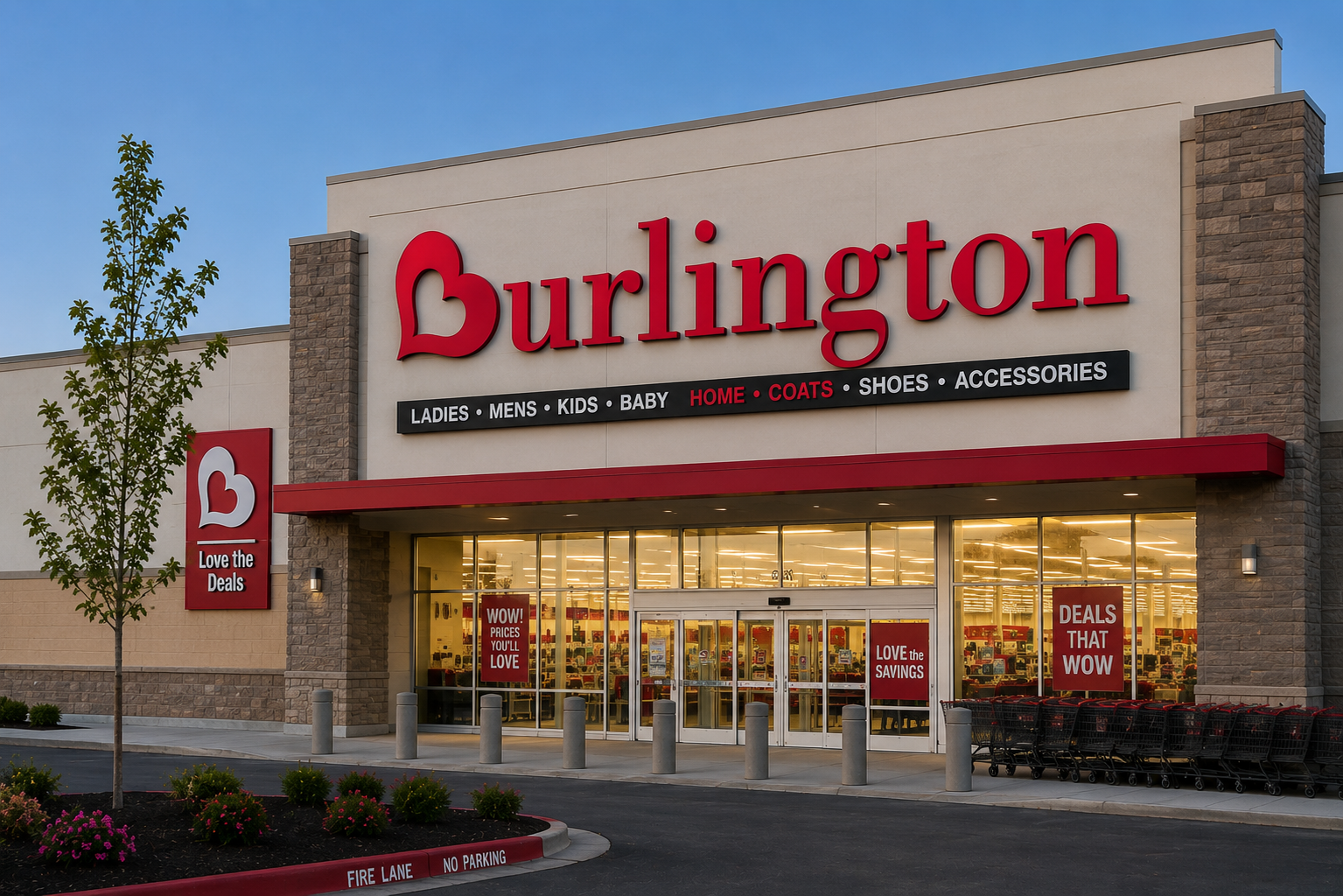
Two different EPS figures circulated for the same quarter before the company's own release settled the question, and the confirmed number sits alongside a revenue miss and a softer third-quarter guide.
Burlington reported GAAP diluted EPS of $2.88 and adjusted diluted EPS of $2.37, which excludes a disclosed $55 million tariff-refund benefit. A $2.96 figure circulating in some market-data feeds does not match the company's own release and is not used here. Against a consensus estimate near $2.18, Burlington beat by a wide margin on a confirmed GAAP basis.
The rest of the quarter is more mixed. Revenue came in at $3.002 billion, just short of a $3.025 billion consensus estimate, a slight miss. Comparable sales growth decelerated to 2%, down from 5% in the year-ago period, a meaningful slowdown even though the direction remains positive. Gross margin, meanwhile, expanded to 46.2% from 43.7% a year earlier, a genuine improvement of nearly two and a half percentage points.
Forward guidance leaned softer. The company guided third-quarter adjusted EPS to a range of $1.60 to $1.70. The $55 million tariff refund the company received is being reinvested into pricing and customer value rather than flowing through to earnings. The company described this as having a neutral impact on full-year earnings guidance. That framing matters for interpreting the softer third-quarter number. The refund benefit did not disappear; management chose to spend it on the customer proposition rather than let it show up as incremental profit.
Shares fell 6.77% to $292.72, trading between $291.55 and $314.72 against a prior close of $313.99. That decline is consistent with the revenue miss and the softer guide, despite a confirmed GAAP EPS figure that beat consensus by a wide margin. The comparable-sales deceleration, roughly half its year-ago pace, is the more likely explanation for the stock's reaction. A beat on GAAP EPS was never going to offset a slowdown in the growth rate that anchors how the stock gets valued.