Lenders including Apollo, Blackstone and Goldman Sachs are in talks on chip financings, according to people familiar with the discussions. The cost of insuring SpaceX's debt has jumped to a record.
| AVGO, ORCL, SPCX, NVDA, APO, BX
The companies building artificial-intelligence infrastructure are reaching for debt at a scale that is starting to show up in prices.
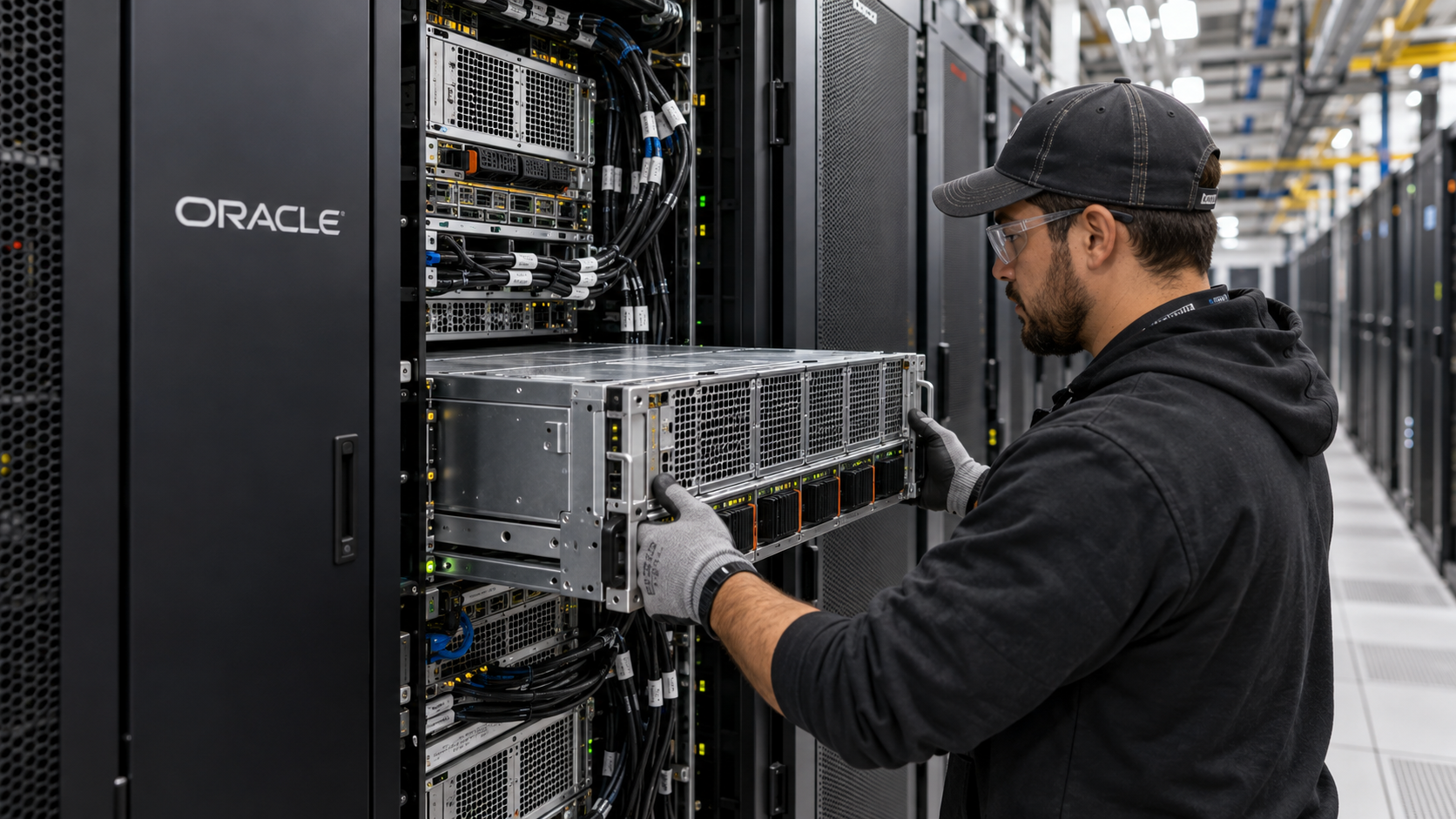
Broadcom is working to arrange more than $50 billion of financing tied to the custom chip it is developing for OpenAI, according to people familiar with the talks, and has approached Apollo Global Management and Blackstone. Oracle is in talks with Apollo and Goldman Sachs on an off-balance-sheet vehicle that would buy chips and lease them to Oracle. The talks are at an early stage and deal sizes could change, the people said.
Both would sit alongside SpaceX's planned $40 billion of debt and loans to buy chips from Nvidia, which is a major SpaceX shareholder.
Two structures
The Broadcom and Oracle plans take different shapes. Broadcom's would finance chips for a customer. Oracle's would sit in a separate vehicle that owns the hardware and rents it back, which keeps the debt off Oracle's own balance sheet. Off-balance-sheet leasing lets a company add capacity without reporting the borrowing as its own, though lease payments remain an obligation.
Both put private-credit managers at the center of chip finance, alongside the bond market.
The price signal
The credit market has started to charge for the volume. Protection against a SpaceX default now costs more than at any point on record, and both the company's stock and its bonds have weakened. SpaceX closed down 2.51% at $167.60 on Wednesday. Broadcom rose 0.19% to $376.51 and was indicated about 1.2% lower early Thursday. Oracle fell 0.84% and Apollo 0.34%.
Nigel Green, chief executive of deVere Group, sees a circular risk in the chipmaker helping to fund buyers of its own hardware. "The AI build-out started on cash," he said. "It's increasingly running on credit, and credit changes the risk profile entirely. Debt has to be repaid on schedule, whether the revenues show up or not."
The other side of the ledger
Borrowed money spent on chips becomes revenue for chipmakers, and their record quarterly numbers are the receiving end of these financings. That link runs both ways: if lenders pull back, the orders behind those records are what would shrink first.
The rates backdrop
The borrowing lands as long-term Treasury yields sit near the highest levels since 2002. Federal Reserve minutes released Wednesday noted that some officials cited expectations of AI-related borrowing among the reasons long-term yields have risen.
AI Demand and the Cost of Credit
One reading is that debt is a rational way to fund long-lived infrastructure with contracted demand, and that lenders' willingness to commit tens of billions shows confidence in the revenue behind it.
Another reading is that a growing share of AI spending now depends on credit markets staying open, and that rising default-insurance costs at SpaceX are an early sign that lenders want more compensation for that dependence.
Terms to watch
Signed financings with stated rates and structures would show what lenders are charging. Further moves in SpaceX's default-insurance costs, and spreads on new technology bond deals, will show whether the market is absorbing the supply or pushing back.