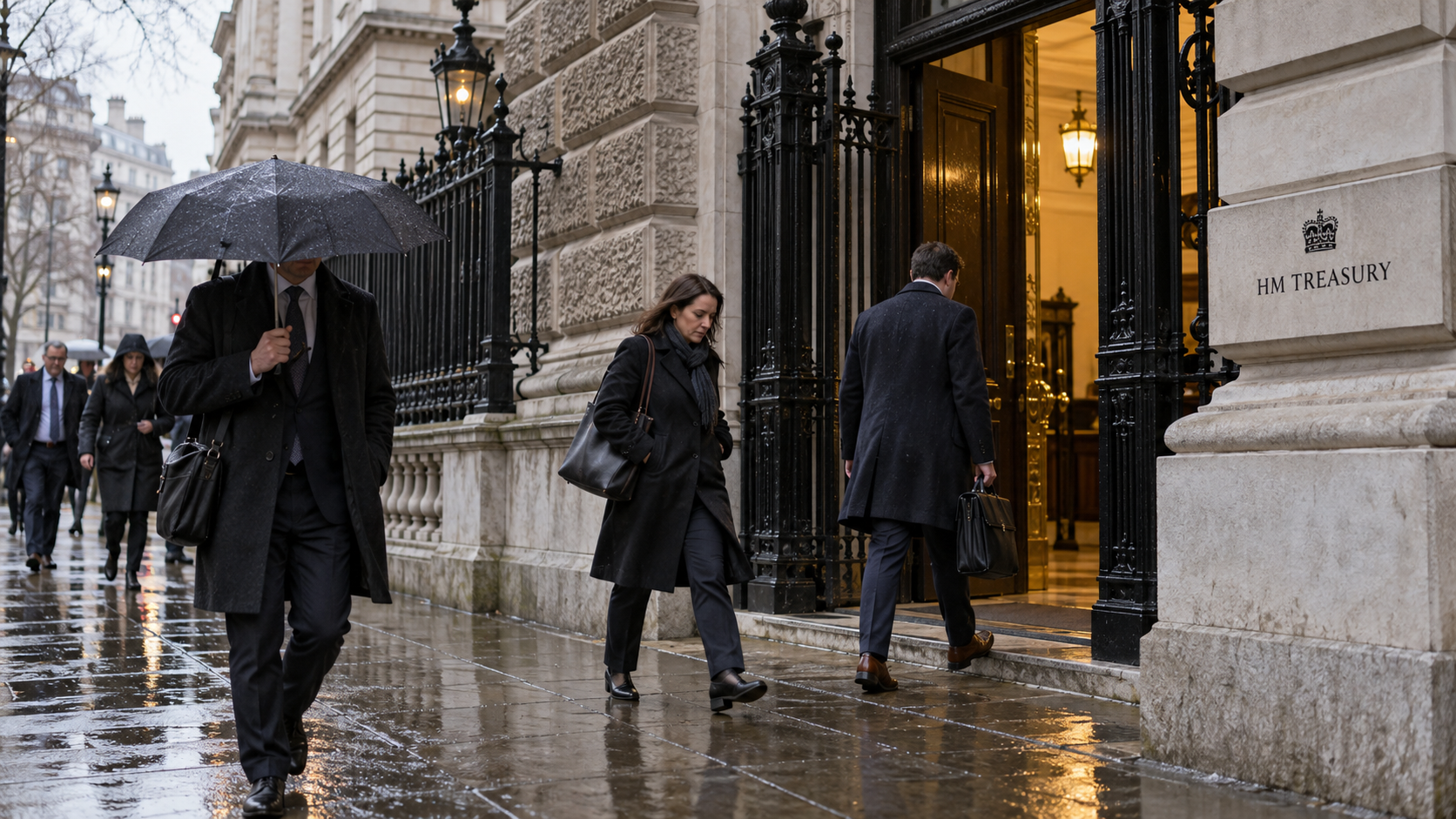
Economists estimate the government's fiscal headroom has shrunk to between 8.5 billion and 16 billion pounds, from 24 billion in the spring. Two lenders slipped on a report of higher bank taxes, and the Bank of England's governor said second-round inflation effects look subdued so far, though it is too early to judge.
Britain's budget is 12 days away, and investors are already pricing who pays for it.
Economists estimate the government's headroom against its own fiscal rules has narrowed to between £8.5 billion and £16 billion, from about £24 billion in March. That leaves the Treasury with a choice among raising taxes, cutting spending or loosening its rules, and each option has a market cost. The 30-year gilt yield briefly rose above 6% earlier this month, after the Bank of England had paused, in September, its sales of gilts from its balance sheet.
Bank stocks have felt it, unevenly. Lloyds and NatWest fell almost 2% in early trading Friday, while Barclays was little changed and HSBC edged up, after a newspaper report that the Oct. 28 budget would include higher taxes on banks. The big U.K. lenders are down 3% to 5% in October, a decline partly attributed to pre-budget nerves, though they are still higher for the week. Higher bank taxes raise money without touching income tax or VAT, which makes the sector an obvious candidate when room is scarce.
A governor less alarmed than the market
The other half of the picture is the Bank of England. Governor Andrew Bailey said on Friday that second-round effects from higher energy prices, the risk that a fuel shock feeds into wages and broader prices, have been limited so far. "I think it's too early, but to the extent we've seen evidence, so far it's been quite subdued," he said, while calling above-target inflation "enormously frustrating." He added that the economy has been "more resilient than we expected."
That tone sits awkwardly with expectations. Most economists polled expect the Bank of England to raise its benchmark rate from 3.75% at its November meeting. A governor who sees subdued second-round effects, with caveats, is neither clearly preparing markets for an increase nor pushing back against one.
Sterling has held up through the fiscal debate and trades near a 16-month high against the euro.
How the pieces connect
Budget arithmetic and monetary policy are linked through the gilt market. If the government fills its gap credibly, through taxes the market views as durable, long-term borrowing costs can ease, which in turn reduces the interest bill that eats into headroom. If it relies on accounting changes or optimistic forecasts, investors may demand more to hold long-dated gilts, which shrinks the room further.
The Bank's decision to pause gilt sales has already eased one source of supply pressure on long bonds.
Market implications
One reading is that fiscal credibility will cap the risk premium. A government with limited room that raises revenue from a sector able to pay, with a central bank willing to slow its bond sales, can keep long yields in check. Sterling's strength suggests currency investors are not alarmed.
A second reading is that shrinking headroom forces choices that hurt growth. Higher bank taxes can tighten credit, tax increases weigh on consumers, and a November rate increase on top of fiscal tightening would squeeze an economy the governor describes as more resilient than expected, not as strong.
For bank shareholders, the question is narrower: how large the levy is and whether it is temporary.
What to watch
The Oct. 28 budget statement and the fiscal watchdog's updated forecasts, the 30-year gilt yield relative to 6%, and Bailey's remaining speeches before the Bank of England's November decision. A budget that leaves bank taxes unchanged would remove the overhang that has weighed on the sector.