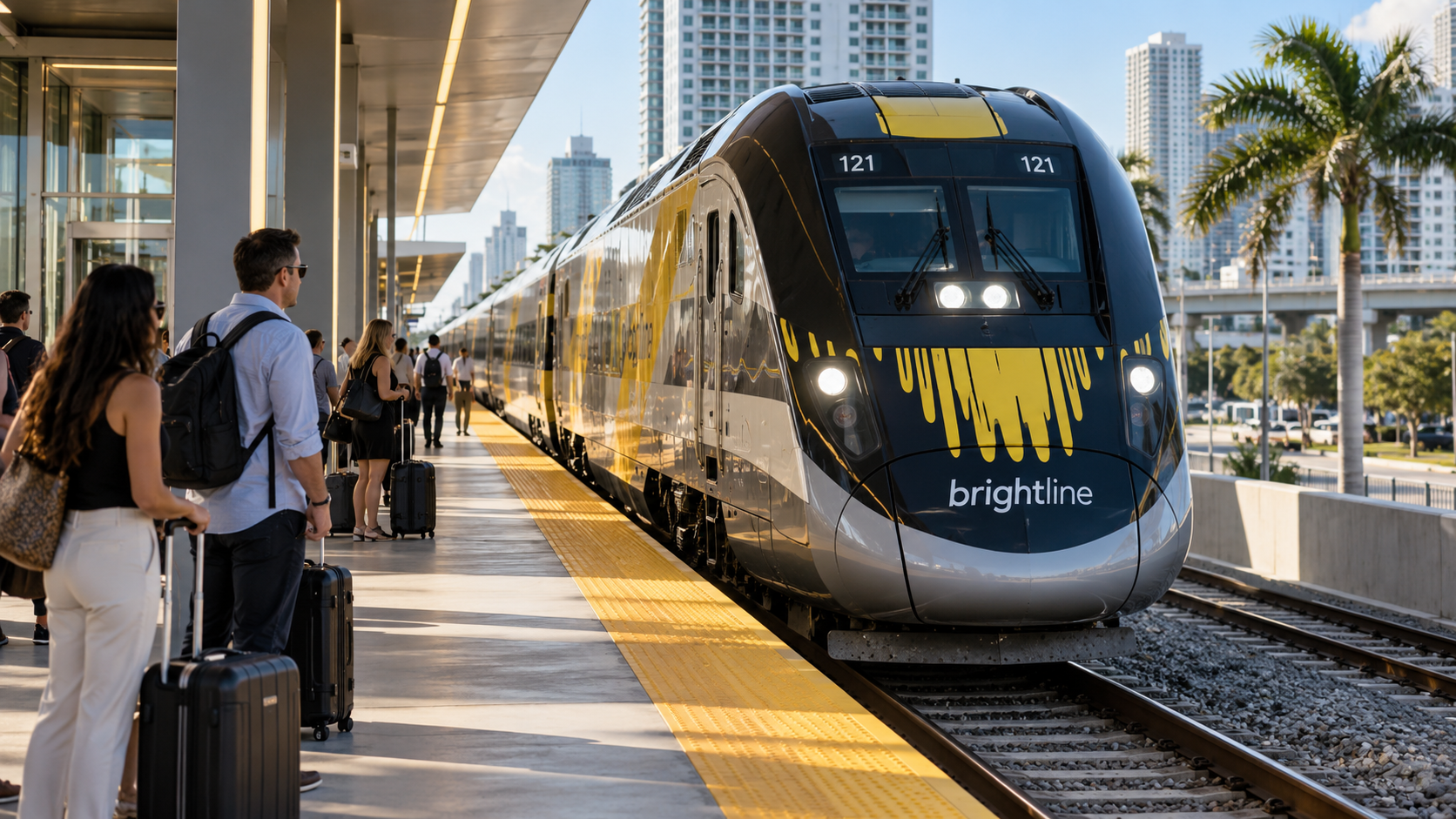
Seventeen holding entities entered Chapter 11 in New Jersey while the Florida rail operator itself stays outside the case, backed by $490 million in new capital.
Brightline, the privately owned Florida passenger railroad, filed for Chapter 11 bankruptcy protection on Sept. 24 in the U.S. Bankruptcy Court for the District of New Jersey.
The filing, Case No. 26-20876, covers 17 affiliated holding entities. The operating company, Brightline Trains Florida LLC, was deliberately excluded and is not a debtor in the case.
Existing stakeholders have committed $490 million in new senior and junior capital to support the restructuring, subject to court approval.
The structure
Keeping the operating company out of bankruptcy is the defining choice. It allows trains to keep running, employees to keep being paid and ticket sales to continue without court supervision of day-to-day operations. The restructuring happens at the holding-company level, where the debt that financed construction sits.
This approach is increasingly common in infrastructure and project finance, where the asset generating cash is healthy enough to operate but cannot carry the debt stacked above it. Separating the two lets creditors restructure claims without disrupting the revenue that ultimately repays them.
Who is putting in money
The $490 million comes from parties already exposed to the project, not from outside investors. That signals existing stakeholders believe the railroad is worth more as a going concern than in liquidation, and that they prefer to defend their position than walk away.
The split between senior and junior capital matters for recovery. New senior money typically takes priority over existing claims, which can dilute holders further down the capital structure. The terms of that financing will determine how much older creditors lose.
Why it matters beyond Florida
Brightline has been the most prominent test of whether privately financed intercity passenger rail can work in the United States. Its filing does not end the service, but it shows how difficult it is to make the financing work even when trains are running.
For private-credit and infrastructure investors, the case is a reminder that construction-era leverage can overwhelm a functioning asset. Similar structures are common in toll roads, airports and energy projects.
The next milestone is the court's first-day hearing, where the judge will consider approval of the $490 million financing. The terms approved there will set the direction for the rest of the case.