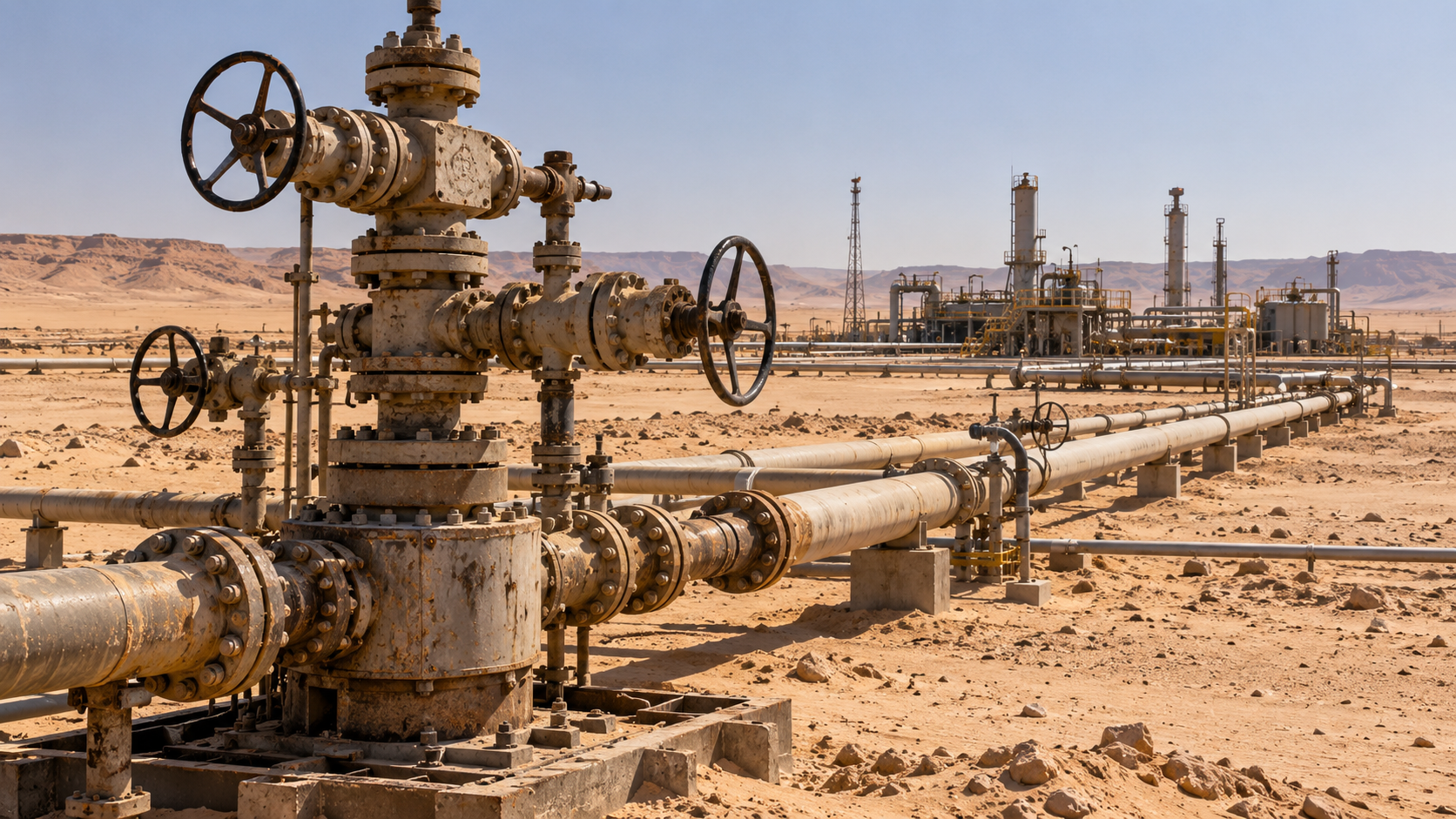
The shutdown at El Sharara adds a fresh supply outage in North Africa while Saudi Arabia is still working its bypass pipeline back toward full strength.
Oil's supply picture gained a new problem on Wednesday, and it came from outside the Persian Gulf.
An armed group shut the pipeline from Libya's El Sharara field, the country's largest, along with the Zawiya refinery. Libya's National Oil Corporation warned that it may declare force majeure, a legal step that releases a seller from delivery obligations when events outside its control prevent it from shipping.
Crude reversed course as news of the shutdown spread. Brent had traded near $98 a barrel early in the session. It finished the afternoon around $101.60, up about 2.4%, while West Texas Intermediate rose about 1.5% to near $91.90. Earlier in the week, Brent had been on its longest losing streak in more than a year as traders priced direct U.S.-Iran talks and the restart of a key Saudi pipeline.
The two supply stories now run in opposite directions. Saudi Arabia's East-West pipeline, which lets the kingdom ship crude to the Red Sea without passing through the Strait of Hormuz, is operating again after a drone strike earlier this month, but at reduced rates. A complete return to normal operations is expected to take weeks. Libya's outage removes barrels from a different route entirely, one with no connection to the Hormuz standoff.
How long this closure lasts, and whether the oil corporation formally declares force majeure, will determine how much supply actually leaves the market.
Energy led the S&P 500's sectors on Wednesday, rising about 1.1%, with Chevron up about 1.4%. The broader index fell 0.7% as Treasury yields climbed.
"We've been through a series of starts and stops like this," said Cole Smead, chief executive of Smead Capital Management, referring to the pattern of diplomatic hopes on Iran that have been raised and then dashed. "We're in a pretty momentum-dominated market. I don't think most people feel comfortable stepping in the way of headlines."
For inflation, the timing is awkward. S&P Global's survey released the same morning showed U.S. business input costs rising at the steepest rate in four years, with fuel and transport costs leading the increase. A new outage that keeps Brent above $100 extends that pressure just as the Federal Reserve weighs a second consecutive rate increase in October.
The markers to watch are specific: any formal force majeure notice from Libya's oil corporation, a restart date for El Sharara, and the pace at which Saudi Arabia restores full flows through its bypass line. Each one moves barrels. The Iran talks, for now, still only move expectations.