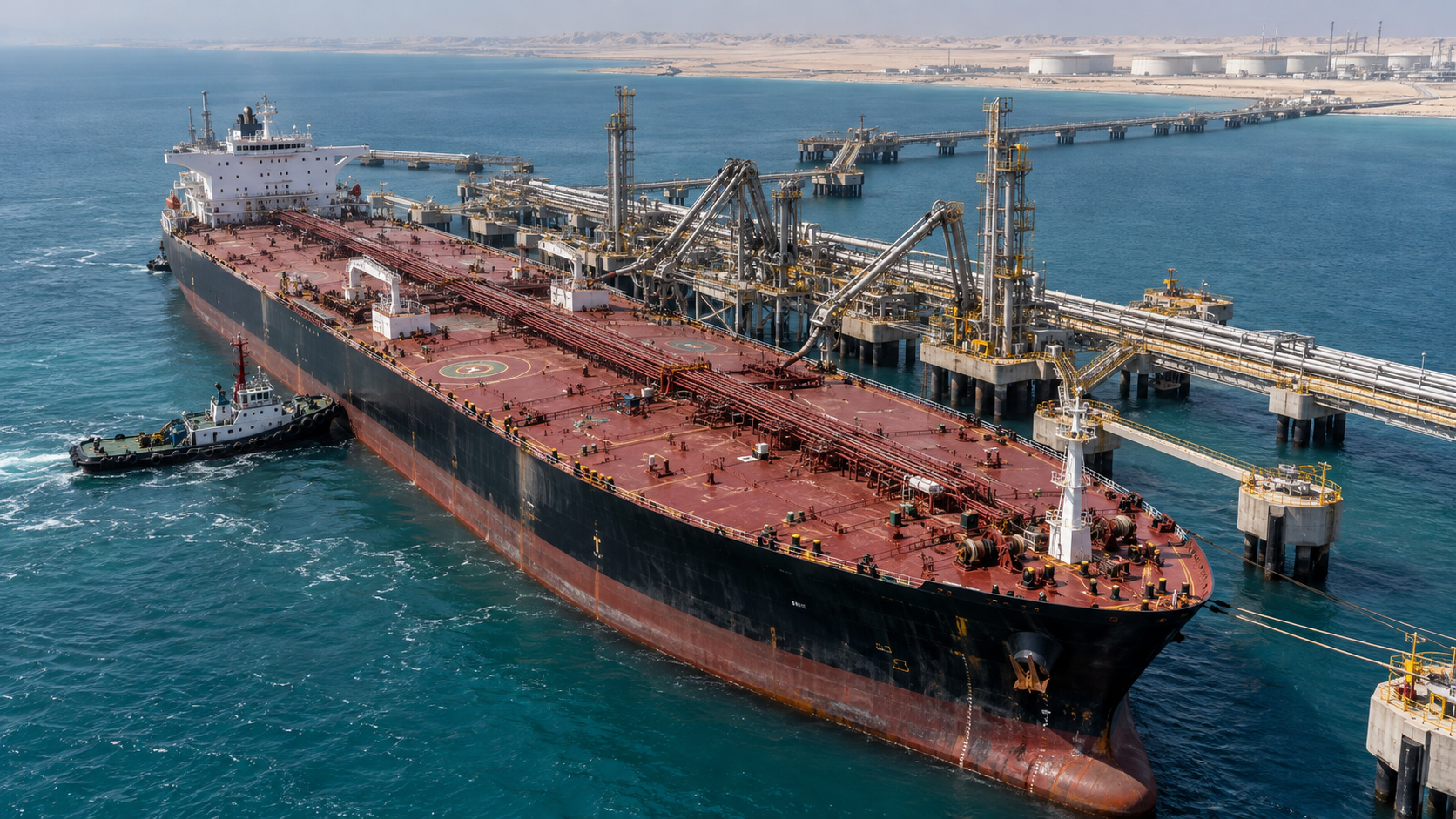
Saudi output rose by about 2.3 million barrels a day in September, roughly matching the world's net supply gain. The overnight drop fell mostly on Brent, the global seaborne benchmark, even as two more ships went down near Hormuz and Washington weighed easing sanctions on some tankers.
The two main oil benchmarks parted ways overnight, and the split says more than either price alone.
Brent crude settled near $106 a barrel on Wednesday and traded at about $103.90 by 4:45 a.m. ET Thursday, down $2.19, or roughly 2.1%. U.S. crude slipped just 27 cents to about $94.80, a decline of about 0.3%. The premium of Brent over West Texas Intermediate shrank from about $11 to about $9.05 in a matter of hours. The front-month contracts for the two benchmarks expire in different months, so the comparison is approximate, but a move of nearly $2 in the spread is large for a single session. The gap narrowed somewhat as the morning went on: by about 6 a.m., Brent was down about 2.4% and U.S. crude about 0.9%.
Three readings of the spread
Brent, the global seaborne benchmark, is more exposed than WTI to disruptions in Gulf supply and shipping. WTI prices oil delivered inland in the U.S. When both fall together, the cause is usually global. When Brent falls faster, something affecting seaborne supply is usually part of the story. Three candidates surfaced overnight.
The first is recovering Gulf output. Saudi Arabia produced 8.30 million barrels a day in September, up from 5.97 million in August, according to the International Energy Agency's October report. That 2.33 million barrel increase is roughly equal to the 2.5 million barrel net rise in world supply the agency counted for the month, which lifted global output to 102.3 million barrels a day. But Brent rose on Wednesday after the report came out, settling at $106.06 against $105.69 on Tuesday, which weakens the case that the September figures alone drove the overnight drop.
The second is sanctions policy. A report citing an unnamed U.S. official said Washington is considering easing sanctions on some shadow-fleet tankers so they could carry Gulf oil, which would add seaborne capacity and weigh on Brent more than on U.S. crude.
The third is the agency's demand outlook. It expects consumption in the fourth quarter to run 2.5 million barrels a day below a year earlier, a global drag that bears on both benchmarks.
The risk did not go away
The spread narrowed even though the physical danger in the region did not ease. Singapore's maritime authority said the container ship GFS Pride had sunk after sustaining damage and a fire on board, and that all 21 crew were safely evacuated. International Maritime Organization data showed that the Cape Dao, a bulk carrier hit in September, also went down. The Saudi-led coalition said it intercepted a drone over the Eastern Province on Thursday, and Riyadh's main airport remains closed until 2100 GMT on Oct. 17. Saudi Arabia's energy ministry described Tuesday's strike on an Aramco building in Dhahran as causing a limited fire with no injuries, though three people familiar with the site said the headquarters suffered extensive damage. Both accounts say operations were not disrupted.
One reading is that the market is weighing barrels already flowing, and the prospect of more ships to carry them, more heavily than attacks that have not yet stopped exports. Several forces were at work overnight, including a broad selloff in Asian equities, so no single event explains Brent's decline.
What would change the read
The discriminating observable is the Brent premium itself. If it widens back toward $11, traders are rebuilding a seaborne risk premium, most likely because an attack has hit export flows rather than ships or office buildings. If it keeps compressing while Saudi output holds near 8.3 million barrels a day, and especially if Washington acts on the tanker sanctions, the supply side is winning the argument.
For consumers, the stakes run through gasoline, which was up 34.2% from a year earlier in September's price index.
What to watch
Weekly U.S. inventory data on Thursday, the Brent-WTI spread at the U.S. settlement, any Treasury action on shadow-fleet sanctions, any attack that interrupts Saudi or Gulf exports, and the OPEC+ meeting on Nov. 1.