Northrop Grumman, the losing finalist, lost about $3.2 billion and recovered little of its opening drop. How the development work is priced is the term the market cannot yet see.
On paper, investors gave Boeing credit for about an eighth of its newest contract.
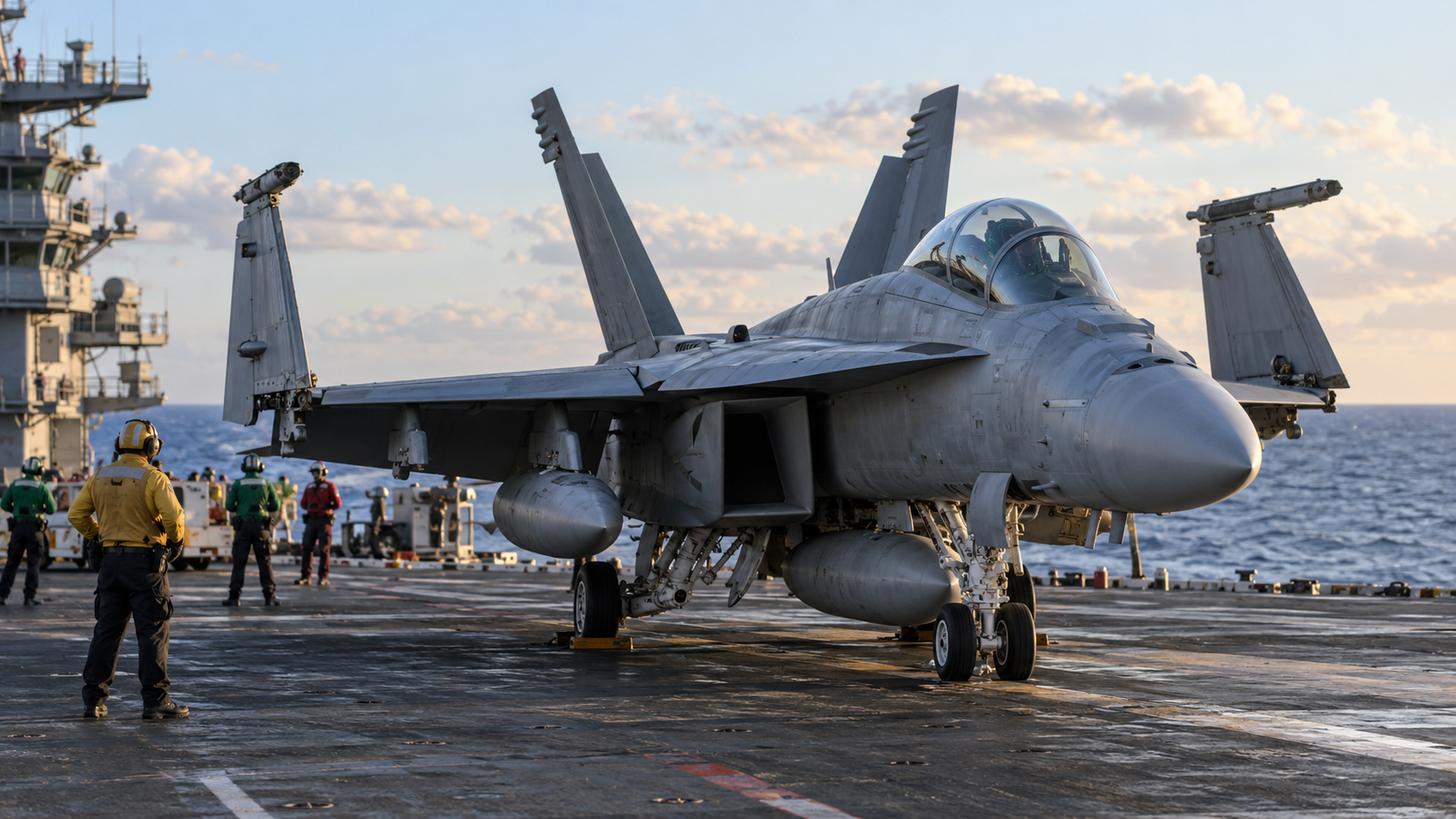
The Department of War announced on Sept. 29 that the Navy had selected Boeing for the F/A-XX, the sixth-generation carrier strike fighter in the Next Generation Air Dominance program. The award covers full-scale development and several test aircraft, and it is valued at more than $20 billion for that phase alone. Production comes later. The jet is meant to fly from carriers alongside the F-35C and, starting in the 2030s, to supplement and then replace the F/A-18E/F Super Hornet and the EA-18G Growler.
By Wednesday afternoon, Boeing shares were up about 1.8% at $187.73. Across roughly 790 million shares, that added about $2.6 billion of market value, or about 13% of the development contract's stated floor.
The finalist's session
The company that lost the competition moved more. Northrop Grumman closed Tuesday at $504.61 and opened Wednesday at $483.00, a gap of about 4.3%. Through midday its best price, $488.46, had won back only about a quarter of that gap, and by the afternoon it was at $482.31, down about 4.4% and a few dollars above its 52-week low of $479.02. With about 142 million shares outstanding, the decline came to roughly $3.2 billion.
Lockheed Martin, eliminated earlier in the competition, slipped only 0.7%. Northrop's percentage decline was about six times Lockheed's, which points to the award rather than a defense-sector selloff.
Set side by side, the two moves imply the market took slightly more value from the loser than it gave the winner, a net of roughly $0.5 billion.
What Boeing now holds
Boeing is now the prime contractor on both of the Pentagon's sixth-generation fighters, after the Air Force chose it for the F-47 in 2025. "Delivering two advanced fighters in parallel was always our plan, and we invested accordingly," said Steve Parker, who leads Boeing Defense, Space & Security. "We are ready and able to build multiple concurrent future combat aircraft franchise programs."
Northrop keeps its B-21 bomber and its F-35 work. For Northrop, the award removes a potential new program rather than revenue it already reports.
The missing term
The number investors cannot see is the contract type. Boeing said the program's technical and programmatic details are classified, and neither announcement said whether the development phase is fixed-price or cost-plus.
Boeing's gain also carries noise from elsewhere. The stock dropped sharply earlier this week after the Federal Aviation Administration delayed certification of the 737 MAX 10 over a go-around software issue, so part of Wednesday's rise may be recovery from that.
Two readings
One reading is that $2.6 billion undervalues a franchise. Boeing holds both fighter programs for a generation, with a path into production and fleet replacement, and its two competitors are shut out of both.
The other reading is that restraint is warranted: development on programs like this has historically been fixed-price, Boeing has absorbed overruns and charges on such work before, and the returns come in production, years away.
The test
Boeing reports third-quarter results on Oct. 28. A fixed-price description of the development work, or any reserve taken against it, would make Wednesday's muted gain look justified. Cost-plus terms could make the market's 13% look low. Northrop reports on Oct. 20, and where its stock trades relative to the $483 opening price will show whether investors treat the loss as a one-day repricing or the start of a lower range.