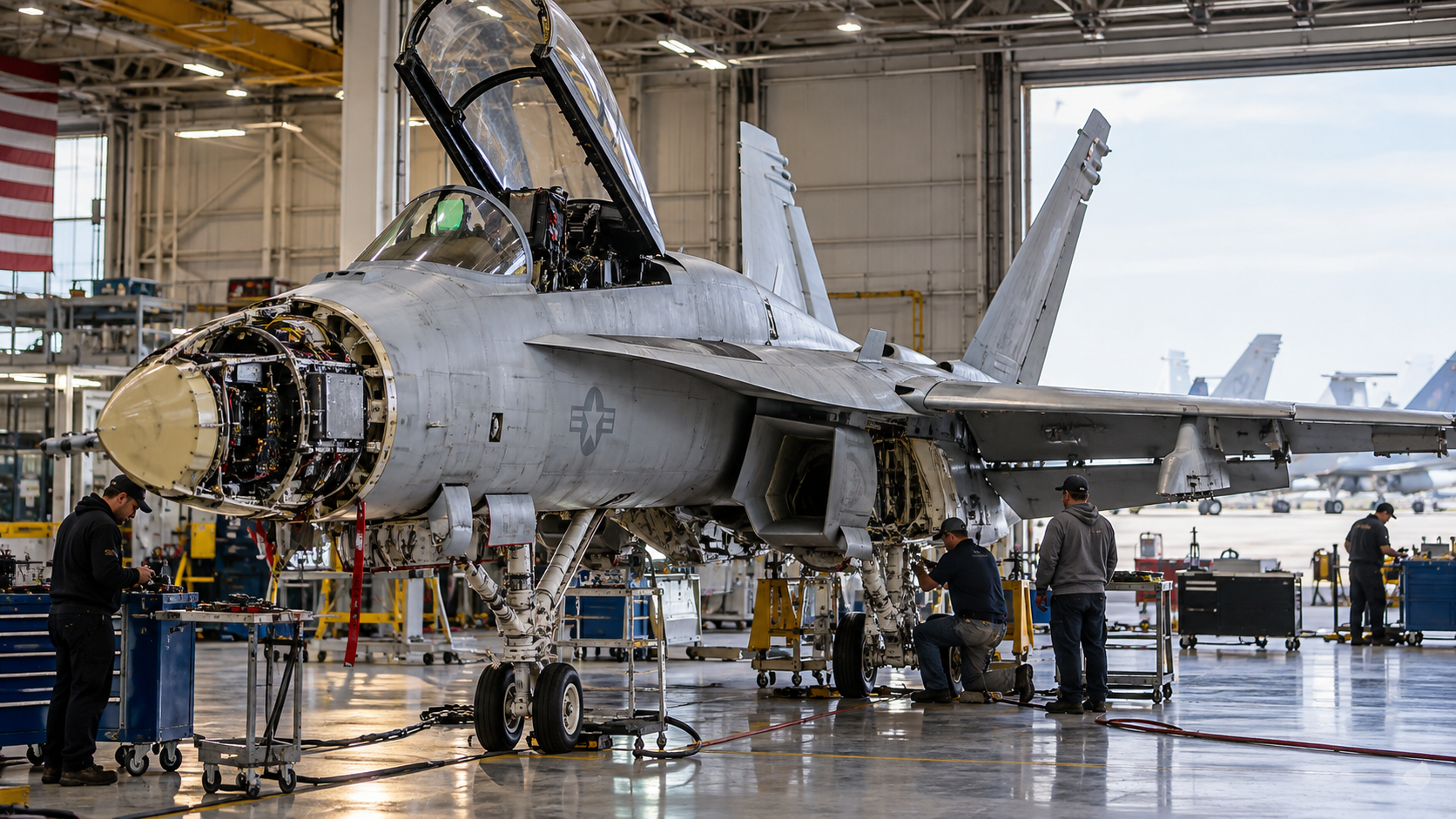
The F/A-XX award, worth about $20 billion, came just before program funds were due to expire and hands Boeing a second next-generation fighter program.
The Navy has picked its next carrier-based fighter, and the decision reshapes the competitive map for the country's two largest combat-aircraft makers.
The Navy selected Boeing late Tuesday to design, build and deliver the F/A-XX, its sixth-generation strike fighter. The contract is valued at about $20 billion. The award follows Boeing's selection for the Air Force's sixth-generation program, giving the company both of the military's next-generation fighter franchises.
A deadline-driven decision
The timing was not accidental. Congress had allocated $897 million for the program in the fiscal 2026 defense appropriations act and required an award, and those funds were due to expire with the end of the fiscal year on . The announcement landed with about a day to spare.
Boeing booked a second win the same day: a $2.38 billion contract for lot 7 of the F-15EX.
The market's verdict
Northrop Grumman, the losing bidder, fell 3.66% on Wednesday. The move reflects more than one contract. Sixth-generation fighters are multi-decade programs that anchor engineering talent, supplier relationships and follow-on production. Losing both the Air Force and Navy competitions shuts Northrop out of the military's two next-generation fighter programs.
For Boeing, the award is a strategic victory but a financial question. Development contracts for advanced military aircraft can carry fixed-price elements that leave the contractor exposed to cost overruns. The size of the reward depends heavily on the contract structure, which will determine how much of the development risk Boeing carries on its own balance sheet.
A possible protest
Northrop retains the right to challenge the award. A timely formal protest may trigger a suspension of work, subject to applicable rules and exceptions, and could delay the program without necessarily changing the outcome.
Reading the numbers
At about $20 billion, the F/A-XX award is more than eight times the F-15EX lot announced the same day. That ratio captures the difference between the two kinds of business: one is a long-term bet on a new aircraft, the other a steady production line for an existing one. Investors tend to value the second for its predictability and the first for the decades of work it secures.
What to watch
The key near-term marker is whether Northrop files a protest with the Government Accountability Office. Beyond that, disclosure of the contract type and its fixed-price exposure will shape how analysts value the win for Boeing.