
Bessent retreated after 10-year yields rose almost 50 basis points. Service firms paid more for inputs as growth slowed. Bank stocks fell almost 9 percent in a month even as margins are forecast to rise.
Washington Is Paying for the Wait, Too.
Stocks rallied to start the week. The Nasdaq set a record. But the 10-year closed near 5.31 percent, up on the day and near its highest since 2002.
The 30-year pushed above 5.66 percent. Long rates rose even as October hike odds now point to a hold.
PTC (PTC) surged over 30 percent on its Schneider Electric acquisition, its largest single-session gain on record. Intel (INTC) fell after Elon Musk confirmed his chip venture Terafab is in talks with TSMC. Brazilian markets rallied sharply after Flávio Bolsonaro led Sunday's presidential vote.
French, Italian, and Greek bond yields calmed after last week's forced selling. WTI fell almost 2% as the G-7 reserve release continued weighing on near-term prices.
Investor Signal
The next step in the debt story could pull in central banks. When government debt is high enough, even a well-designed central bank operation "can be interpreted through a fiscal lens," the Bank for International Settlements warned. Fed help for Treasuries could look like debt financing whatever its stated aim. Treasury auctions this week will show what yield buyers demand when they're acting alone.
Investing In The Titans of AI

Carnegie didn't invent steel. He used new technology to produce it cheaper and faster than anyone on Earth.
Rockefeller didn't discover oil. He used industrial machinery to refine it more efficiently.
Vanderbilt didn't build the railroad. He understood that whoever controlled the infrastructure controlled the economy.
Their combined fortunes were between $700 billion and $1 trillion.
Best-selling financial author Alexander Green has identified three companies positioned to be the Titans of the AI age.
Bessent Said He Was the House. Then Yields Rose Almost 50 Basis Points.
Bessent told investors last month "I am the house now," daring bears to bet against him. Ten-year yields then rose almost 50 basis points.
In a Sunday interview, he made the concession, citing oil and hyperscaler demand for capital. Asked whether August's bigger buybacks signaled intervention, he said "we are not an activist Treasury."
The interest bill on more than $40 trillion of debt runs to roughly $1 trillion a year. For every five dollars of tax revenue, one goes to debt service.
The options from here each trade lower rates for more inflation. After bills and small buybacks comes a revival of Operation Twist, last run in 2011-2012, which needs the Fed. Beyond that is outright yield curve control, used from 1942 to 1951.
Chair Warsh has publicly criticized large-scale bond purchases for blurring the line between monetary policy and debt management.
Capital Economics' John Higgins points to two historical paths. Post-WWII, debt fell from 106 percent of GDP to 23 percent while the 10-year climbed from 2.2 to 7.5 percent, through capped borrowing costs and inflation.
In the 1990s, debt fell from 48 percent to 32 percent and yields fell with it, through restraint and rising revenue. With Congress resisting both tax hikes and spending cuts, Higgins sees risks tilted toward the inflationary path. Trump told Time that inflation can help pay off the debt.
Investor Signal
Both of Higgins's paths cut the debt ratio. Only one of them was good for bondholders. Every step past bills and buybacks needs a Fed chair who has argued against the tool. That leaves buybacks, which have run below their expanded capacity. Bigger buyback sizes at the next refunding would show Treasury using the one lever it controls alone.
Services Growth Slowed. Prices Paid Jumped to 74.
Activity slowed, costs didn't.
The ISM services index fell to 54.9 from 55.4, below the 55.2 economists expected.
New orders eased from the highest level since February 2023. The prices paid gauge rose to 74.0 from 72.6, after manufacturing prices jumped to 77.9 last week. Iran's war premium, Hormuz disruptions and record diesel are all feeding through. Strong demand is also straining supply chains.
Economists read the two surveys together as pointing to higher inflation ahead and supporting a December hike. One detail cuts the other way on labor. The services jobs gauge jumped from 47.8 to 50.1, and the factory jobs gauge also rose, both in the same month payrolls came in at 29,000.
Investor Signal
Two surveys now show slower activity and faster costs. The Fed can't wait that combination out on patience alone, since demand is still strong enough to strain supply chains. The hiring gauges argue September's weak payrolls were measurement noise rather than deterioration. September consumer prices, due October 14, test whether the cost pressure is already reaching shoppers.
Trump to build "biggest data center on the planet"

America's about to get its first national data center… Completely funded by taxpayer dollars. When it comes online just days from now… This device could change the history of Artificial Intelligence… And even human civilization. (It could also make early investors in this company very happy.) Louis Navellier believes it will secure America's dominance over China in the AI arms race… While completely sidestepping the dangers of Artificial Superintelligence. Donald Trump committed $1 billion to support the stock behind the coming breakthrough right now… Ahead of a potential announcement from the company that could hit soon. Get all the details – down to the company name and ticker – here, in Louis' brand-new presentation.
This ad is sent on behalf of InvestorPlace Media at 1125 N. Charles Street, Baltimore, Maryland 21201. If you're not interested in this opportunity, pleaseclick here.
Spending Rose More Than 6 Percent. The Saving Rate Is 4 Percent.
The saving rate is 4.1%. Sentiment is near a record low. Spending is accelerating.
Household spending rose more than 6 percent in the year through August, up from about 4 percent at the end of last year. Just over half of that was inflation. After stripping prices out, spending still grew, extending a five-year streak. Michigan sentiment sits just above a record low. "No one is happy," said NORC's Brian Fabes.
The numbers behind that contradiction run through the balance sheet. The saving rate is around 4 percent, about half its prepandemic level. Household debt is at a record. In August, real after-tax income was flat. The resources funding the gap… savings, credit, and wealth gains… are finite, as EY-Parthenon's Gregory Daco put it.
Investor Signal
The mood-spending gap has been treated as a political curiosity. The numbers reframe it as a balance-sheet question. Spending is outrunning income, funded by a declining saving rate and record debt. Mastercard projects holiday spending up about 5 percent, with roughly half from prices. The saving rate is the better gauge than sentiment, and it arrives again October 29.
Bank Margins Are Forecast to Rise. Bank Stocks Fell 9 Percent in a Month.
Investors are skipping ahead to the hard part of the rate cycle.
Banks are stronger than when rate hikes broke regional lenders in 2023, the Journal's Telis Demos writes. Unrealized securities losses were just under $330 billion in the second quarter, per the FDIC. That is about 14% of Tier 1 capital, down from over 33% in late 2022.
Loans that reset within three months rose from below 20% of assets in 2021 to above 25%, helped by lending to private-credit funds.
Analysts expect net interest margins across the KBW Nasdaq Bank index to have risen this past quarter and into next year. The index still fell almost 9% in a month as the S&P 500 edged up.
Investor Signal
The weakness that broke banks in 2023 has shrunk. The selling looks like a bet on the cycle's second half, when deposit costs catch up and borrowers strain. Banks already report fierce competition for deposits, and the newest fear is that AI agents could pry loose idle cash. Third-quarter results will show whether deposit costs rise faster than loan yields.
Hidden in Tesla's Filing: A $12 Billion "Super Startup"
Pull up Tesla's most recent SEC filing. Page 5.
And you'll see a single line showing $12 billion in revenue from a brand-new "super startup" Elon Musk has been quietly incubating inside Tesla.
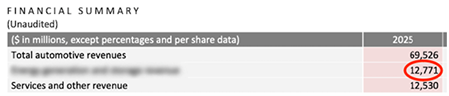
This new "super startup" has nothing to do with cars or robots or space or AI…
But it sits at the center of what Blackstone calls "a $23 trillion investment opportunity."
And on Oct 21st, Elon is expected to pull back the curtain and reveal exactly what he's building.
But Adam O'Dell already knows… and he reveals it all in this urgent video.
Iraq Wants Its Own Tankers. Renting Them Got Harder.
Baghdad owns no tankers. That forced it to offer steep crude discounts to attract ships into the Gulf.
Its state tanker company expects to charter two vessels in coming days and is reissuing a tender that drew no acceptable offers the first time.
The oil minister said Saturday the government is also seeking funds to buy ships outright. Iraqi companies have already bought at least two supertankers, including one for roughly $200 million last month, a record price for a vessel of its type.
The chartered ships will transfer crude to other vessels outside Hormuz, the shuttle system the whole Gulf now runs on at $15 to $20 a barrel per round trip. Kuwait is also seeking to buy tankers. The UAE and Saudi Arabia hold large fleets and have more flexibility than their neighbors.
Investor Signal
Tanker earnings at more than 40 times their five-year average are being answered with ship purchases, not just charters. That converts a war premium into fixed capital, and fixed capital doesn't unwind when the fighting eases. A second failed charter tender would show the shortage is binding even for a sovereign buyer willing to overpay.
Bessent conceded the bond market after yields rose nearly 50 basis points, and the escalation ladder from here runs through a Fed chair who has argued against its tools. Services costs accelerated as activity slowed. Households spend faster than they earn on a saving rate half the prepandemic level. Bank investors are pricing the costly half of the cycle before the good part delivers.
Everyone is waiting for a payoff. The Treasury, the household, and the Gulf producer are each paying for the wait in a different currency.
3 Stocks at a Major Turning Point
Something unusual is happening beneath the surface of three widely followed stocks.
In each case, the fundamentals are saying one thing... while institutional activity, management signals or the options market are saying something else.
That kind of disagreement can matter.
Because when the evidence stops lining up, the next move in the story often comes down to a handful of signals most investors never think to watch.
Our new FREE Market Tell Special Report breaks down three of these situations, and shows you exactly what we’re watching next.