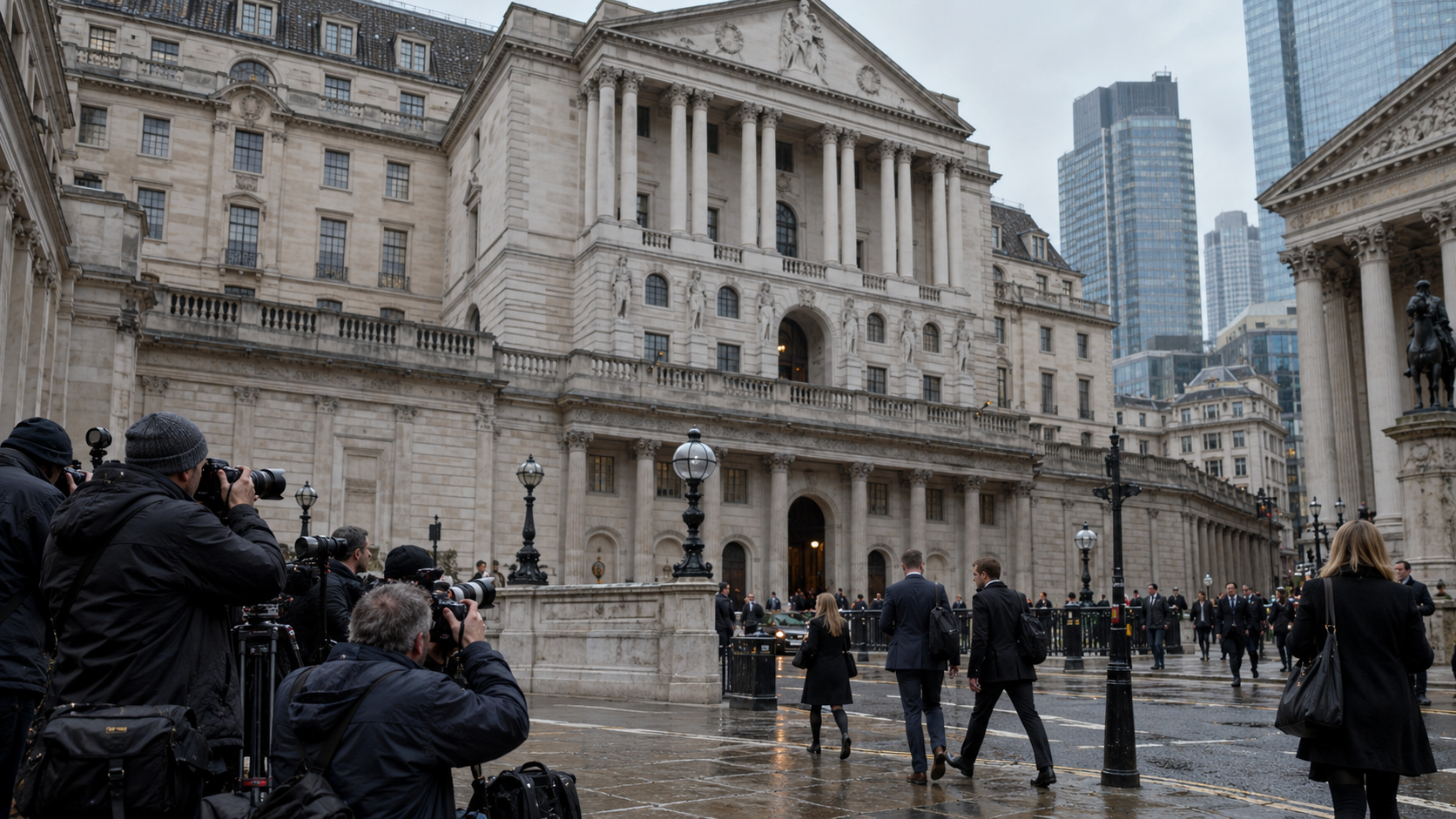
Three policymakers wanted to raise rates immediately. The other six chose a different lever: they stopped selling government bonds.
The Bank of England's Monetary Policy Committee voted 6 to 3 on Thursday to hold its key rate at 3.75 percent, even as inflation runs well above the central bank's 2 percent target. The three dissenting members voted for an immediate quarter-point increase to 4 percent.
The decision marks a divergence from the Federal Reserve, which raised its own benchmark rate by a quarter point on Wednesday, and from the European Central Bank, which delivered its second rate increase of the year earlier this month after raising rates in June for the first time in three years. The Bank of Japan is due to announce its own decision Friday.
Bailey signals a hike is coming, just not yet
Bank of England Governor Andrew Bailey said in a statement that "so far, higher global energy costs have had a limited effect on price and wage setting in the U.K. But the longer this volatility persists, the bigger the impact it will have on inflation, and the more likely it is we will need to raise Bank Rate to ensure that inflation falls back to our 2 percent target."
That language leaves the door open to a move at a future meeting without committing to one now, a position that puts the central bank closer to the Fed's posture this week than the language of "holding steady" might suggest on its own.
The more consequential move may be in the bond market
Alongside the rate decision, the Bank of England said it would pause sales from its roughly 488 billion pound, or 652 billion dollar, government bond portfolio for six months and halt sales of long-duration gilts entirely.
Gilt yields had climbed across the curve in the hours ahead of the announcement, with the benchmark 10-year yield ticking higher earlier Thursday morning in London. The decision to slow the pace at which the central bank offloads its bond holdings eased that pressure, pulling yields lower immediately after the announcement, as investors read the move as an implicit effort to keep a lid on long-term borrowing costs even while leaving the door open to a rate increase.
Why the split matters
Holding rates while signaling a future increase, and simultaneously moving to support the bond market, reflects a central bank trying to manage two problems that pull in different directions: inflation that argues for tighter policy, and a level of long-term borrowing costs that argues for caution about adding to bond supply. The three dissenting votes suggest that balancing act has limited support inside the Monetary Policy Committee itself.
The next test arrives at the Bank of England's following meeting, with markets now watching whether persistent energy costs push enough of the committee toward the dissenters' view to tip the balance toward a hike.