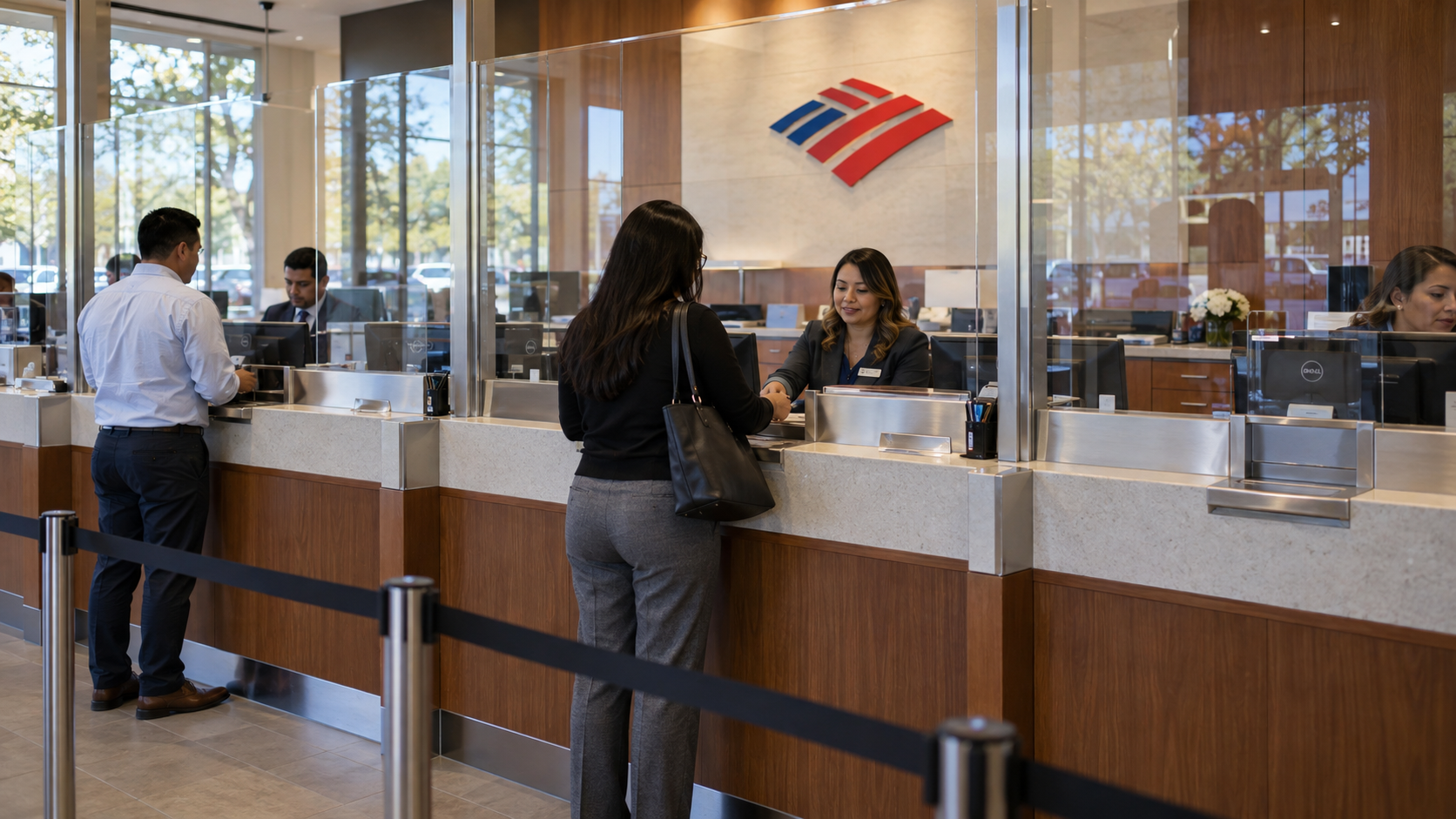
Federal penalties of $1.21 billion include the largest fine in the OCC's history and will cut third-quarter profit by about 17 cents a share. Regulators said the bank failed to report more than $5 billion of suspicious transactions on time.
The first number in Bank of America's third-quarter report is already known: a $1.2 billion charge the bank announced the night before.
Federal regulators on Tuesday fined the country's second-biggest bank a combined $1.21 billion-plus, citing breaches of rules on money laundering and sanctions. The bank said the penalties will produce a $1.2 billion charge that is not tax-deductible, reducing third-quarter net income by about 17 cents a share.
The bank reports before the opening bell. Analysts expect earnings of $1.10 a share on revenue of about $30.6 billion, according to Financial Modeling Prep. The penalty is equal to about 15% of that per-share estimate, and it is not clear how many forecasts included it.
What regulators found
The biggest piece, $1.2 billion, came from the Financial Crimes Enforcement Network, which said the bank did not adequately guard against or report national-security threats it treats as priorities, among them Chinese money-laundering networks and illicit money flows at the southwest border. That figure counts a $750 million penalty from the Office of the Comptroller of the Currency, a record for the bank regulator, so FinCEN itself collects $450 million. The bank also agreed to pay $11.6 million to Treasury's sanctions office over apparent breaches of programs that include the Iran and Russia sanctions.
Bank of America admitted that it willfully violated the Bank Secrecy Act. According to Treasury, it failed to file timely reports on more than $5 billion of suspicious transactions, more than $1 billion of which involved national-security and other priority risks. The OCC said the bank's transaction monitoring failed to properly cover trillions of dollars of activity and that the bank "knew for years" it was not escalating potentially suspicious activity for review.
Only two Treasury penalties have ever been larger.
The words from Washington
"The bank's poor response to its BSA deficiencies is unacceptable," Comptroller of the Currency Jonathan V. Gould said. Treasury Secretary Scott Bessent said the actions "send a clear message that even the biggest financial institutions are not above the law."
The bank said it had invested billions of dollars and thousands of employees in fighting financial crime. "Financial crime compliance is serious, and we are responsible for getting it right," it said, adding that the resolutions stem from violations cited in its December 2024 consent order with the OCC.
Sizing the hit
At $1.2 billion, the charge is about 0.3% of Bank of America's roughly $383 billion market value. The shares closed Tuesday at $53.96, down 1.14%, and were indicated at $53.08 in thin early trading Wednesday, down about 1.6%.
The cash cost is known. The operating cost is not. The orders require independent reviews of the bank's historical activity, monitoring and data governance, and the bank remains under the 2024 cease-and-desist order.
Market implications
One reading is that the overhang is now priced and closed. The amount is final, the charge falls in a single quarter, and the penalty is small against the bank's earnings power and capital.
A second reading is that the admission matters more than the money. A willful violation finding, a regulator calling the bank's response "unacceptable" two years into a consent order, and new independent reviews raise the possibility of further compliance spending and closer supervision.
What to watch
Management's comments on remediation costs and any business restrictions will be the first test. Morgan Stanley, BlackRock, State Street and Progressive also report on Wednesday, the same morning as September's consumer-price data.