
The S&P 500 closed at a record high while the first Treasury auction drew softer demand than September. Chip imports drove the trade gap to a 17-month high. Tankers kept moving through Hormuz under fire.
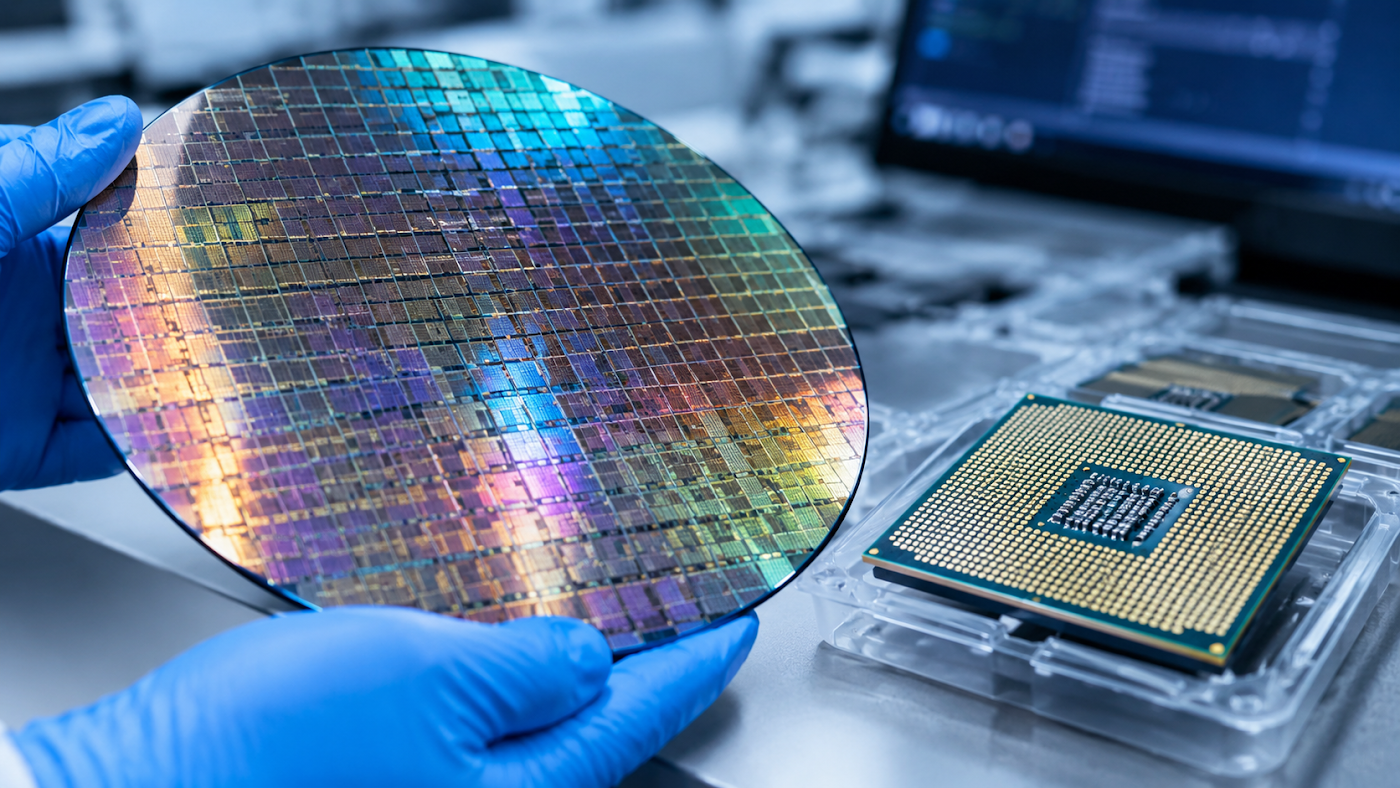
Record High. But Only Part of the Market Got There.
The S&P 500 set a new all-time high. The Nasdaq closed at a second straight record. The Dow gained. The Russell 2000 fell.
Only one of the S&P’s eleven sectors are up over the past month, technology. The other ten are down. A headline index at a record while most of its sectors decline is the specific setup the rally has been running on all quarter.
- Constellation Energy (CEG) surged after confirming a 20-year nuclear deal with Alphabet (GOOGL).
- Lambda is raising up to $4 billion at a $14.5 billion valuation pre-IPO, backed by Blackstone (BX) and Coatue.
- JPMorgan (JPM) CEO Jamie Dimon said Anthropic’s Mythos model raised cybersecurity risks “10-fold.”
The 10-year yield eased slightly from Monday’s 2002 high. WTI held near $89.
Investor Signal
A record S&P alongside a falling Russell 2000 is not a broad rally. It is a concentrated one, carried by AI infrastructure names while rate-sensitive sectors quietly retreat. Wednesday’s 10-year auction is the next real test of whether foreign buyers show up at 5.3% with the same conviction equity traders have shown.
Watch What the Institutions Are Doing — Not What They're Saying.
Bank of America increased its stake in one small gold company by 139%.
Jane Street — one of the most sophisticated trading firms alive — by 159%.
Millennium by 122%.
One value fund, Kopernik Global, made it their single largest holding — owning roughly 8% of the entire company.
The company doesn't even mine. It owns the rights to an 88 million ounce deposit — one of the largest on earth — with government-built roads, power already running to the property, and permits that never expire.
Market cap: ~$4 billion. Value of the metal in the ground at today's prices: hundreds of billions.
The institutions did this math quietly, over months.
You get to do it this afternoon.
The Long-Bond ETF Lost 10 Days Straight. Now the Buyers Get Tested.
The iShares 20+ Year Treasury Bond ETF (TLT) fell ten straight sessions through Monday, its longest losing streak on record. It bounced slightly today.
Treasury sold $58 billion in three-year notes. Bids covered 2.62 times the amount offered, down from 2.72 in September. Dealers absorbed about 11 percent, meaning real buyers left more on the table than last month. Almost every major auction since mid-September has cleared at a wider concession. The harder tests arrive Wednesday on the 10-year and Thursday on the 30-year.
BMO’s Ian Lyngen warned the long sales could struggle. Friday’s jobs-day rally faded into the close, which he said means “this week’s duration supply will require a more meaningful concession.” Vanguard’s Joyce Huang sees natural buyers at current yields.
Ray Dalio offered the structural argument against her. Foreign buyers fund roughly a third of US debt. Japan’s holdings fell nearly $13 billion in July. China’s stack has dropped from $1.3 trillion in 2013 to about $618 billion. “The Chinese don’t want to continue to accumulate,” he said.
Investor Signal
Every auction sells out. What decides the story is how far above the pre-sale yield it clears, a gap traders call the tail. A wide tail Wednesday would point to supply and fiscal concern, not Fed policy. The indirect bid captures foreign demand. That is the one line Dalio’s entire argument predicts will deteriorate.
Chips and Computers Widened the Trade Gap to $106 Billion.
Imports of semiconductors, computers, and accessories ran $234 billion above last year’s pace through August.
The goods and services deficit widened to about $106 billion in August, the largest since March 2025, when companies were front-running tariffs. Brad Setser of the Council on Foreign Relations said it reached “quite strong levels only exceeded by the front-running days.”
Electronics have been largely exempt from the administration’s tariffs. “That’s the key thing,” he said. Through August, the total deficit still runs about 20 percent below last year’s pace.
Investor Signal
The AI buildout has been framed as a domestic investment story. The external accounts tell a different one. $234 billion in additional chip imports over eight months, all tariff-exempt, means the buildout is partly financed by foreign capital recycling back into US assets. A wider deficit exports more dollars. The October auctions are testing what it costs to get those dollars back.
People paid $8,000… yours for FREE

Some people have paid $8,000 to be in the room with Luke Lango in Las Vegas. But he believes the new Elon venture he's uncovered (not space or AI) is so big that EVERYONE needs to know about it. See how to get in while we're still early here.
This ad is sent on behalf of InvestorPlace Media at 1125 N. Charles Street, Baltimore, Maryland 21201. If you're not interested in this opportunity, pleaseclick here.
More Oil Is Moving Through Hormuz. So Are the Attacks.
Iran attacked roughly two ships for every hundred that crossed the strait in the third quarter.
Nearly 20 vessels, mostly tankers, were attacked in the past month near Hormuz or off Oman. On Monday, Iran’s Revolutionary Guard ordered a tanker to turn back or face attack. It complied. Flow estimates still disagree.
One tracker puts shipments about 23 percent below prewar levels; another sees them down even more. The EIA credits a Saudi pipeline restart and dark transits, where tankers switch off tracking before transferring cargo. Shipping crude from the Gulf to China costs roughly $1 million per tanker per day.
The EIA raised its fourth-quarter oil forecast anyway. Brent closed over $100, tracking just below the $105 fourth-quarter figure the EIA published.
Investor Signal
“The oil market is not becoming more secure,” said Lloyd’s List editor Richard Meade. “It is becoming more efficient at operating under sustained insecurity.” That explains prices staying elevated even as more crude moves. The EIA’s raised forecast assumes the workarounds keep expanding and shut-in output keeps declining. The attack rate decides whether any of that holds.
Warsh Dropped Guidance. His Deputies Supplied It.
October hike odds fell from about 70 percent to about 25 percent in three days, on two officials’ remarks, before Friday’s jobs report pushed them lower still.
New York Fed president John Williams said there was “no need for urgency,” a week after telling a London audience that forward guidance was finished.
Vice Chair Philip Jefferson followed with a similar signal. Chair Warsh wants markets to watch the economy, not the Fed. His September case for a hike had investors betting on October anyway. Hiking six days before the midterms carried its own risk.
“It would be awkward for him to do it himself,” said former Boston Fed president Eric Rosengren. “So he’s doing it through his two vice chairs.”
Piper Sandler’s Kurt Lewis called Williams “way more specific than he needed to be” and dropped his October call. Goldman and RBC did the same. Between the September hike and the deputy comments, the 10-year moved from 5 percent to 5.25 percent. Jefferson specifically named it.
Investor Signal
Ending forward guidance didn’t end the demand for it. “Nature abhors a vacuum,” said former Cleveland Fed president Loretta Mester. The deputies cut October odds 45 points and the two-year fell. The 10-year closed Monday higher than before Williams spoke. Guidance moved the end of the curve the Fed sets, not the end the auctions price.
Elon Musk Warns We May Have Just Months Left
"Frontier AI" is a point of no return when AI surpasses human intelligence and gains free will. Elon Musk warns this moment could hit by the end of 2026.
According to 60-year Wall Street legend, Marc Chaikin, Frontier AI could soon become the only thing that determines which companies make money and which grind to a halt, That's why he's giving away a list of stocks to buy and sell absolutely FREE to help you position your money for a world driven by Frontier AI technology.
The Agent Boom Runs on the Cheaper Chip.
Meta’s Muse agent runs on two CPU cores. OpenAI’s Dots uses nine.
AMD (AMD) rose almost 3 percent to a record near $650 today. “CPUs are actually performing the workflows while GPUs are doing the thinking,” said Futurum CEO Daniel Newman.
The AMD processor powering Dots sells for under $3,000. Nvidia (NVDA) AI chips can cost more than ten times that.
AMD’s data center revenue more than doubled in the latest quarter. Morgan Stanley estimates Muse could account for 20 percent of AMD’s 2026 chip sales. Meta says it is “largely CPU-agnostic by design.”
Investor Signal
Agents add a compute bill that grows with use. A workload on a $3,000 chip is a workload not running on the GPU clusters that underpin the $10 trillion capex projection. The 20 percent estimate holds only while Meta keeps buying AMD. Meta has already said the architecture is fungible.
Treasury opened a week of bond sales with long yields at a two-decade high and the long-bond ETF off a record losing streak. Chip and computer imports widened the trade gap to a 17-month high. Tankers kept moving through Hormuz under fire. The Fed’s deputies moved short rates, and long rates didn’t follow. Agents found a cheaper chip.
The buildout buys its hardware abroad, and the dollars have to come back as investment. The October auctions are showing what that now costs.
3 STOCKS OUR SIGNAL ENGINE SAYS TO WATCH CAREFULLY
Three stocks. Three signals. Two weeks later, the story changed.
On September 2, we published three market questions around KLAC, HPE and PG&E.
Two weeks later, every one of them produced new evidence.
One company delivered record revenue and raised its outlook.
Another saw weakness spread across its entire peer group.
And in the third, a market risk that had only been showing up beneath the surface suddenly became explicit.
Yet none of these stories is finished.
That’s why we built Market Tell.
To track the signals that keep moving after the headline is gone — and show you what investors should be watching next.
We’ve put the latest analysis into a new FREE Special Report:
3 Stocks at a Major Turning Point
See what changed… what still hasn’t been resolved… and the signals we’re watching now.