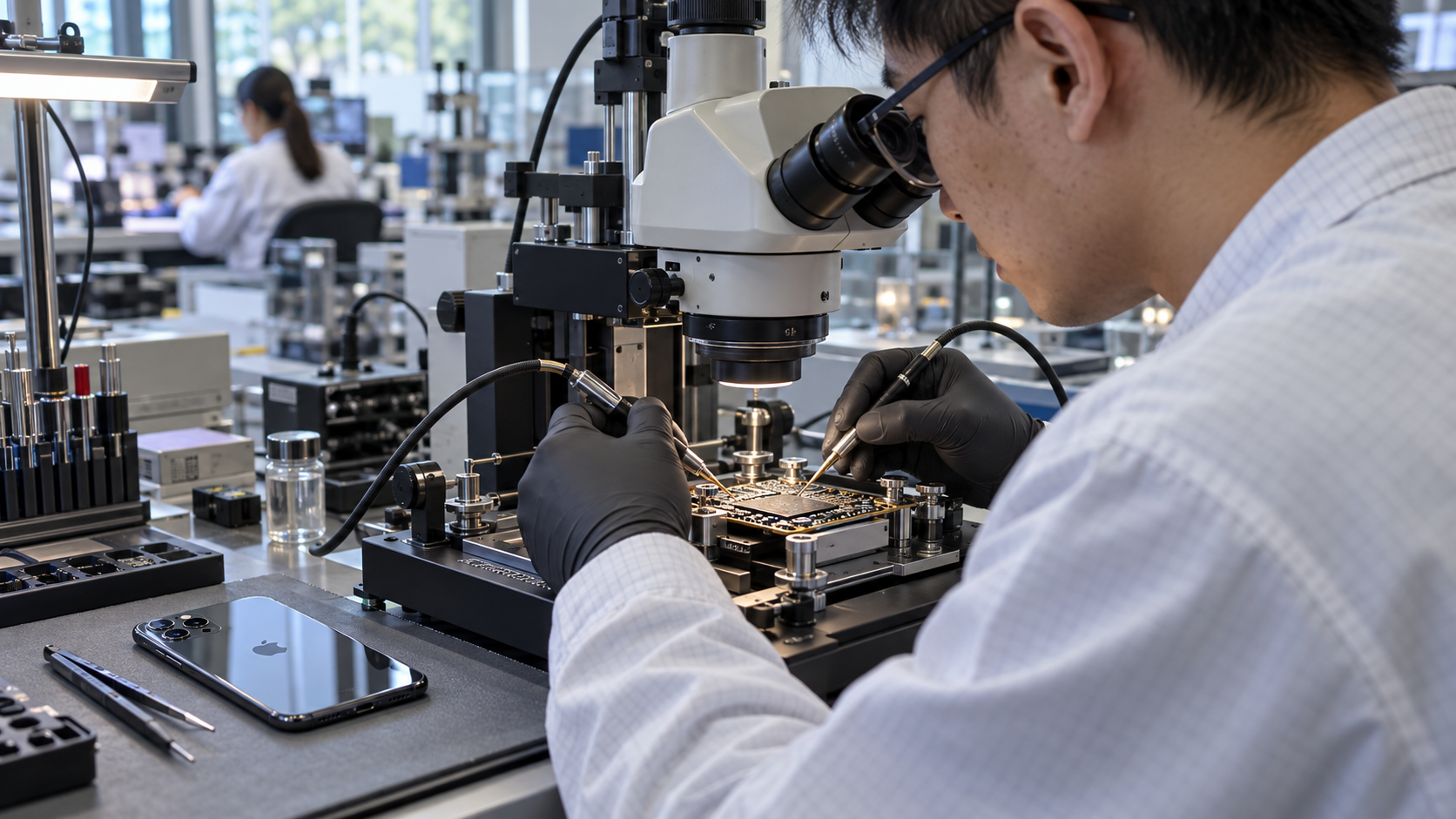
The iPhone 18 Pro's A20 Pro chip is beating rival PC and Android processors in key benchmarks, and investors are increasingly treating Apple as an AI-alternative play rather than a laggard.
Apple's new iPhone 18 Pro, powered by its in-house A20 Pro chip, outperforms the best available PC chips from Intel, Advanced Micro Devices, and Qualcomm in single-core computing benchmarks, the kind of performance most relevant to everyday device use. The A20 Pro also continues to lead Android smartphone chips from Qualcomm and MediaTek. The result extends a pattern that traces back to 2010, when Apple's decision to design its own silicon began in earnest with the debut of its A4 chip.
That strategy allows for tighter integration between hardware, software, and services than most competitors can achieve. It shows up in concrete features: dedicated video-decoding hardware that extends battery life, and a new component called Secure Exclave that powers an AI feature named Siri Rewind on the latest Apple Watch. Siri Rewind summarizes a wearer's day using on-device processing paired with Apple's Private Cloud Compute servers for more demanding tasks, an approach that reflects Apple's broader preference for keeping AI processing on the device rather than routing it through the cloud whenever possible.
That preference sets Apple apart from the "hyperscaler" cloud companies that are together spending more than $700 billion on AI data centers this year. While rivals pour capital into massive server farms to run AI workloads, Apple has leaned on privacy as its rationale for a more device-centric approach, betting that consumers and regulators alike will reward less centralized data handling even if it means less headline-grabbing AI infrastructure spending.
The market has started to reward that divergence. Since August 11, over a stretch of about six weeks, Apple shares have traded in the opposite direction from the iShares Semiconductor ETF on the large majority of trading days. Apple stock is up about 8% over that period, while the semiconductor ETF is down about 5% through mid-September. That inverse pattern has fueled a live debate among investors: some are increasingly treating Apple stock as an AI-alternative play, insulated from the volatility of data-center-focused chip names, rather than as a company lagging behind the AI infrastructure buildout.
The divergence raises a genuine question for the months ahead. If AI data center spending continues at its current pace and semiconductor stocks remain volatile, Apple's on-device, privacy-first approach could keep attracting investors looking for AI exposure without direct dependence on hyperscaler capital expenditure cycles. But that same conservatism means Apple is not capturing the immediate revenue tied to AI infrastructure demand that its chip-making peers are pursuing. Investors will be watching whether Apple's performance edge in benchmarks and its stock market divergence from semiconductor peers persists, or whether it proves to be a temporary rotation rather than a durable repricing of Apple's AI strategy.