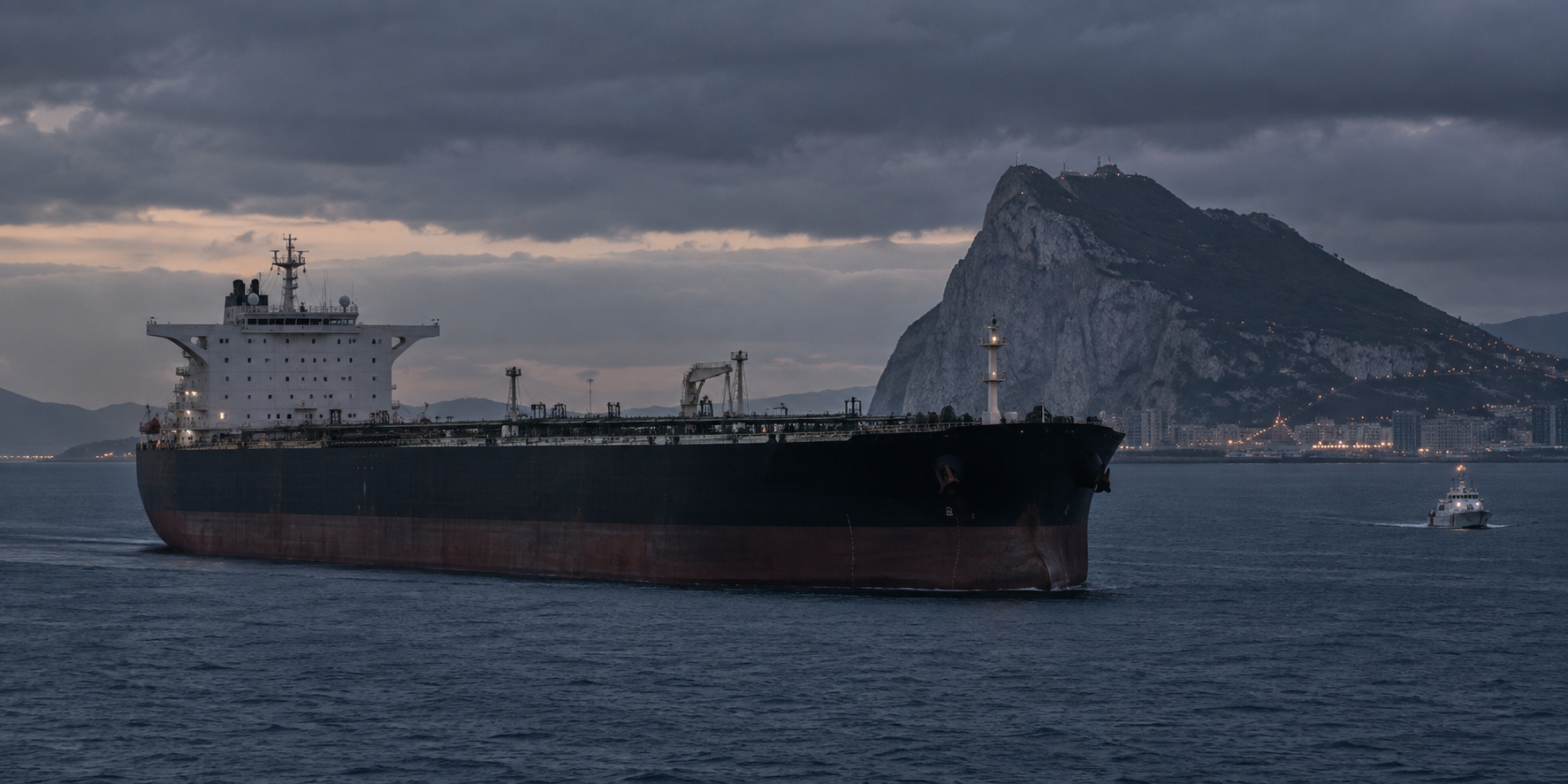
The Coast Guard and FBI boarded two tankers in August following suspected cyber incidents. Neither vessel reported operational damage, and no actor has been publicly identified.
The vessel at the center of the investigation has been identified as the VLCC *VL Prosperity*, owned by GMF GLV No. 4 SA, a Liberia-registered entity, and technically managed by South Korea's HMM Ocean Service. At the time of the incident it was carrying approximately two million barrels of Saudi-origin crude loaded at Egypt's Sidi Kerir terminal.
The ship's communications were cut for more than 30 hours while it transited the Strait of Gibraltar on August 21. U.S. Coast Guard and FBI personnel subsequently boarded the vessel to investigate a suspected cyberattack. A second vessel, an LNG carrier, was boarded on August 24 following similar activity; that ship has not been identified in any account located.
U.S. authorities have not attributed either incident to any actor. The Coast Guard has reported no operational disruption, no vessel instability and no environmental impact, and has cleared the *VL Prosperity* to resume normal operations.
How the story surfaced is itself a fact worth noting
The account of the 30-hour blackout originated with Iranian state media rather than with the vessel's owner, its technical manager, a flag-state authority or U.S. officials. That is a disclosure about provenance, not evidence of responsibility, and it should not be read as either. But readers assessing the claim are entitled to know where it entered the public record, particularly for an incident involving a Liberia-flagged, South Korean-managed ship carrying Saudi crude in the western Mediterranean.
Why a no-damage incident still matters commercially
Nothing broke. That is precisely the point of interest for the shipping and insurance complex.
A tanker that loses navigation and communications capability for more than a day while carrying two million barrels through one of the world's busiest transit lanes represents a demonstrated capability, whether or not this particular episode caused harm. Marine insurers price cyber exposure off demonstrated capability, not off realized losses. If incidents of this kind recur and become attributable to a pattern rather than to isolated events, the transmission runs through war-risk and cyber-endorsement premiums first, then through charter economics on affected routes.
The context tightens the point. Saudi Arabia has suspended loadings at its Yanbu Red Sea terminal following a pipeline outage, and additional crude is reportedly being routed through the Strait of Hormuz, which would concentrate more tanker traffic in a narrower corridor.
The relevant caveat is that a two-incident sample in a single month, with no attribution and no operational impact, is not a trend. No freight rate or marine insurance pricing move has been tied to these boardings.
What would change the assessment
Identification of the second vessel, a formal statement from U.S. authorities on attribution, or a third incident on a comparable route. Absent one of those, this remains a specific, documented episode rather than an established threat to tanker operations.