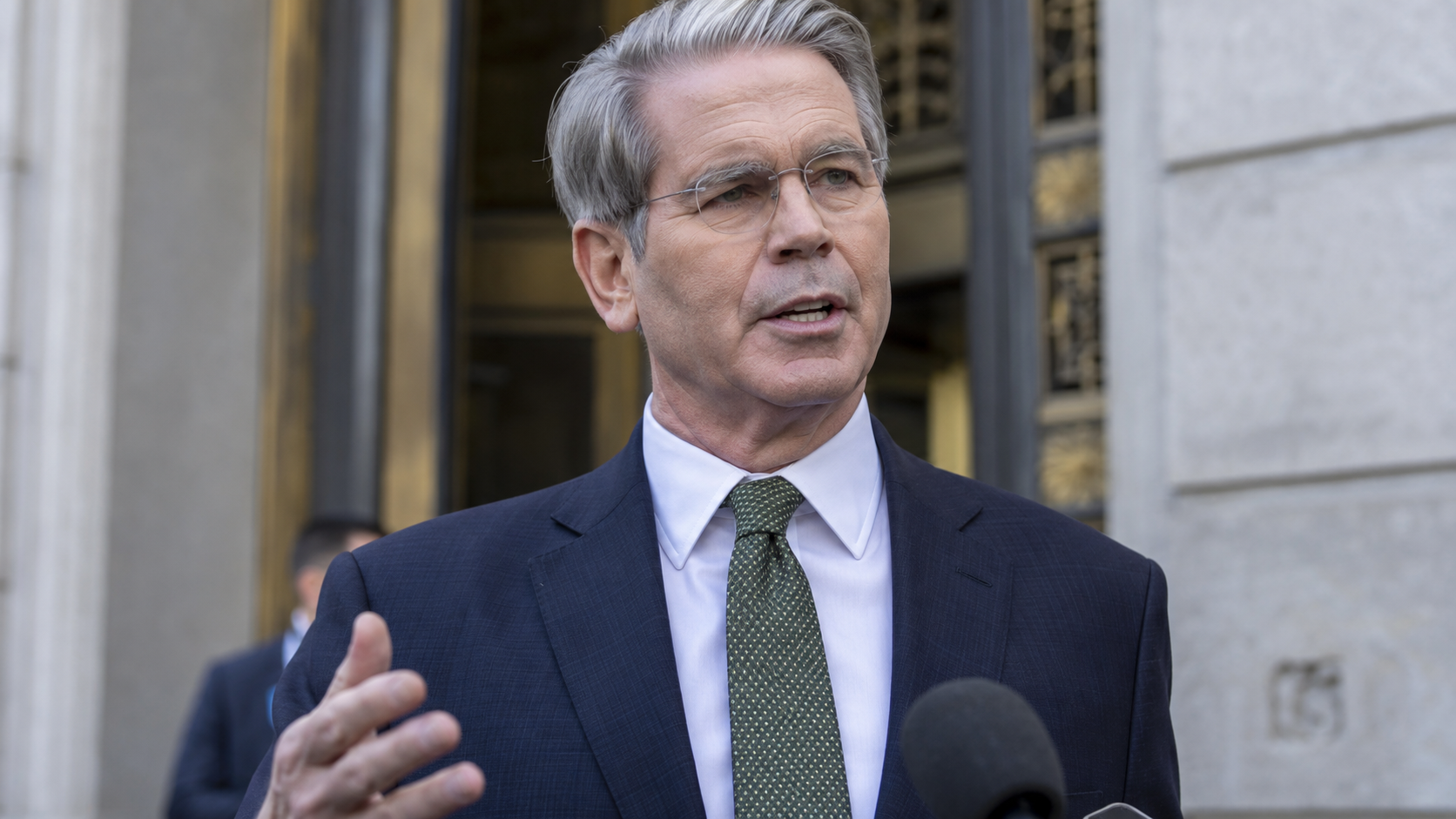
Treasury Secretary Scott Bessent said the arrangement that paused triple-digit tariffs and eased mineral export curbs will run to . He also said some of China's commitments had been "imperfect."
The trade truce struck between Washington and Beijing last October ran for a year. The extension announced as Xi Jinping arrived in Washington runs for two months.
Treasury Secretary Scott Bessent said on Wednesday evening that the two countries had agreed to extend what he called the "Busan Agreement," named for the South Korean city where President Trump and Xi met last year. "We have agreed today that we will extend what we call the Busan Agreement," Bessent said in a Fox News interview. The arrangement had been due to expire on . It will now run until .
The original deal paused triple-digit tariffs between the two countries and rolled back restrictions on exports of critical minerals and high-technology goods. Bessent said the extension keeps tariffs lower for longer and rare earths flowing.
Bessent paired the extension with a complaint. Some Chinese deliverables under the existing agreement have been "imperfect," he said, and Beijing needs to deliver more. The United States wants better compliance.
For now, the new date rests on Washington's account.
The timing makes the extension a bridge rather than a settlement. Xi's state visit runs through Friday, with artificial intelligence, Iran, Taiwan and trade all on the agenda for his talks with Trump. Trump greeted Xi at the airport, a rare gesture for a visiting leader. China analysts have broadly predicted a cautious summit with few major deliverables, and a short extension fits that expectation: it removes a November deadline without committing either side to terms beyond early January.
Chinese stocks did not rally. Mainland China's CSI 300 index closed down 1.7% on Thursday, and Hong Kong's Hang Seng slipped about 0.3%. Global markets were dominated by a bond selloff that pushed the 30-year Treasury yield to its highest since 2004.
For companies exposed to Chinese supply chains, the extension changes the planning calendar more than the planning. Rare-earth users, chip-equipment makers and importers facing the paused tariffs now have a date to work around instead of . A two-month horizon is short enough that few will treat it as a basis for long-term sourcing decisions.
The substance will arrive with the summit's readouts. A joint statement from both governments on the extension and its terms would settle whether Bessent's date is shared by Beijing. Any movement on the compliance issues he raised, or on a broader deal, would show whether the extra two months buy a negotiation or simply delay a deadline.