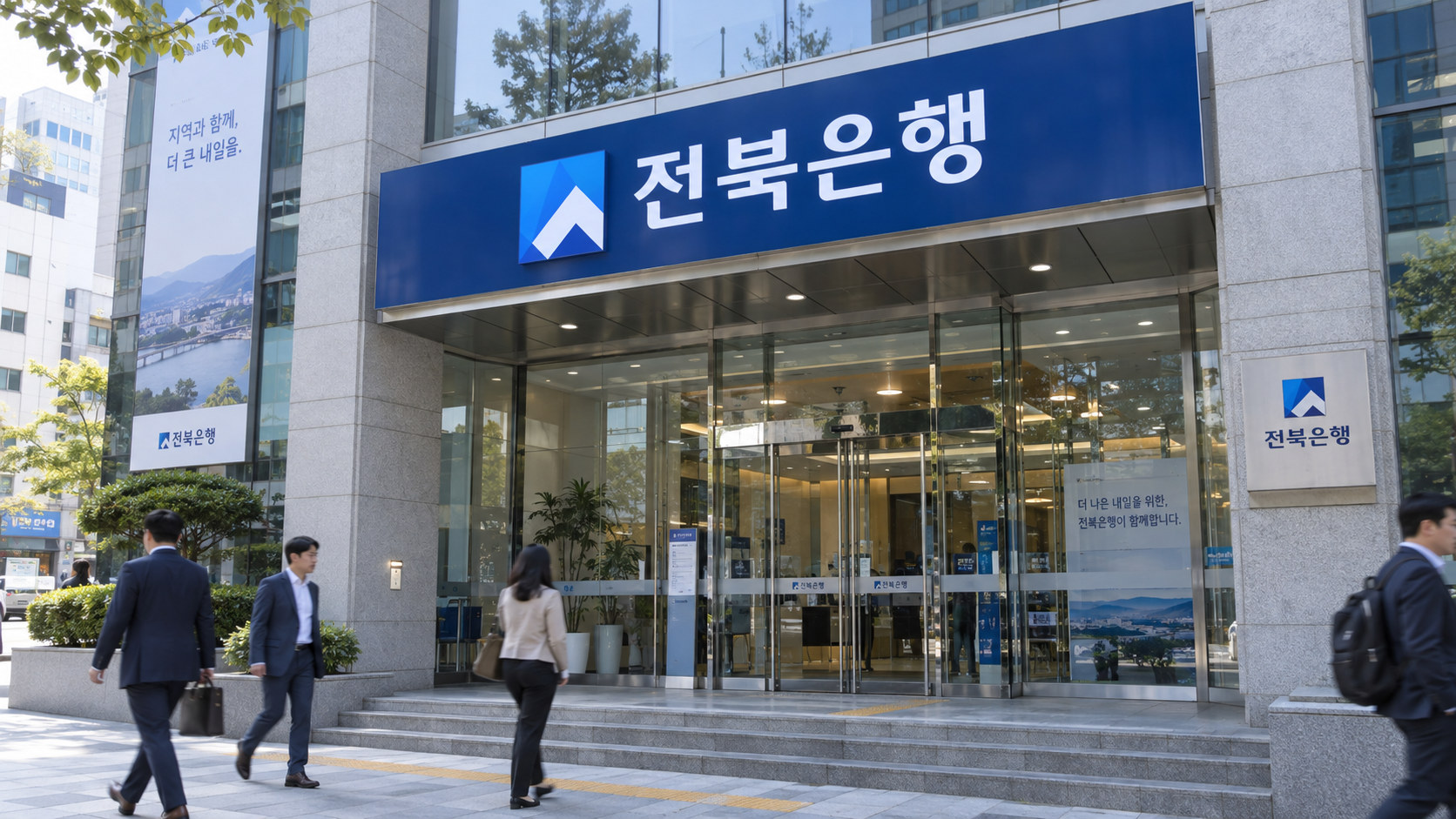
Jeonbuk Bank is offering corporate loans backed by bitcoin held at registered exchanges, a first for a Korean bank according to local reports. A change to civil enforcement rules on Oct. 1 lets lenders seize and sell crypto through the courts without ever owning it.
South Korea has kept its banks away from crypto for years without passing a law to do it. A regional lender has now found a way back in without waiting for one.
Jeonbuk Bank, a unit of JB Financial Group, has begun offering won-denominated loans to companies, secured by bitcoin, according to local reports. It is the first South Korean bank to do so. A bank official said a loan has already been made; the borrower was not disclosed.
How the loans work
The program is narrow. Only corporations can borrow, only bitcoin is accepted as collateral, and the money must be used for business operating funds. The bitcoin stays with crypto exchanges registered under Korea's financial-information law, which requires security certification, segregation of customer assets, cold-wallet storage and insurance or reserves. The bank does not own or control the wallets.
The bank values the collateral using its own standard, a weighted index of prices across several exchanges combined with a median volatility measure. It has not disclosed interest rates, loan-to-value ratios, loan volumes or which custodians it uses.
The court rule
The program rests on revised civil execution rules that took effect on Oct. 1. They allow a creditor to attach a borrower's claim to virtual assets held at an exchange and have a court order their sale. If a borrower defaults, the bank recovers its money from the proceeds of a court-ordered sale, without ever taking ownership of the coins.
That is the key design choice. Korean banks have been kept out of crypto since 2017 and 2018, not by a statute but by government guidance. No law prohibits taking crypto as collateral. By leaving custody with registered exchanges and relying on the courts for enforcement, Jeonbuk Bank avoids holding crypto on its own balance sheet.
What it does and does not mean
The program does not mean Korean banks can now freely lend against crypto, and there is no report of regulators approving it. Industry participants expect the bank to apply for designation as an innovative financial service, a regulatory sandbox status.
Korea has one of the world's most active retail crypto markets, and access to bank credit against those holdings has been effectively closed. A working template at one bank, if it holds up, would be easy for others to copy.
Two readings
One reading is that this opens the door to crypto-backed lending in Korea. The legal tool exists, custody is regulated, and the bank has found a structure that keeps crypto off its books.
The other is that it is a small pilot that regulators could still stop. One regional bank, one asset, corporate borrowers only and no disclosed volume add up to a test, and court-ordered sales may be too slow to protect a lender against an asset that can fall sharply in days.
What to watch
A response from Korea's Financial Services Commission or Financial Supervisory Service, the sandbox application, and whether larger banks follow will show whether this becomes a template or remains an exception.