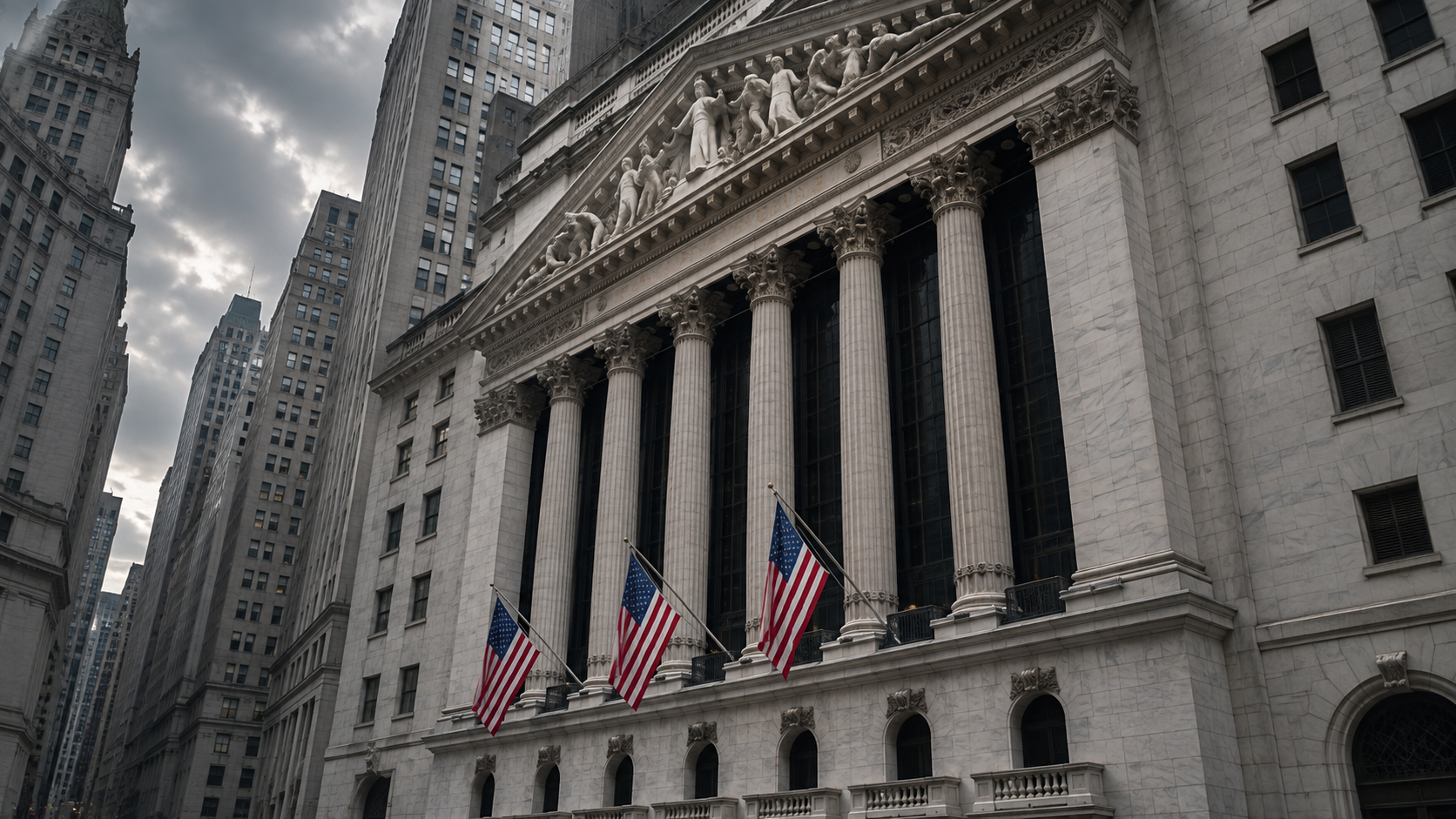
Nearly 70% of US issues fell Wednesday and the 10-year yield pushed toward the top of its multi-decade range, which makes the index declines look milder than the tape actually was.
FINANCIALMARKETS.COM | AFTERNOON EDITION
Wednesday's headline index moves were modest. The internals were not.
The S&P 500 traded at 7,641.05 at midday, down 0.42%. The Nasdaq Composite was at 26,262.83, down 0.60%, and the Dow Jones Industrial Average at 52,464.55, down 0.61%. Those are ordinary numbers for an ordinary down day. Underneath them, nearly 70% of US issues were lower and 78% of S&P 500 constituents were trading down.
That combination, shallow index losses and very poor breadth, means the averages were being held up by a small number of large gainers. The largest was Meta Platforms, up about 6% on the launch of its Muse AI agent. Apple, holding its own product event the same day and unveiling its first foldable iPhone, traded slightly lower. So the day's two biggest scheduled corporate events produced opposite reactions, which argues against reading Meta's move as any kind of sector tailwind.
The macro side of the tape was more coherent. Brent crude rose 2.96% to $100.80 a barrel and West Texas Intermediate rose 2.54% to $95.39, both on Middle East escalation. The 10-year Treasury yield rose about 4 basis points to roughly 4.84%. Gold was little changed near $4,447 an ounce. Higher oil, higher yields, weak breadth and a flat safe haven is a cost-shock tape, not a growth-scare tape, and the two behave differently from here.
The practical consequence is about position concentration rather than direction. On a day when four out of five large-cap constituents fall and the index loses less than half a percent, index-level exposure is describing something very different from the average holding. Investors reading Wednesday off the S&P print alone got a materially gentler picture than the one their individual positions delivered.
Two events follow inside 48 hours. August producer prices, then consumer prices. Both land before the Federal Reserve meets on September 15 and 16, and both are the kind of release that resolves a cost-shock tape one way or the other.