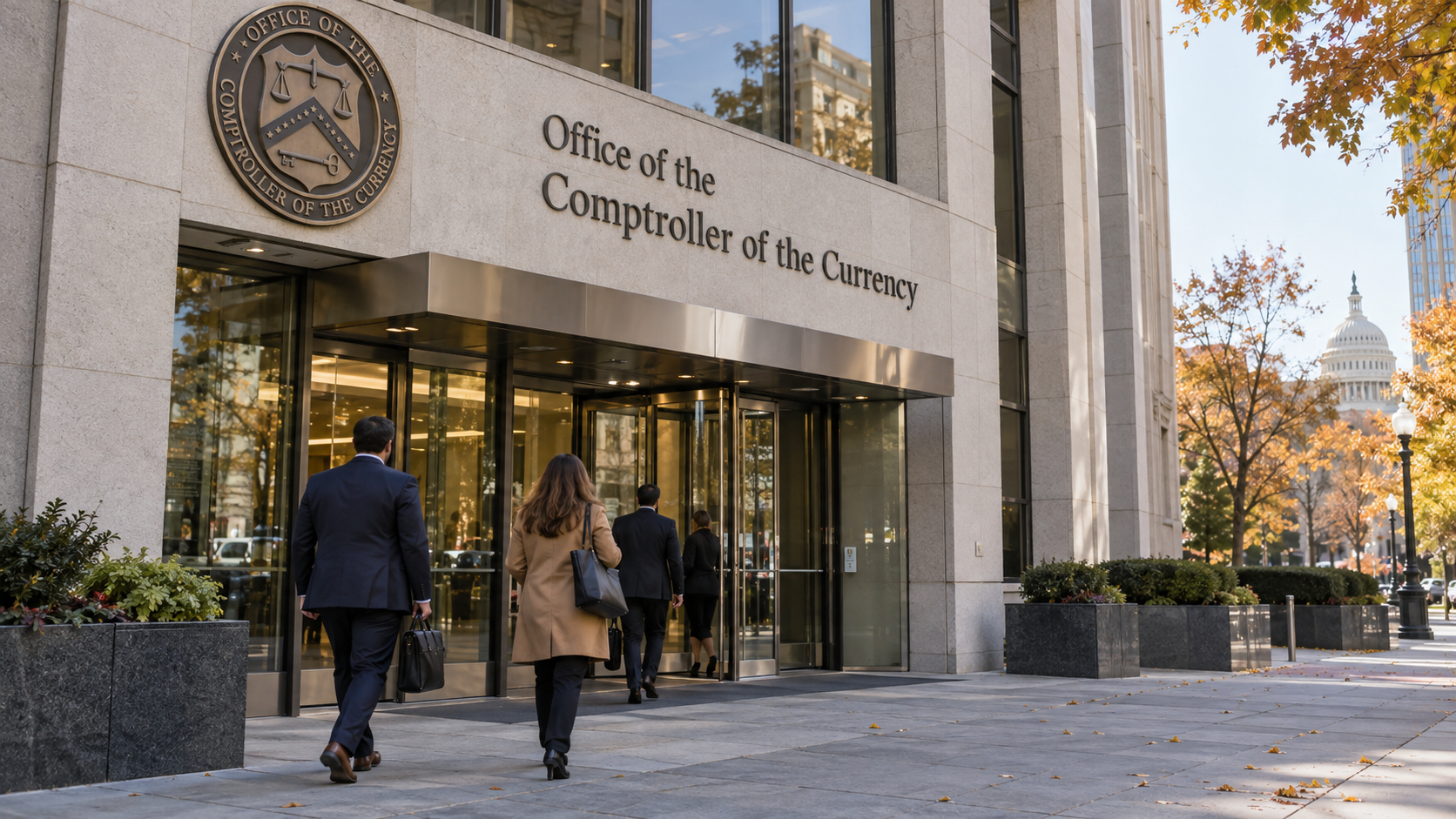
The Comptroller of the Currency reported on Oct. 14 that JPMorgan, Bank of America, Citibank, Wells Fargo and five other large lenders all had such policies between 2020 and September 2025. The consumer finance bureau says it will investigate. No penalty has been announced.
A federal bank regulator has made a finding about the country's biggest banks. What it means for shareholders depends on a decision the regulator has not yet made.
The Office of the Comptroller of the Currency said on Oct. 14 that it had reviewed debanking practices at the nine largest national banks it supervises: JPMorgan Chase Bank, Bank of America, Citibank, Wells Fargo Bank, U.S. Bank, Capital One, PNC Bank, TD Bank and BMO Bank. "Between 2020 and September 2025, all nine banks had such policies," the agency said. It described them as policies that "may have required, encouraged, or otherwise influenced banks to deny or limit access" to services because of customers' political or religious beliefs or lawful business activities.
The OCC said it is "considering actions," and Comptroller Gould said the agency is "assessing further changes to the regulatory and supervisory framework." The Consumer Financial Protection Bureau said it will "fully investigate."
JPMorgan said the unit involved, payment processor WePay, "did not meet our expectations. We identified it, corrected it, and the business no longer operates," a spokesperson said.
Findings, not enforcement
The report is a supervisory review, not an enforcement action. It names the banks and describes their policies, but it does not impose a fine, require restitution or order specific changes. That leaves the question investors care about, the cost, unanswered.
The distinction matters because bank regulators have several tools. They can issue guidance that changes how banks evaluate customers going forward, which would cost little. They can issue consent orders that require reviews and remediation, which take years and money. Or they can impose penalties. The OCC's language points to both rule changes and possible actions, without saying which.
The CFPB's involvement adds a second track. A consumer-protection investigation looks at whether customers were harmed, which raises the possibility of restitution in addition to any penalty.
The banks' position
The nine banks include the country's four largest. JPMorgan closed at $339.72 on Friday, up 1.25%. None of the banks has disclosed a reserve or estimated cost related to the review.
The finding covers a period that ended in September 2025, which suggests that the policies the OCC identified may already have been changed. JPMorgan's statement that the unit involved no longer operates points the same way.
Market implications
One reading is that this is a political and reputational issue with limited financial cost. The policies are historical, at least one unit involved has been closed, and the most likely outcome is new supervisory guidance rather than large fines spread across nine banks.
A second reading is that the report starts a process whose cost cannot yet be estimated. Two agencies are now involved, one of them focused on consumer harm, and the OCC has said it is considering unspecified actions. Investors have seen in other cases how a supervisory finding can turn into consent orders and years of remediation.
What to watch
Any OCC enforcement action or proposed rule; the scope of the CFPB investigation; bank disclosures in quarterly filings of reserves or regulatory matters; and comments from bank executives on earnings calls. A consent order against any of the nine would set the template for the rest.