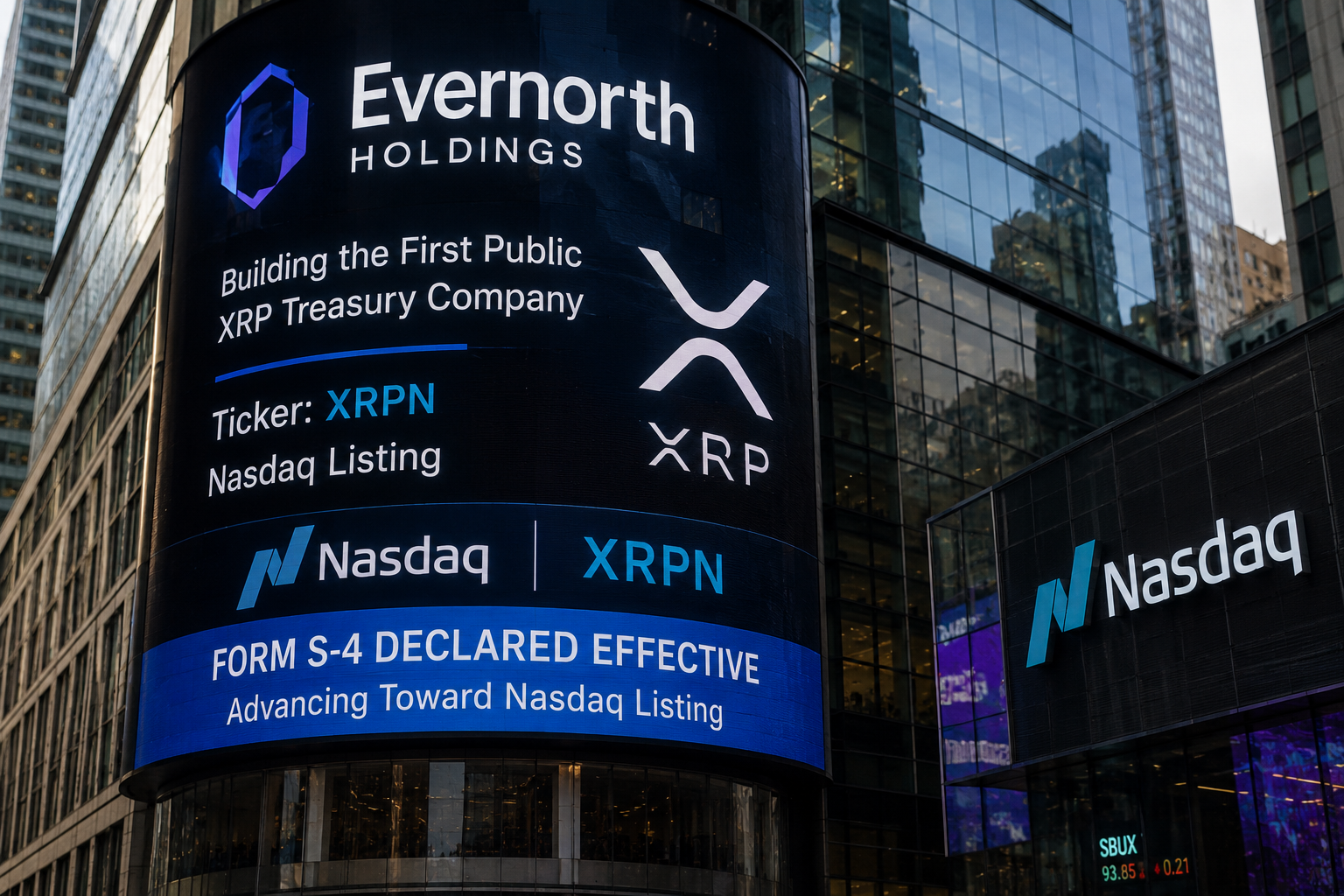
Evernorth Holdings' registration statement to go public as an XRP treasury company was declared effective this week. Around the same time, the XRP Ledger's own developers withdrew a proposed cross-chain bridge upgrade, citing weak adoption.
Evernorth Holdings' Form S-4 registration statement was declared effective this week, the company announced, advancing its plan to list on Nasdaq under the ticker XRPN as a company built to hold XRP on its balance sheet. A shareholder vote is scheduled for around September 30. It's the latest step in a process that has been running since at least April, part of a broader wave of publicly traded companies built specifically to hold cryptocurrency as a corporate treasury asset.
Around the same time, and with less fanfare, Ripple and the XRP Ledger developer community withdrew a proposed technical amendment known as XLS-38, a native cross-chain bridge that would have connected the XRP Ledger to other blockchains. The stated reason was weak developer adoption, with the ecosystem instead favoring an existing third-party bridge, Axelar, for that function.
The two developments are moving in different directions. Evernorth's progress is a corporate and financial-engineering story: a company designed to give public-market investors exposure to XRP's price is clearing the regulatory steps needed to list, part of a now-familiar pattern of similar vehicles built around other cryptocurrencies. The XLS-38 withdrawal is a protocol-development story: an attempt to build new technical functionality directly into the XRP Ledger didn't attract enough developers to justify continuing, and the ecosystem is relying on outside infrastructure instead.
There's no evidence connecting the two developments causally. What the pairing does show is that a treasury company's progress toward a stock listing reflects investor and sponsor interest in owning XRP through a public wrapper, not the pace of technical development on the underlying network. The two can move independently, and this week, they did.