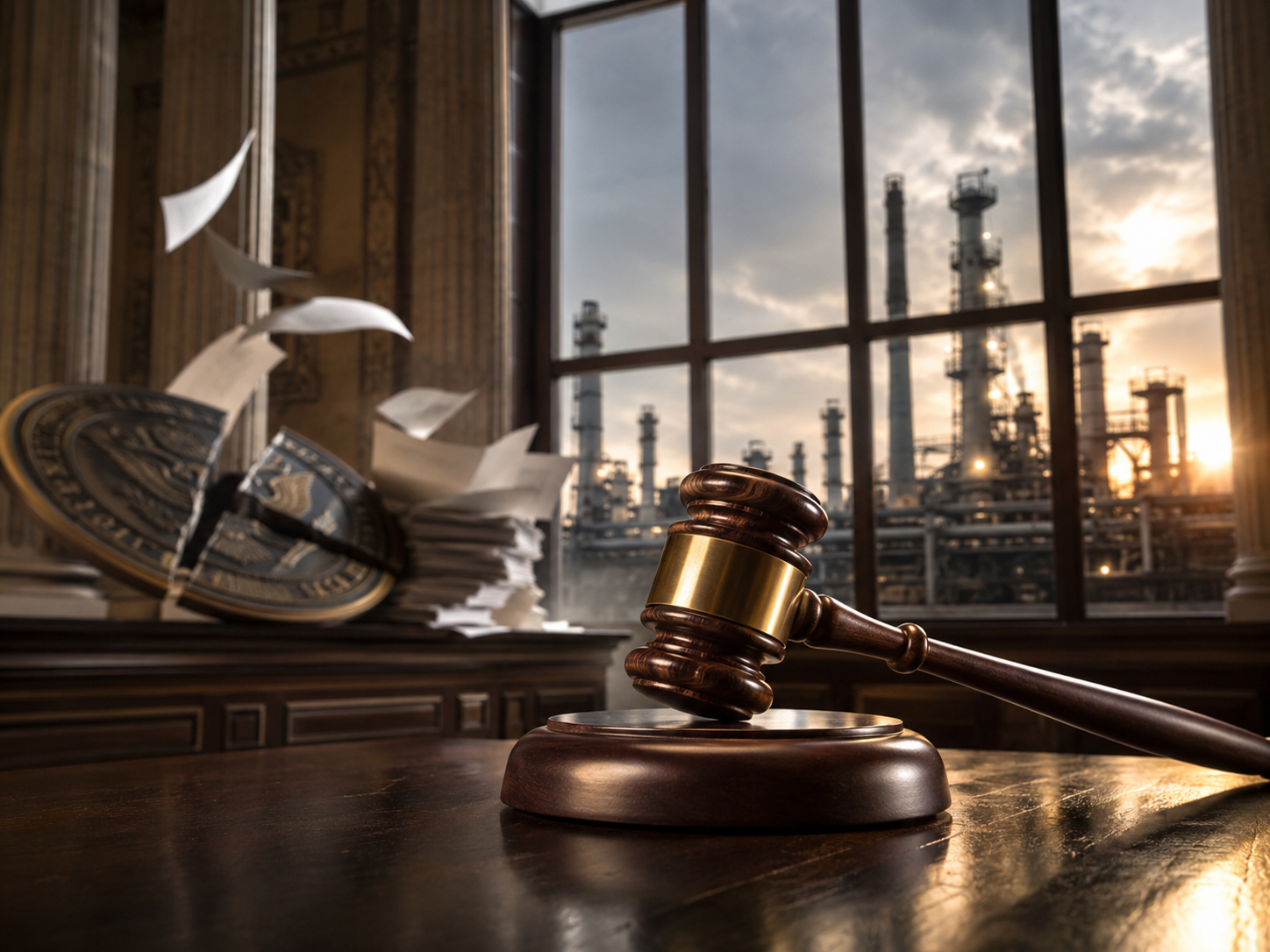
New York's landmark climate liability law, designed to make fossil fuel companies pay for decades of emissions, was struck down on constitutional grounds. The ruling removes a large contingent liability from the energy sector's books, but the fight is far from over.
A federal judge ruled that New York cannot enforce its 2024 Climate Change Superfund Act, delivering a significant win for the oil and gas industry and eliminating, at least for now, a liability that state officials had pegged at $75 billion. The court found the law unconstitutional on two grounds: it is preempted by the federal Clean Air Act, and it improperly interferes with the federal government's authority over foreign affairs.
The law had sought to impose strict liability on both domestic and foreign fossil fuel extraction and refining companies for their historical contribution to greenhouse gas emissions, without requiring proof of individual fault for any specific harm. The Justice Department, which challenged the statute, argued the law "would have expropriated $75 billion" from energy companies worldwide. The department noted it has brought parallel challenges against the same New York statute in a separate federal court and against a similarly structured law in Vermont.
For an industry that has faced a growing patchwork of state-level climate liability efforts in recent years, the ruling offers a template for challenging similar statutes elsewhere. If it survives appeal, it could reduce a category of tail risk that companies and their insurers have had to account for when pricing long-term liabilities tied to legacy emissions.
New York has not yet indicated whether it will appeal. The state's own response to the ruling, and the fate of the parallel Vermont case, will determine how far this precedent travels. A single district court decision, even one addressing constitutional questions this directly, typically does not settle a matter of this scale on its own, and other states weighing similar legislation are watching closely to see whether the same preemption and foreign-affairs reasoning would apply to laws built on different legal footing.
The immediate market question is narrower: whether investors and insurers begin discounting the probability of similar liability regimes taking effect elsewhere, a shift that would matter most for companies with large historical extraction and refining footprints and correspondingly large exposure to state-level climate litigation.