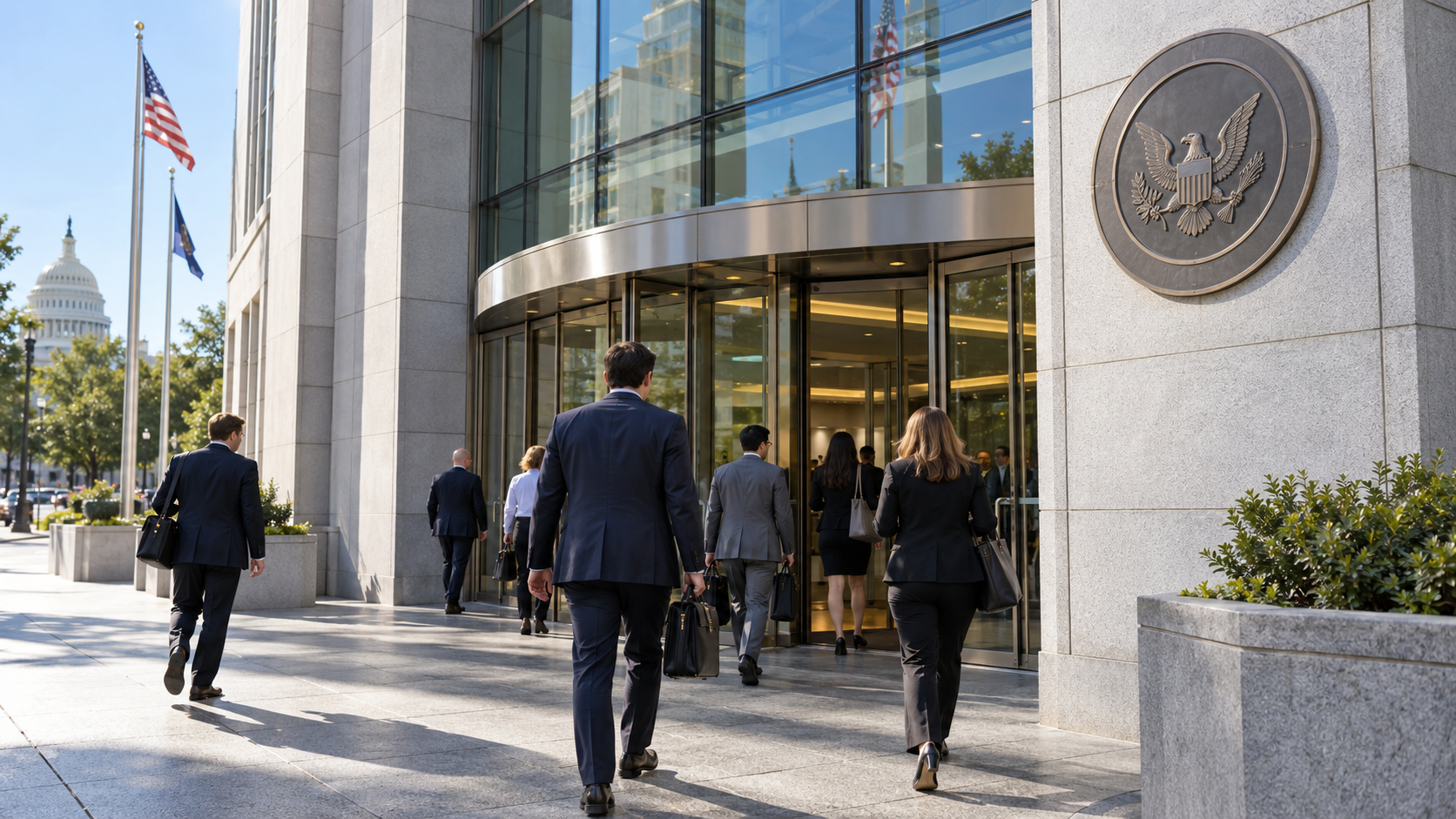
New staff FAQs also address liquid staking receipts, three questions that have hung over token design for years.
Staff at the Securities and Exchange Commission have issued a new set of answers to frequently asked questions about crypto assets, taking positions on three practices that token projects have long treated as legal gray zones.
According to the guidance, dated Sept. 25, token buybacks and network upgrades do not, on their own, turn a crypto asset into a security. The FAQs also address when receipt tokens issued for staked assets fall outside existing securities laws.
Why these three
Each of the issues maps to a common feature of how crypto networks operate.
Buybacks have become a standard tool for protocols with revenue, which use fees to repurchase and sometimes burn their own tokens. The practice resembles a corporate share repurchase, which raised the concern that it could signal an expectation of profit from the efforts of others, a key element of the test courts use to define an investment contract. Staff guidance that a buyback alone does not create securities status removes one of the most frequently cited risks for revenue-generating protocols.
Network upgrades raise a related question. Core developers routinely ship changes that improve a network and may lift the value of its token. If each upgrade could be read as evidence of a managerial effort that investors rely on, nearly every active blockchain would carry ongoing exposure. The staff position treats upgrades as ordinary maintenance of a network rather than as a new offering.
Staking receipt tokens, often called liquid staking tokens, represent a claim on assets locked in a proof-of-stake network. They let holders earn staking rewards while keeping a tradable instrument. The FAQs set out the conditions under which those receipts fall outside the securities laws, which bears directly on exchanges and custodians that list them.
The limits of staff guidance
FAQs from SEC staff are not rules adopted by the commission and do not bind courts. They do, however, signal how the agency's divisions intend to apply existing law, and they tend to shape how exchanges, lawyers and project teams make decisions in the near term.
What to watch
The practical impact will show up in behavior. Protocols that had paused or restructured buyback programs may revive them, and platforms may expand listings of staking receipt tokens. The more important signal will be whether the commission itself follows with formal rulemaking that locks these positions in, since staff guidance can be revised as quickly as it is issued.