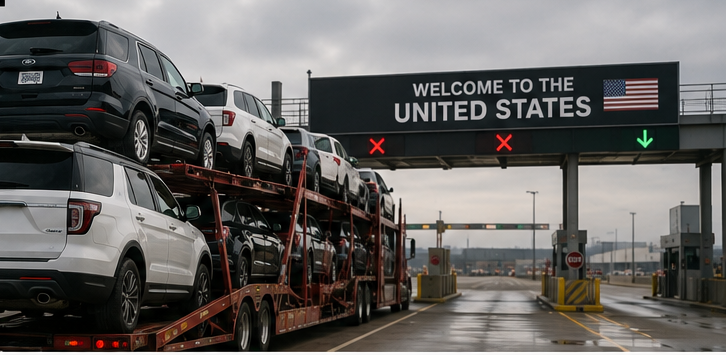
President Trump’s threat to raise Canadian auto and steel tariffs to 50% effective January 2027 landed the same day Ford, Stellantis and General Motors shares fell, layered on top of a trade war that is already live.
Ford fell roughly 4% to about $13.87. Stellantis fell roughly 4% to about $5.19. General Motors fell roughly 2% to about $86.28. All three moved in mid-morning trading Monday, after President Trump posted that tariffs on Canadian cars, trucks, automotive parts and steel would rise to 50%, effective January 1, 2027. No formal proclamation documenting the threat had been located as of publication; it rests on the president’s own public statement.
Existing 50% tariffs on a range of Canadian goods, including autos, steel, lumber, dairy and electronics, were already in force before the new threat was announced. Canada has said it will retaliate dollar for dollar starting September 8.
A tariff sixteen months out should be easy to discount. Instead, three of the most exposed automaker stocks moved together and immediately, evidence the market is treating the threat as a credible policy signal rather than background noise.
That reaction fits an administration intent on extending its tariff regime more than it fits a pure negotiating tactic: the existing tariffs were themselves the product of a failed negotiation, and Canada is proceeding with its own retaliation regardless of Monday’s threat. The main risk to that reading is a quiet climbdown from the January 2027 date in coming weeks. Whether the new threat would duplicate goods already covered by existing tariffs, or add a fresh layer on top, is not yet established, and that distinction changes how large the eventual cost shock to automakers’ supply chains actually is.
Automakers are pricing a threat that does not take effect for sixteen months as though it were closer to certain than its own timeline suggests.