
The 30-year hit its highest since 2004. Forced selling made Wednesday's bond rout worse than the data alone explained. The AI buildout is a $10.3T credit story nobody can fully see. Breadth matched March 2000. The oil industry turned a ban into a voluntary limit in 24 hours. The truce got two months.
The 30-Year Just Hit Its Highest Level Since 2004. The Selling Is Still Going.
The 30-year Treasury climbed to 5.438 percent, its highest since 2004. The 10-year continued rising past 5.13 percent. Japan's 10-year hit 3.084 percent, its highest since 1996. Bond yields are climbing across the developed world simultaneously. This is not one country's inflation problem anymore.
Nasdaq-100 futures fell about 1 percent. S&P 500 and Dow futures both dropped. Growth stocks are taking the worst of it. Oil climbed further and Iran's president said Tehran will never surrender to Washington's pressure, pushing the front-month crude contract back toward $104.
Meta (META) fell premarket after unveiling new smart glasses and a handheld device for its Muse agent. MGM Resorts (MGM) slid after Barry Diller withdrew his takeover bid. Costco (COST) reports today. Multiple Fed presidents speak. October hike odds stand at 73 percent.
Investor Signal
Wednesday's Treasury selloff was not just about the data. WSJ reports forced selling created a vicious feedback cycle once yields crossed thresholds. Hedgers sold to cover losses, which pushed yields higher, which forced more selling. The implication for Thursday is that the move did not fully settle on the data, which means it does not fully settle when the data stops.
AI's "All In" Moment
In the dot-com days, former Wall Street money manager Alexander Green bought Apple under $1. Netflix at $1.62. Amazon under $2. (Split adjusted.)
Now he's doing the same with AI.
And he says it's the biggest opportunity he's seen in 40 years.
Every few decades, a window opens that can change your financial life forever.
Four Things Went Wrong in One Session. Each One Landed on the Same Yield.
The worst day for Treasuries in 18 months. A vicious cycle made it worse.
Oil moved first. Iran's president said the Strait of Hormuz will not fully reopen while sanctions remain, and crude climbed back above $103. Then the PMI showed the fastest business growth in five years. Fed Governor Barr said inflation is not clearly trending toward target. A $6 billion Treasury buyback barely registered. Then a $70 billion 5-year auction cleared above expectations with dealers absorbing an unusually large share.
RBC's Izaac Brook arrived to a flood of messages after the PMI landed. Buying Treasuries on the dips has not worked for six months. Every line in the sand keeps getting broken.
Then forced selling took over. Once yields crossed certain thresholds, hedgers sold to cover losses, which pushed yields higher, which forced more selling. The $6 billion buyback could not interrupt that loop.
Four Inputs, One Direction
- Iran will not reopen Hormuz while sanctions remain, oil moved higher
- Five-year-high PMI and Barr's hawkish comment pointed to more hikes
- Dealers absorbed an unusual share of the 5-year auction
Bessent's buyback announcement did not slow the selling on the day it was made. That is the clearest signal available about how much the facility is helping at current scale.
Who Is Still Buying
RBC's line in the sand question is no longer about the right yield level. It is about who the buyer base is now. Patient holders who buy and hold regardless of price have been replaced by price-sensitive ones. Every threshold crossed invites more forced selling, not more buying.
A $10.3 Trillion Bet. Much of It Borrowed. A Lot of It Off Balance Sheet.
The railroads took 2.2 percent of the economy a year at their peak. This projection runs past them.
Economist Stijn van Nieuwerburgh estimates $10.3 trillion in data-center and AI infrastructure investment from 2025 to 2032, roughly 3.6 percent of GDP per year. Goldman puts 2026 alone at 1.9 percent of GDP. The last comparable period was the railroad boom of the late 19th century.
The crowding-out is already visible. Through July, data-center construction ran $9 billion above last year while all other private construction ran $46 billion below. Mississippi lost an aluminum smelter because a nearby data center tied up the power. Site consultant Didi Caldwell put it directly. This is crowding out manufacturing.
Analysts project $4.2 trillion of capex at five hyperscalers through 2029, a growing share funded through off-balance-sheet entities with little public reporting. Warsh has named hyperscaler borrowing as one reason long rates are elevated.
A Credit Question Wearing an Equity Price
The AI trade gets discussed as a stock-picking question. At this scale, financed this way, it is a credit question with a stock price attached. The off-balance-sheet portion cannot be sized from public filings. That is exactly the structure that made the last two credit cycles hard to read before they broke.
Louis: The "Strawberry Problem" Is Stalling the AI Revolution

Billion-dollar tech investor Louis Navellier calls it "AI's darkest secret." Until AI models solve the "Strawberry Problem," they'll never create new breakthroughs in medicine, energy, or quantum computing. The good news? One company is about to solve the crisis… unleashing a new $100 trillion opportunity.
This ad is sent on behalf of InvestorPlace Media at 1125 N. Charles Street, Baltimore, Maryland 21201. If you're not interested in this opportunity, please click here.
The Index Was Within Half a Percent of a Record. More Than Half Its Members Were Below Their 200-Day Average.
The last time that combination appeared was March 27, 2000.
As of Tuesday's close the S&P 500 sat 0.44 percent below its all-time high while 52 percent of members traded below their 200-day moving averages. Dow Jones Market Data puts the last occurrence of that combination at March 27, 2000.
Third breadth warning in a week. About 60 percent of members are down more than 20 percent from their all-time highs. Monday's 1 percent rally came with more new lows than new highs, a pattern last seen in 1999 and 1929.
Three Threats, One Feedback Loop
- Higher yields raise the discount rate on every growth stock
- Wider credit spreads raise the cost of the debt funding the buildout
- Narrow breadth leaves fewer names to absorb either pressure
Krinsky named all three as live simultaneously. Each one reinforces the others. When they were separate they were manageable.
Wednesday Was the First Acknowledgment
The index held the highs while its members deteriorated for weeks. Wednesday was when the index itself finally moved toward where its members had been. That gap closing from the top down is the direction to watch.
Trump Backed a Diesel Export Ban Tuesday. By Wednesday, More Than 30 Groups Had Signed a Letter.
The oil industry mounted a 24-hour counteroffensive and turned a ban into a voluntary limit.
More than 30 trade groups signed a letter within 24 hours. API warned of market havoc. Chevron's (CVX) Mike Wirth, Phillips 66's (PSX) Mark Lashier, Exxon (XOM), and Valero (VLO) called administration contacts. By Tuesday night Wright was telling CEOs he opposed a ban. By Wednesday he described a voluntary limit.
The industry's alternative asks point to where the political constraints are. Jones Act waivers. Pressure on China to export more fuel. A fuel-tax holiday. The one option nobody named publicly was Renewable Fuel Standard adjustments, which could cut gasoline prices significantly but would hurt Iowa corn.
The administration is split. Wright and Burgum publicly oppose a ban. Others have argued for limits before the midterms.
Ban to Voluntary in One Day
A CEO phone tree that changes policy in 24 hours describes the ceiling on refiner risk better than any analyst price target. The question moved from whether Washington acts to which tool it uses, and the softer tool is now the baseline. Jones Act waivers are the ask that requires neither Congress nor a volume number.
Hidden in Tesla's Filing: A $12 Billion "Super Startup"
Pull up Tesla's most recent SEC filing. Page 5.
And you'll see a single line showing $12 billion in revenue from a brand-new "super startup" Elon Musk has been quietly incubating inside Tesla.
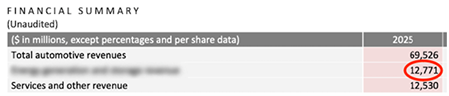
This new "super startup" has nothing to do with cars or robots or space or AI…
But it sits at the center of what Blackstone calls "a $23 trillion investment opportunity."
And on Oct 21st, Elon is expected to pull back the curtain and reveal exactly what he's building.
But Adam O'Dell already knows… and he reveals it all in this urgent video.
The Truce Was Extended to Mid-January. Many Had Expected Six Months.
Two months, not six. The length is the message.
Xi landed at Joint Base Andrews for his first US state visit in eleven years. Trump met him on the tarmac. Bessent confirmed the trade truce runs to mid-January, not the six months markets had expected.
CSIS's Scott Kennedy said the shorter window suggests the US remains unsatisfied with China's rare-earth offer. Bessent said some deliverables have not been perfect on the Chinese side.
Two complications emerged alongside the summit. Bloomberg reported China holds F-35 parts diverted to Hong Kong in transit from Australia, including components with radar-absorbing material. And Chinese ports logged their busiest week ever in the seven days before Xi's arrival.
Front-Running Is Its Own Signal
- Rare-earth magnet exports running well below pre-truce levels
- Record container week before the summit looks like exporters pulling forward
- A 7.5 percent tariff recommendation is already drafted
If shipments are being pulled forward, strong Chinese trade data now are borrowing from Q1, which is roughly when the extension expires.
Two Months Is a Deadline, Not a Truce
The summit changes the timeline. It has not changed the destination. Everything unresolved on January 10 arrives with the tariff report already written.
The 30-year is at levels not seen since 2004. The 10-year is still rising. Forced selling is extending Wednesday's move into Thursday open. The AI buildout behind those rates is a $10.3 trillion credit structure with large portions held off the balance sheet. Breadth matched March 2000. The oil industry turned a diesel ban into a voluntary limit in 24 hours. The trade truce got two months.
Trump and Xi meet today. Two inputs that could change everything, oil diplomacy and the trade structure, are both live at once. Neither is resolved.
3 Stocks at a Major Turning Point
Something unusual is happening beneath the surface of three widely followed stocks.
In each case, the fundamentals are saying one thing... while institutional activity, management signals or the options market are saying something else.
That kind of disagreement can matter.
Because when the evidence stops lining up, the next move in the story often comes down to a handful of signals most investors never think to watch.
Our new FREE Market Tell Special Report breaks down three of these situations, and shows you exactly what we’re watching next.